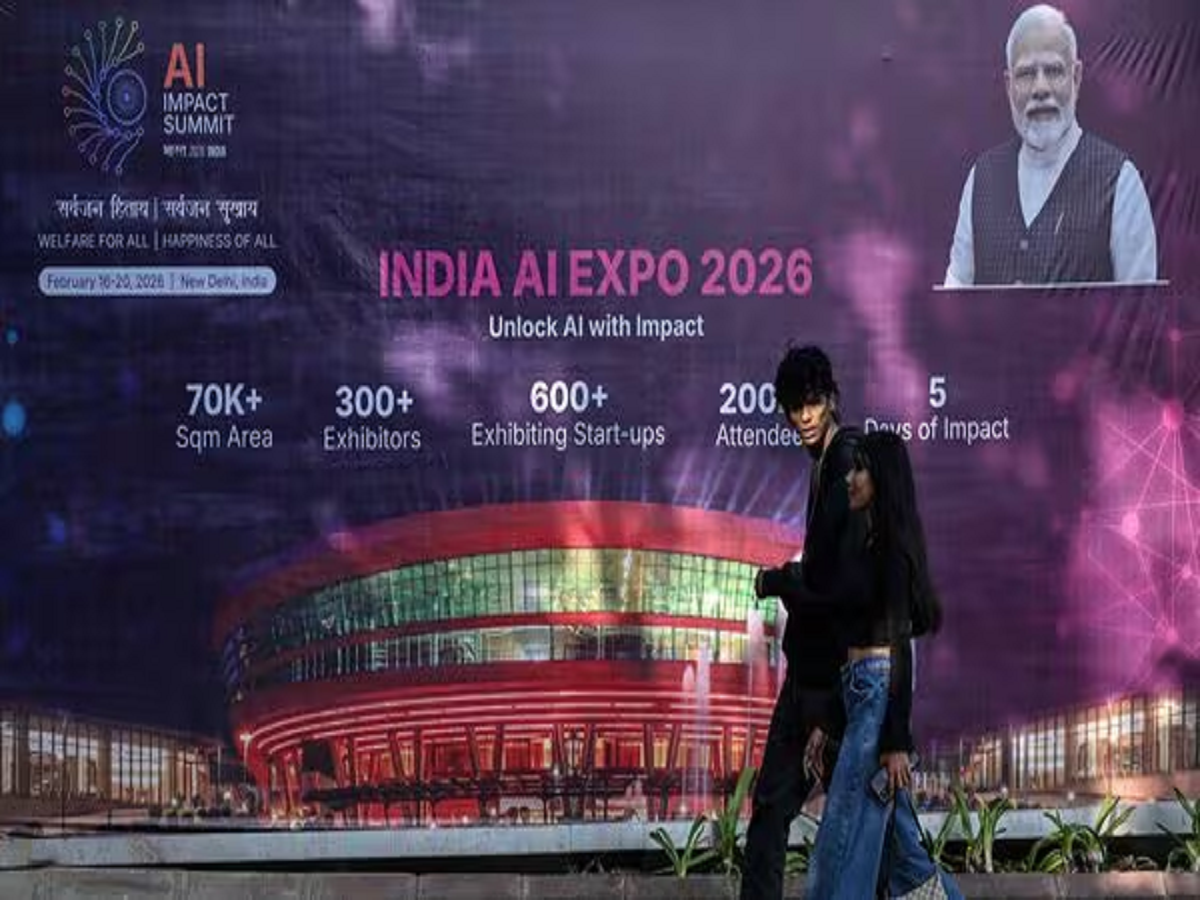
The global technology community turned its attention to Bharat Mandapam in New Delhi, where the five-day AI Impact Summit 2026 presented a powerful glimpse into the future of artificial intelligence. The event highlighted how AI is rapidly moving beyond theoretical research and prototypes to real-world applications that can transform everyday life. From advanced robotics to multilingual intelligence systems, the summit demonstrated that AI is no longer a distant concept—it is already reshaping industries, services, and daily routines.
Hundreds of innovations were showcased, but five technologies captured the most attention for their practical impact and futuristic capabilities. These standout developments illustrated how AI is narrowing the gap between humans and machines while unlocking new possibilities across sectors.
1. Holographic Avatars Draw Crowds at Reliance Jio Pavilion
The exhibition area hosted by Reliance Jio became one of the busiest spots at the venue. Visitors were fascinated by its “Holotube” system, which displayed lifelike holographic avatars capable of interacting with users. Rather than being passive visual displays, these avatars could answer questions in real time using AI-powered conversational technology. The demonstration showed how immersive digital experiences could be used for education, culture, and interactive storytelling in the future.
2. AI Cricket Coach Brings Professional Training to Smartphones
Recognizing India’s passion for cricket, Google introduced an AI-driven coaching tool designed for aspiring players. By analyzing batting videos, the system evaluates stance, timing, and footwork, then provides instant improvement tips. This innovation could democratize sports training by giving young athletes access to professional-level guidance without expensive coaching centers. Experts believe such tools may redefine sports analytics and grassroots talent development.
3. Smart Autonomous Car Tailored for Indian Roads
Tata Consultancy Services showcased a next-generation smart car equipped with advanced AI models built specifically for Indian traffic conditions. Unlike generic self-driving prototypes, this vehicle is trained to interpret complex local driving environments, including unpredictable traffic flow, varied road infrastructure, and dense urban conditions. The demonstration highlighted how localized AI training can accelerate the adoption of autonomous mobility in emerging markets.
4. Robot Dog Engineered for Hazardous Missions
Another crowd favorite was a four-legged robotic machine designed to move like a real animal while performing complex engineering tasks. The quadruped robot can climb stairs, navigate debris, and detect mechanical faults without human intervention. Built for disaster response and industrial inspection, it can operate in environments that are unsafe for people. Developers say such robots could soon play vital roles in rescue missions, infrastructure maintenance, and defense operations.
5. Multilingual AI Breaks Language Barriers
One of the most impactful themes at the summit was the rise of multilingual artificial intelligence tailored for India’s linguistic diversity. Several platforms demonstrated AI systems capable of understanding and responding in all 22 official Indian languages. This breakthrough could bring digital assistance to rural communities, enabling farmers, small business owners, and students to access information and services in their native tongues. Experts believe language-inclusive AI will be key to ensuring that technological progress benefits every segment of society.
A Defining Moment for India’s AI Ecosystem
During the event, Narendra Modi interacted with startups and young innovators, praising their creativity and emphasizing the country’s growing leadership in emerging technologies. The summit underscored that artificial intelligence is evolving far beyond chatbots and virtual assistants. It is now influencing healthcare, agriculture, transportation, education, and public services.
Industry analysts say the technologies unveiled at the gathering reflect a broader shift: AI is becoming deeply integrated into real-world systems, designed not just for efficiency but for accessibility and problem-solving. As these innovations move from demonstration halls to daily life, they could redefine how societies work, learn, and connect.
The AI Impact Summit 2026 ultimately served as a powerful reminder that the future of technology is no longer on the horizon—it is already here, unfolding through intelligent systems built to enhance human potential and open new frontiers of progress.