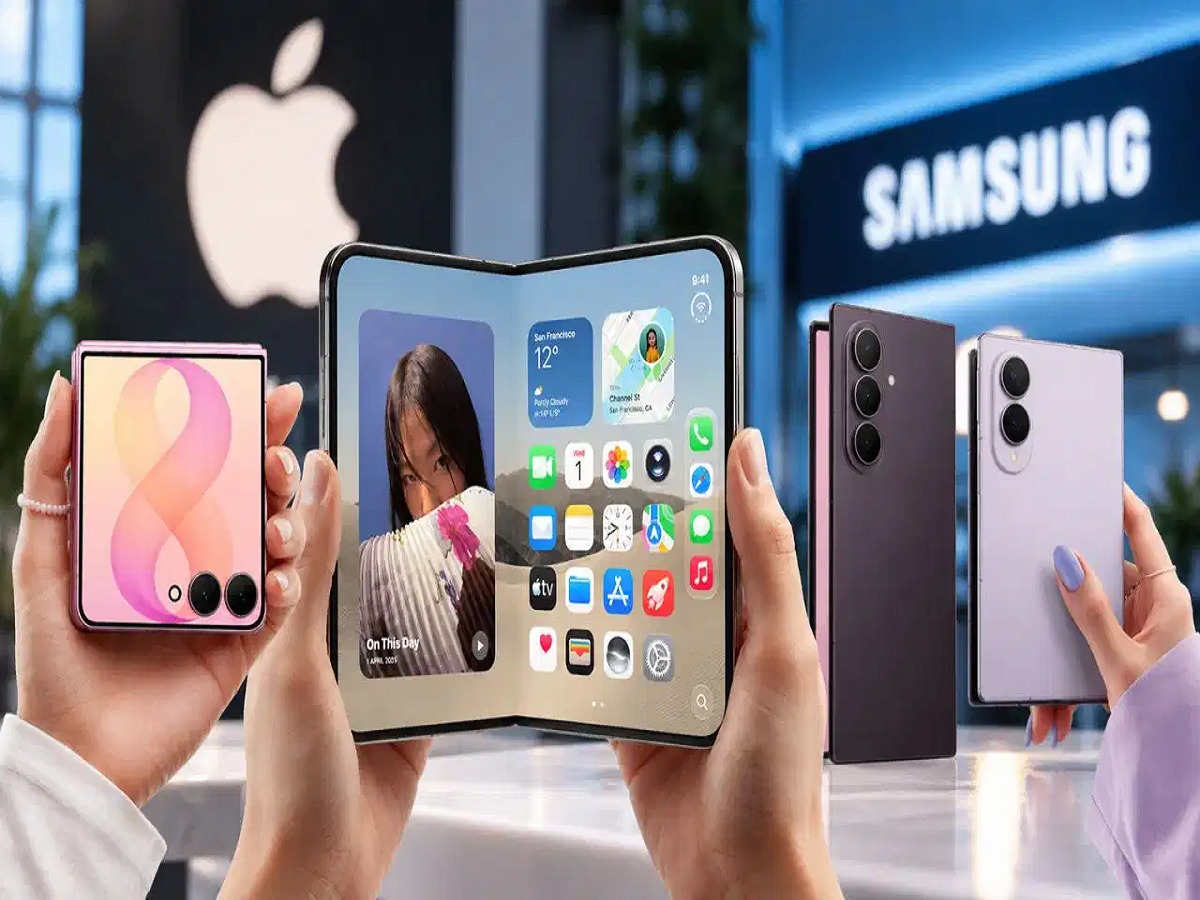
Apple may have arrived late to the foldable smartphone market, but its entry could significantly change the competition. After watching Samsung, Huawei and other brands develop the category for years, Apple has finally introduced its first foldable smartphone—the iPhone Duo.
Priced at ₹2,99,900 in India and starting at $1,999 globally, the iPhone Duo enters one of the most premium segments of the smartphone industry. Samsung already has years of experience in foldables, while Huawei has built a particularly strong position in China. Apple's biggest advantage, however, could be its enormous base of loyal iPhone users.
The question now is whether the iPhone Duo can turn foldable phones from a relatively niche category into a mainstream premium choice—and potentially threaten Samsung and Huawei's established positions.
Apple Arrived Late, but That Could Work in Its Favour
Apple has rarely rushed to be the first company to introduce emerging consumer technologies. Instead, it often waits for a category to mature before entering with its own interpretation.
Market analysts believe Apple's late entry into foldable smartphones could therefore be deliberate rather than a disadvantage.
IDC Vice President Francisco Jeronimo believes that although Apple is arriving after its rivals, its ability to influence consumer behaviour could reshape the category. Samsung and other manufacturers have already spent years familiarising consumers with foldable devices.
Apple can now focus on premium customers who are willing to spend more for a different smartphone experience.
Forrester analyst Dipanjan Chatterjee also points to Apple's tendency to wait until the weaknesses of a new product category have been identified and improved before making its move.
iPhone Duo Gets Two Displays
The iPhone Duo features a foldable design built around two screens. The base 256GB model comes with a large 7.6-inch internal display and a 5.4-inch external screen.
Apple has focused heavily on three aspects that have traditionally been challenging for foldable smartphones—the hinge, overall thickness and multitasking experience.
The device can be folded and positioned at different angles, allowing users to perform multiple tasks simultaneously and take advantage of the larger internal display.
The experience could prove particularly important because software optimisation has become a major differentiating factor among foldable devices.
$1,999 Starting Price Keeps It in the Ultra-Premium Segment
Before the official launch, speculation suggested Apple's first foldable could cost considerably more than $2,000.
Instead, the company has introduced the iPhone Duo at a starting price of $1,999 globally. In India, however, buyers will have to spend ₹2,99,900 for the device.
That makes the iPhone Duo one of Apple's most expensive smartphones and clearly positions it as a luxury device rather than a mass-market iPhone.
Jeronimo believes Apple's pricing strategy attempts to maintain the exclusivity expected from its first foldable while keeping it competitive within the ultra-premium foldable segment.
Can Apple End Samsung's Foldable Dominance?
Samsung enjoys a major first-mover advantage. The company has spent years developing multiple generations of foldable smartphones and already offers a mature portfolio.
Senior research analyst Prachir Singh believes removing Samsung from the leading position immediately will not be easy.
Apple, however, doesn't necessarily need to dominate the market from day one. Even convincing a portion of existing premium iPhone customers to switch to a foldable model could quickly give the company a meaningful position in the category.
The bigger impact may become visible as Apple's entry attracts consumers who previously had little interest in foldable smartphones.
Huawei Could Face a Bigger Challenge in China
While Samsung is a major global rival, the battle in China could be particularly significant.
China is one of the world's largest markets for foldable smartphones, and Huawei has established a commanding position there. According to the figures cited, Huawei was projected to account for roughly 80% of the Chinese foldable market by the second quarter of 2026.
Until now, Apple hasn't had a foldable device with which to compete directly.
The iPhone Duo changes that. Apple can now target affluent Chinese consumers looking for a premium foldable device while remaining within the iPhone ecosystem.
Whether that will be enough to significantly reduce Huawei's dominance remains to be seen.
Apple Could Sell 10 Million iPhone Duo Units
The iPhone Duo isn't merely an experimental product for Apple—it could potentially become a significant new source of revenue.
PP Foresight analyst Paolo Pescatore believes the foldable device could bring fresh momentum to Apple's iPhone business.
IDC estimates cited in the report suggest Apple could sell approximately 10 million iPhone Duo units during the first 12 months following its launch.
Such sales could potentially generate around $27 billion in revenue, demonstrating how valuable the foldable category could become for Apple despite its relatively small share of the overall smartphone market today.
Could Apple Become the No. 1 Foldable Brand by 2027?
Some industry projections go even further, suggesting Apple could become the world's largest foldable smartphone seller by 2027.
That would represent a dramatic change for a market currently associated primarily with Samsung and Chinese manufacturers such as Huawei.
However, achieving that position will depend on several factors, including consumer response to the iPhone Duo, production capacity, durability, software experience and whether customers are willing to pay its premium price.
The Foldable Market Could Get Its Biggest Boost Yet
Apple's entry may ultimately have an impact beyond its own sales figures.
Samsung and Huawei helped establish the foldable category, but Apple's enormous installed user base could expose foldable smartphones to a much larger group of premium consumers.
The iPhone Duo therefore represents more than Apple's first attempt at a folding phone. It could become a test of whether foldables are ready to move beyond their niche status and become a major part of the premium smartphone market.
Samsung's leadership is unlikely to disappear overnight, and Huawei remains exceptionally strong in China. But with Apple officially joining the race, competition in the global foldable smartphone market has entered an entirely new phase.