INTERNATIONAL
Libya in Turmoil: After Army Chief’s Death, Gaddafi’s Son Assassinated — What’s the Hidden Operation?
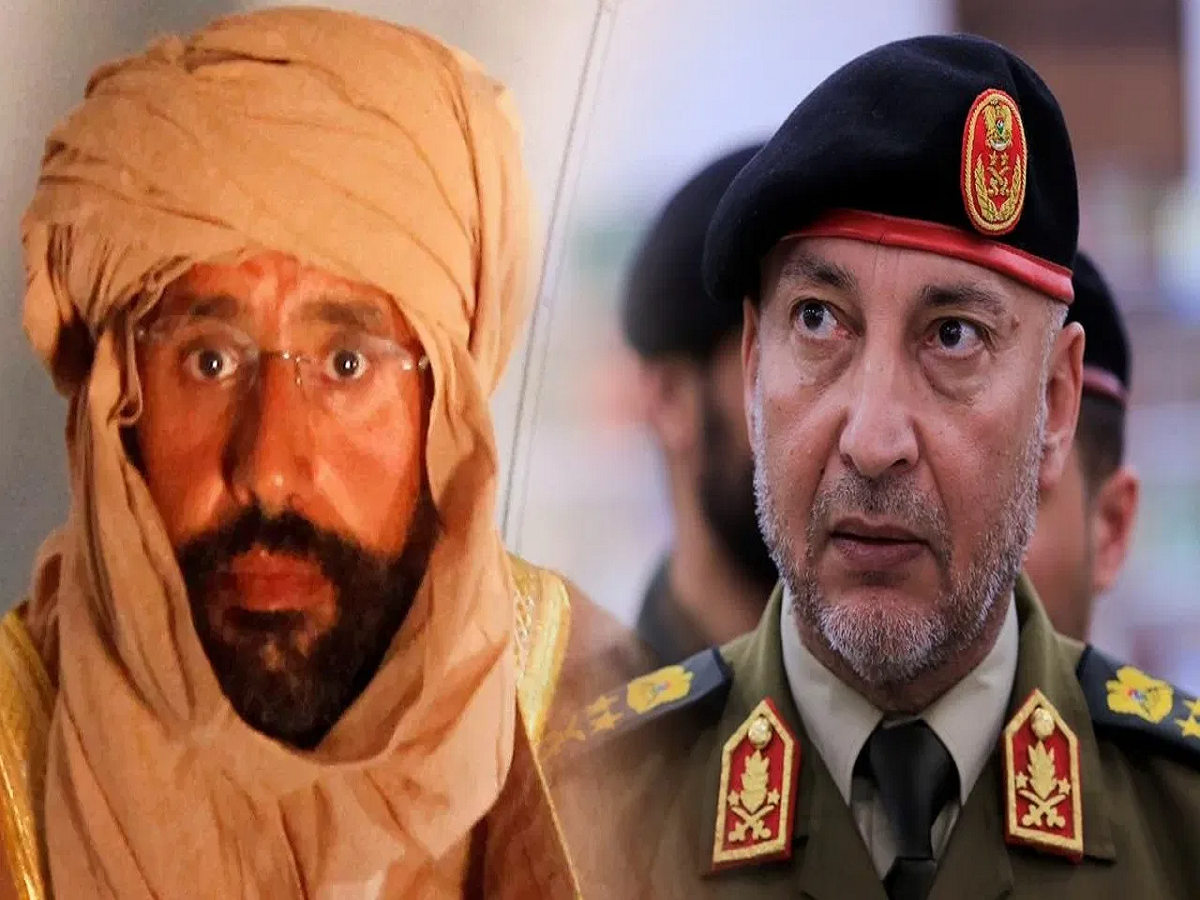
Barely forty days after the mysterious death of Libyan military chief Ali Ahmed al-Haddad in a plane crash, Libya has been shaken again—this time by the assassination of Saif al-Islam Gaddafi, son of former dictator Muammar Gaddafi. Saif al-Islam, 53, was considered a strong contender in Libya’s upcoming presidential elections, making his killing politically explosive and deeply suspicious.
Saif al-Islam’s murder has triggered intense speculation: Is a larger, coordinated operation underway in Libya?
Libya, a North African nation with a population that is around 96% Sunni Muslim, has its capital in Tripoli and has remained politically fractured since the fall of Gaddafi.
How and where was Saif al-Islam killed?
According to reports by Anadolu Agency, Saif al-Islam was assassinated on Wednesday in Zintan, a city where he had been living since his father’s overthrow. Supporters of the Gaddafi family allege that the killing was carried out on the orders of the 444th Brigade, an authorized defense unit operating in Zintan. The brigade, however, has strongly denied any involvement.
Former Gaddafi-era spokesperson Musa Ibrahim described the incident as a “treacherous assassination,” claiming that only the local defense unit knew Saif’s exact location—raising serious doubts about the official denials.
Why was Saif al-Islam seen as a threat?
Beyond being Gaddafi’s son, Saif al-Islam had recently re-emerged as a political reformer, calling for a unified Libya. His growing popularity posed a challenge in a country currently split between rival power centers.
At present:
-
Tripoli and surrounding areas are controlled by forces aligned with the National Army
-
Benghazi and eastern Libya are under the control of the Libyan National Army (LNA) led by Khalifa Haftar
Haftar has declared his son Saddam Haftar as his political successor, and Saddam has been aggressively consolidating power. In this context, Saif al-Islam was viewed as a major rival to the Haftar family’s ambitions.
Turkey’s expanding role in Libyan politics
Following Gaddafi’s fall, Türkiye gradually became a key power broker in Libya. Initially, Ankara supported forces controlling Tripoli and secured several strategic agreements in the region. However, in recent years, Turkey appears to have shifted its alignment toward the Haftar camp.
Key developments include:
-
In 2019, Turkey deployed troops in Tripoli. Later, Libyan authorities asked Ankara to withdraw its forces by the end of 2025, a request Turkey reportedly refused. Around the same period, military chief Ali Ahmed al-Haddad died in a plane crash in Turkey, after which the issue quietly faded.
-
Turkey allegedly facilitated a $4 billion arms deal between the Haftar family and Pakistan, involving fighter jets and small arms. Members linked to the Haftar camp have reportedly made frequent visits to Pakistan, while Turkey continues to expand its strategic influence through the family.
Is Türkiye linked to Saif al-Islam’s assassination?
There is no official confirmation, but suspicions persist. The 444th Brigade, accused by Saif’s supporters, is believed to maintain close intelligence ties with Turkey. Ankara’s growing closeness to the Haftar family has further fueled speculation about its possible indirect role.
For now, Libya’s Attorney General’s Office has announced a formal investigation, promising that findings and evidence will be made public once the probe is complete.
With the deaths of the army chief and Gaddafi’s son occurring in quick succession, Libya once again finds itself at the center of a dangerous power struggle, raising fears that the country may be heading toward another phase of instability.