LIFESTYLE
Mahabharata: Why was Yamaraj born as the son of a maidservant? Learn the story of Mahatma Vidura's birth and the curse of Sage Mandavya
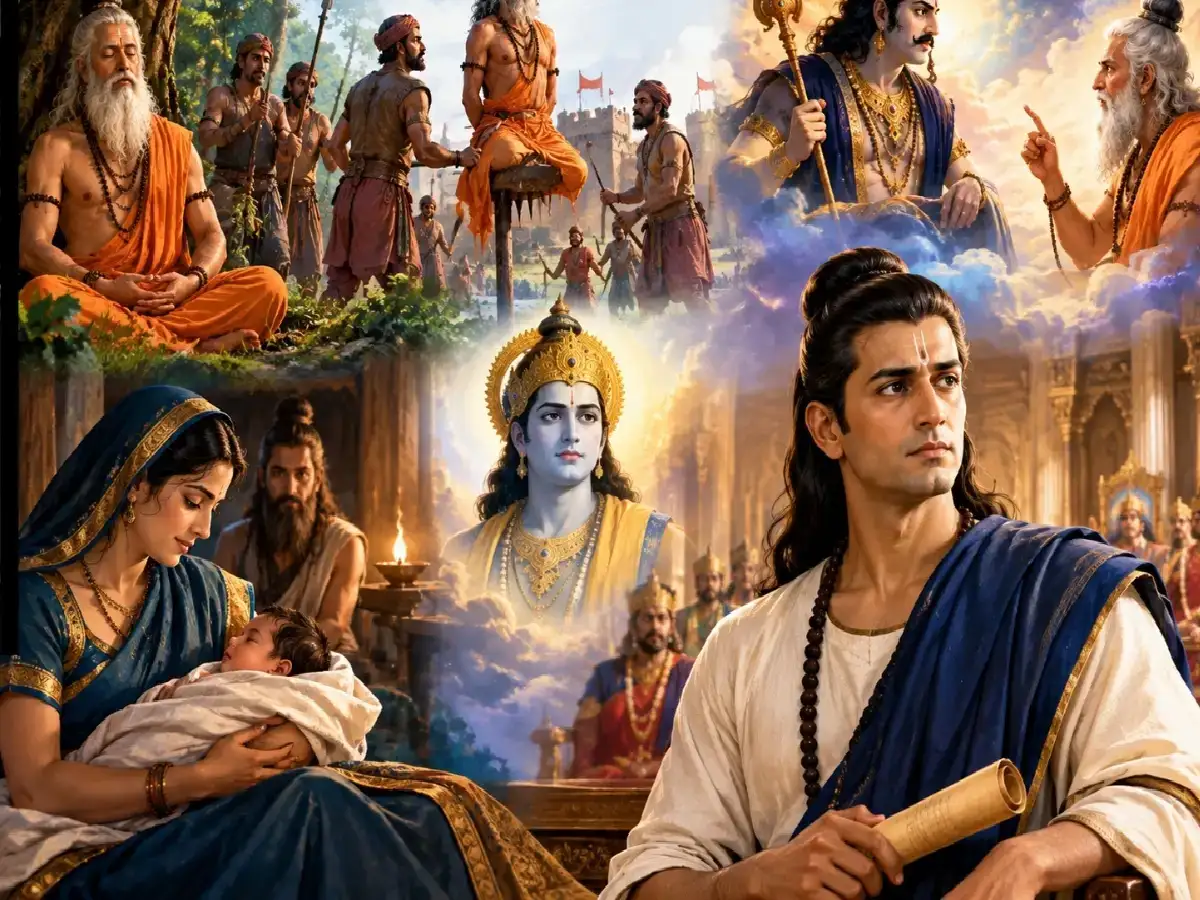
In the Mahabharata, Mahatma Vidur's character emerges as a wise and strategic figure who, despite living in the royal palace, always stood for righteousness and truth. Despite being the brother of Dhritarashtra and Pandu, Vidur was denied the right to the throne. According to mythological beliefs, Mahatma Vidur was no ordinary human being, but an incarnation of Dharmaraja (Yamaraja), who, due to a sage's curse, was forced to take human form on Earth.
Why was Sage Mandavya punished with the spear?
According to the story, once Sage Mandavya was meditating in his ashram. When some thieves hid in his ashram with stolen goods, the king's soldiers came in pursuit, but the sage, engrossed in meditation, did not answer the soldiers' questions. The soldiers mistook the sage for an accomplice of the thieves, captured him, and on the king's orders, crucified him. However, the sage survived due to his penance. Later, when the king realized his mistake, he apologized to the sage and took him down from the spear.
Childhood Mistake and Yama's Curse:
Distressed by this incident, Sage Mandavya asked Dharmaraja (Yamaraja) what crime had caused him such a harsh punishment. Dharmadev explained that in his childhood he had pierced a small insect with a blade of grass, and this was the result of that action.
Sage Mandavya was not satisfied with this argument. He believed that such a harsh punishment for a minor, unintentional childhood offense was unjust. Enraged, the sage cursed Dharmaraja that he would be reborn as a human on Earth from the womb of a Shudra (slave woman).
Vidur was born as a slave's son.
Due to this sage's curse, Dharmadev was forced to take birth on earth. During the Niyoga tradition in Hastinapur, Vidur was born from the womb of a slave woman, under the charisma and blessings of Maharishi Ved Vyas. Being a slave's son, despite his superiority in knowledge, policy, and wisdom, he was denied the throne of Hastinapur.
The Message of Vidur Neeti:
Vidur may not have held royal power, but his wisdom and policy were revered throughout the Kuru dynasty. His words remain relevant today as Vidur Neeti. Vidur's life conveys the message that a person's worth is determined not by his birth or social status, but by his actions, knowledge, and wisdom.
PC: IN NEWS