BUSINESS
New Government Push for Biogas! How GOBARdhan Can Turn Farm Waste Into Useful Fuel and Extra Income
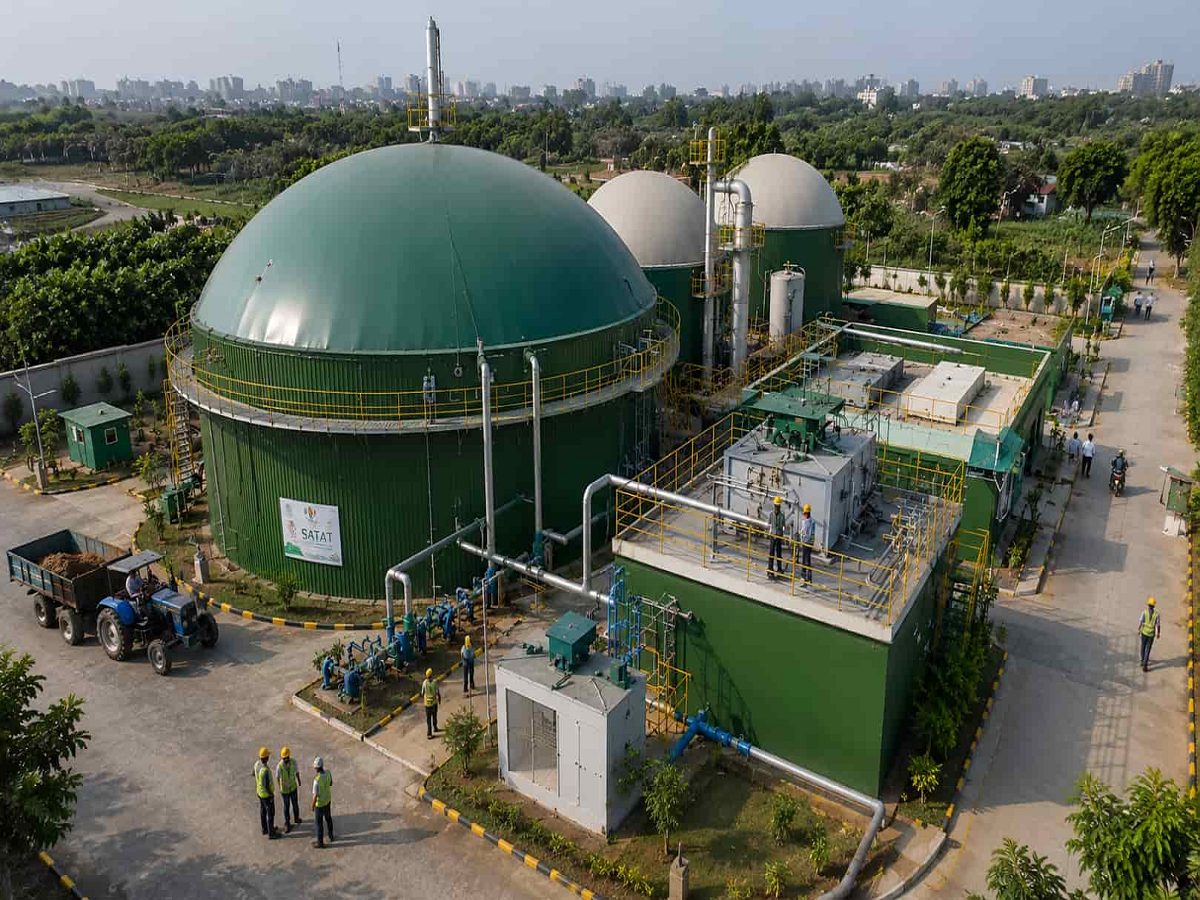
Farm waste and cattle dung are often treated as a disposal problem, but the government is increasingly looking at them as a source of clean energy and additional income.
A fresh push under the GOBARdhan initiative is aimed at accelerating the development of India’s Compressed Biogas sector. The initiative focuses on converting organic waste into useful energy while also supporting cleaner waste management and a circular rural economy.
What is the GOBARdhan scheme?
GOBARdhan stands for Galvanizing Organic Bio-Agro Resources Dhan. The initiative promotes the conversion of cattle dung and other organic waste into biogas, bio-CNG and other useful products.
The basic idea is simple: instead of allowing agricultural and animal waste to accumulate or be disposed of inefficiently, it can be processed and converted into energy.
This can be particularly useful in areas where cattle waste and agricultural residues are available in large quantities.
How can farmers benefit?
For rural households, the biggest attraction is the possibility of turning waste into a productive resource.
Organic waste can be collected and processed in biogas plants. Depending on the type and scale of the facility, the resulting biogas can be used for energy purposes, while the leftover material can also have value as an organic manure or soil-input resource.
This creates the possibility of a cycle in which waste from farms and livestock contributes to energy and agricultural production.
Why is compressed biogas important?
Compressed Biogas, or CBG, is produced by processing organic feedstocks such as agricultural residues, cattle dung and other biodegradable waste.
Once purified and compressed, it can be used as a cleaner fuel in suitable applications.
The government's increased focus on the CBG sector is also linked to reducing dependence on conventional fossil fuels, improving waste management and creating opportunities for new businesses in rural areas.
It could create opportunities beyond farming
GOBARdhan is not only about individual farmers installing small biogas plants.
The broader ecosystem can create opportunities for entrepreneurs, cooperatives, waste-collection businesses and organisations involved in processing agricultural and animal waste.
Villages with sufficient quantities of organic waste can potentially support larger community-level projects, creating local economic activity around collection, transportation, processing and energy production.
What should farmers know before investing?
Anyone considering a biogas or CBG project should first assess the availability of raw material.
A plant needs a consistent supply of suitable organic waste. Therefore, cattle population, agricultural activity, transportation requirements, land availability and the potential market for the resulting fuel or by-products should all be considered before investing.
Farmers should also check the latest eligibility conditions, financial assistance and implementation guidelines applicable to their state and the particular project before spending money.
Why this government push matters
India generates significant quantities of agricultural and animal waste every year. Converting even a portion of this waste into useful energy could help address two problems at the same time: waste management and energy requirements.
The renewed focus on GOBARdhan and the compressed biogas sector is therefore important not only from an environmental perspective but also for rural entrepreneurship and local employment.
For farmers and rural entrepreneurs, the message is clear: agricultural waste may no longer be simply something to dispose of. With the right infrastructure and government support, it can become a valuable resource.