LIFESTYLE
New Government Scheme for PNG Connections Starts: How Households Can Benefit From the Push for Cheaper Piped Gas
The central government has introduced a new incentive scheme aimed at expanding domestic piped natural gas (PNG) connections across India. The initiative, which came into effect on September 1, 2026, is designed to encourage faster expansion of PNG networks and help more households shift to piped cooking gas.
The move could be particularly useful for families living in cities and areas where PNG infrastructure is already available or is being expanded. Here's what households need to know.
What is the new PNG scheme?
The government has approved the Incentive Scheme for Promotion of Domestic PNG Connections to encourage City Gas Distribution (CGD) companies to increase the number of active domestic PNG connections.
Under the scheme, CGD companies can receive additional allocations of domestically produced, lower-priced gas when they achieve incremental billed domestic PNG connections above specified thresholds. The scheme will operate through two six-month tranches.
The government currently estimates that India has around 1.74 crore domestic PNG connections.
How can this benefit households?
The scheme does not provide a direct cash subsidy to every family for installing a PNG connection. Instead, it creates a financial incentive for gas distribution companies to expand their networks and activate more household connections.
The broader objective is to make it easier for eligible households to obtain an active PNG connection where pipeline infrastructure is available.
The government says the scheme could substantially reduce the payback period for investments made by CGD companies in domestic PNG connections, giving them greater incentive to expand connectivity.
What are the benefits of PNG over LPG cylinders?
For households with access to a PNG network, piped gas can offer several practical advantages.
No need to book and store cylinders
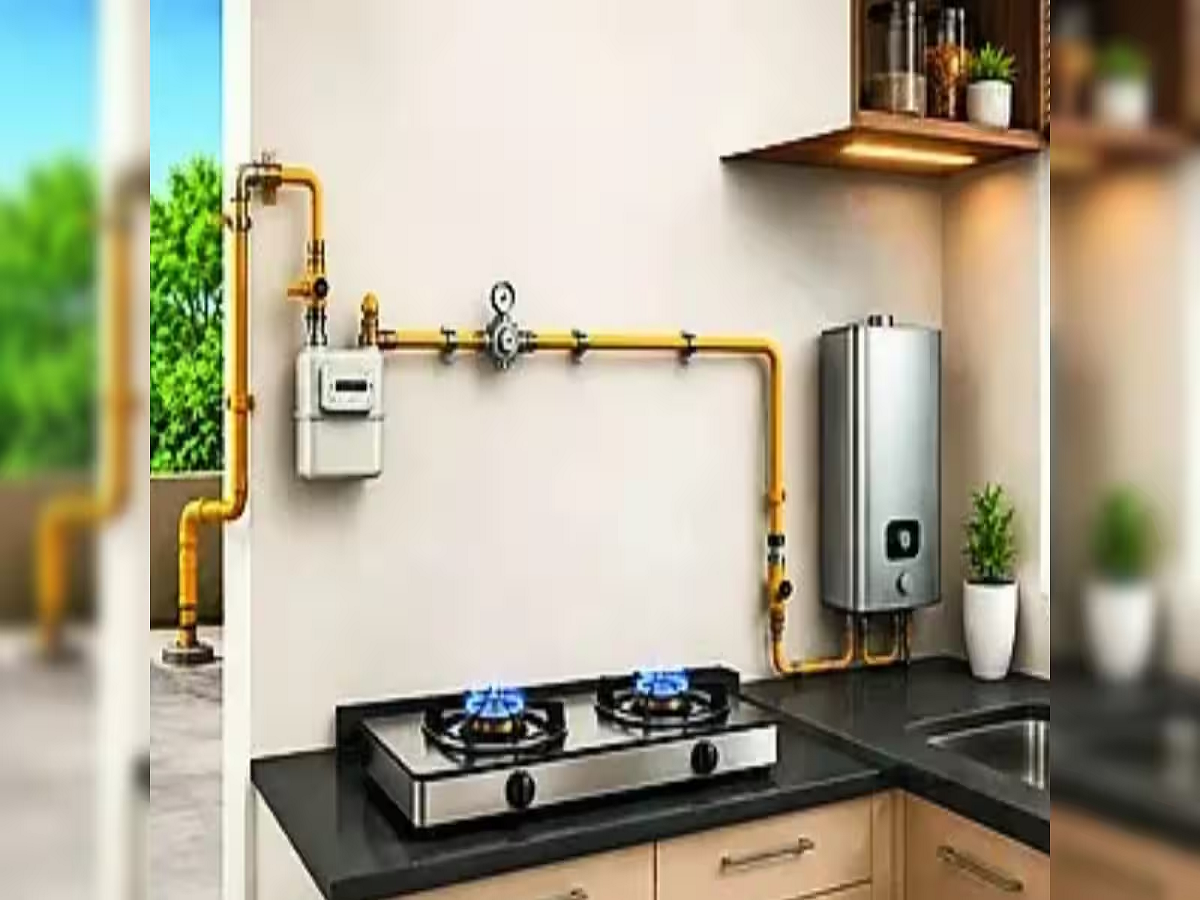
PNG is supplied directly through a pipeline, so households do not need to regularly book, transport or store LPG cylinders.
Pay according to consumption
PNG is supplied through a metered connection, with households billed according to the quantity of gas consumed.
Continuous supply
Unlike LPG cylinders, which need to be replaced after they are emptied, PNG can be supplied continuously as long as the connection and network are operational.
Convenient for apartments
Piped gas can be particularly convenient in apartment buildings and densely populated urban areas where storing LPG cylinders can be difficult.
Government is also working on easier PNG registration
The government says a unified PNG registration portal is under development. The proposed platform is intended to provide a single-window system through which consumers can apply for and track domestic PNG connections.
This could make the process easier for consumers once the platform becomes operational.
Will every household get a free PNG connection?
No. This is an important point.
The new scheme is primarily an incentive programme for CGD companies. It should not be interpreted as a nationwide scheme under which every household will automatically receive a free PNG connection or cash assistance.
Whether a household can obtain PNG depends largely on whether a gas distribution network is available in its area and whether the concerned CGD company is providing domestic connections there.
Government encouraging LPG-to-PNG conversion
The government is also promoting the transition from LPG to PNG through National PNG Drive 2.0. The initiative includes awareness campaigns, household outreach and efforts to encourage housing societies using LPG to consider switching to piped natural gas where the infrastructure is available.
States are also being encouraged to rationalise VAT on natural gas, with the government highlighting a 5% VAT level as a way to improve PNG affordability. However, taxation is a state-level matter, so the actual rate can vary depending on the state.
Who should check for PNG availability?
Households should consider checking their eligibility if:
-
PNG pipelines are already available in their locality.
-
Their housing society has an existing PNG network.
-
A CGD company has announced expansion in their area.
-
They currently use LPG and want to compare PNG with their existing cooking-fuel arrangement.
Consumers should contact the authorised CGD company operating in their area for the latest information on connection availability, charges, documentation and installation timelines.
Why the new scheme matters
The government's latest initiative is aimed less at giving households a one-time financial benefit and more at expanding the availability of piped cooking gas.
If the incentives lead to faster network expansion, more households could eventually have the option of switching from LPG cylinders to a continuous piped supply. The government says PNG offers advantages in convenience, safety and cleaner cooking compared with conventional cooking fuels.
Important: The new scheme does not mean that every citizen will receive ₹50,000, a free gas connection or a direct cash payment. Benefits depend on the availability of PNG infrastructure and the policies of the authorised gas distribution company operating in the area.