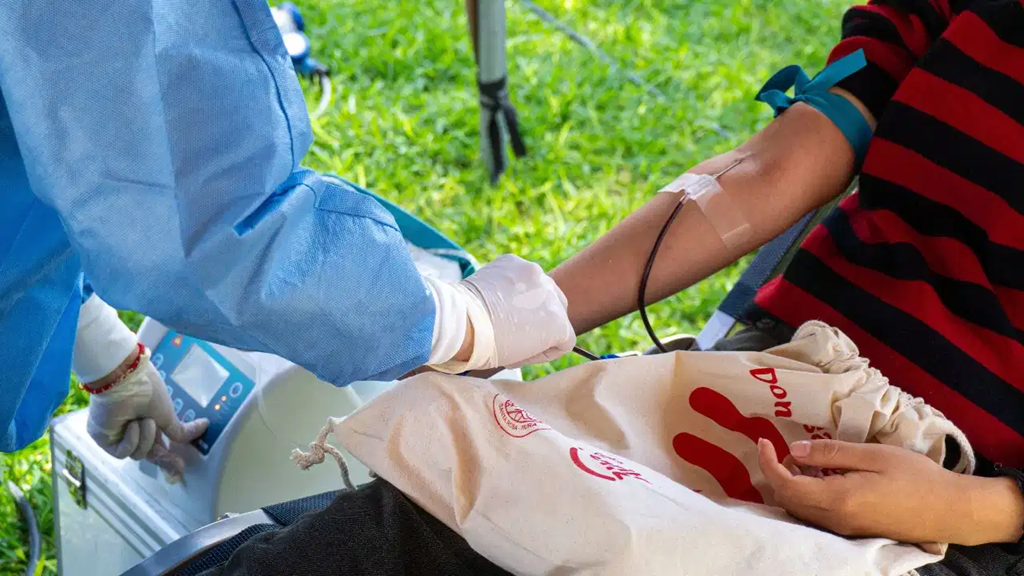
You've probably heard the phrase at blood donation drives: "One unit of blood can save three lives." While it may sound like a slogan, medical experts say it's actually based on science.
Thanks to advances in modern blood banking, a single blood donation can be separated into different components and used to help multiple patients with different medical needs. Here's how one act of generosity can make a life-changing impact.
What Happens After You Donate Blood?
When a person donates blood, approximately 350 to 450 milliliters are collected. In the past, this whole unit of blood was often transfused directly to one patient.
Today, blood banks use specialized equipment to separate donated blood into three major components:
-
Red Blood Cells (RBCs)
-
Plasma
-
Platelets
Each component serves a unique purpose and can be transfused to different patients, maximizing the benefit of every donation.
How One Unit Helps Three Different Patients
1. Red Blood Cells (RBCs)
Red blood cells carry oxygen throughout the body and are commonly used for patients experiencing significant blood loss.
They can help:
-
Accident victims
-
Patients undergoing major surgeries
-
Individuals with severe anemia
2. Plasma
Plasma is the liquid portion of blood and contains proteins, antibodies, and clotting factors essential for many bodily functions.
It is often used for:
-
Liver disease patients
-
Burn victims
-
Patients with bleeding disorders
3. Platelets
Platelets help blood clot and prevent excessive bleeding.
They are especially important for:
-
Dengue patients
-
Cancer patients
-
Individuals undergoing chemotherapy
-
People with bone marrow disorders
Because these components can be given to different individuals, a single blood donation has the potential to support up to three separate patients.
Common Myths About Blood Donation
Despite growing awareness, many misconceptions still prevent people from donating blood.
Myth: Blood donation causes long-term weakness
Medical experts say this is not true for healthy individuals. The body quickly begins replacing the fluid portion of donated blood, and blood cell levels gradually return to normal over the following weeks.
Myth: Blood donation causes anemia
Healthy donors who meet eligibility requirements and maintain a balanced diet generally do not develop anemia from routine blood donation.
Who Can Donate Blood?
While eligibility criteria may vary slightly, most healthy adults can donate blood if they:
-
Are between 18 and 65 years of age
-
Weigh at least 45–50 kilograms
-
Are in good general health
-
Meet standard screening requirements at the donation center
Why Blood Shortages Still Happen
Even with increasing awareness, blood shortages remain a challenge in many hospitals and blood banks.
Donations often decline during:
-
Summer months
-
Festival seasons
-
Long holidays
At the same time, the need for blood remains constant due to accidents, surgeries, childbirth complications, cancer treatments, and chronic blood disorders.
Unlike medicines, blood cannot be manufactured. Every unit available for patients comes from a voluntary donor.
Before and After Donating Blood
Before Donation
-
Drink plenty of water
-
Eat a light, healthy meal
-
Get adequate sleep
After Donation
-
Rest for a short period
-
Drink extra fluids throughout the day
-
Avoid strenuous physical activity for several hours
A Small Act With a Big Impact
Blood donation is one of the simplest ways to help save lives. Thanks to modern blood component separation, a single donation can provide red blood cells, plasma, and platelets to different patients who urgently need them.
What may seem like a small contribution can offer hope, treatment, and even a second chance at life for up to three people.