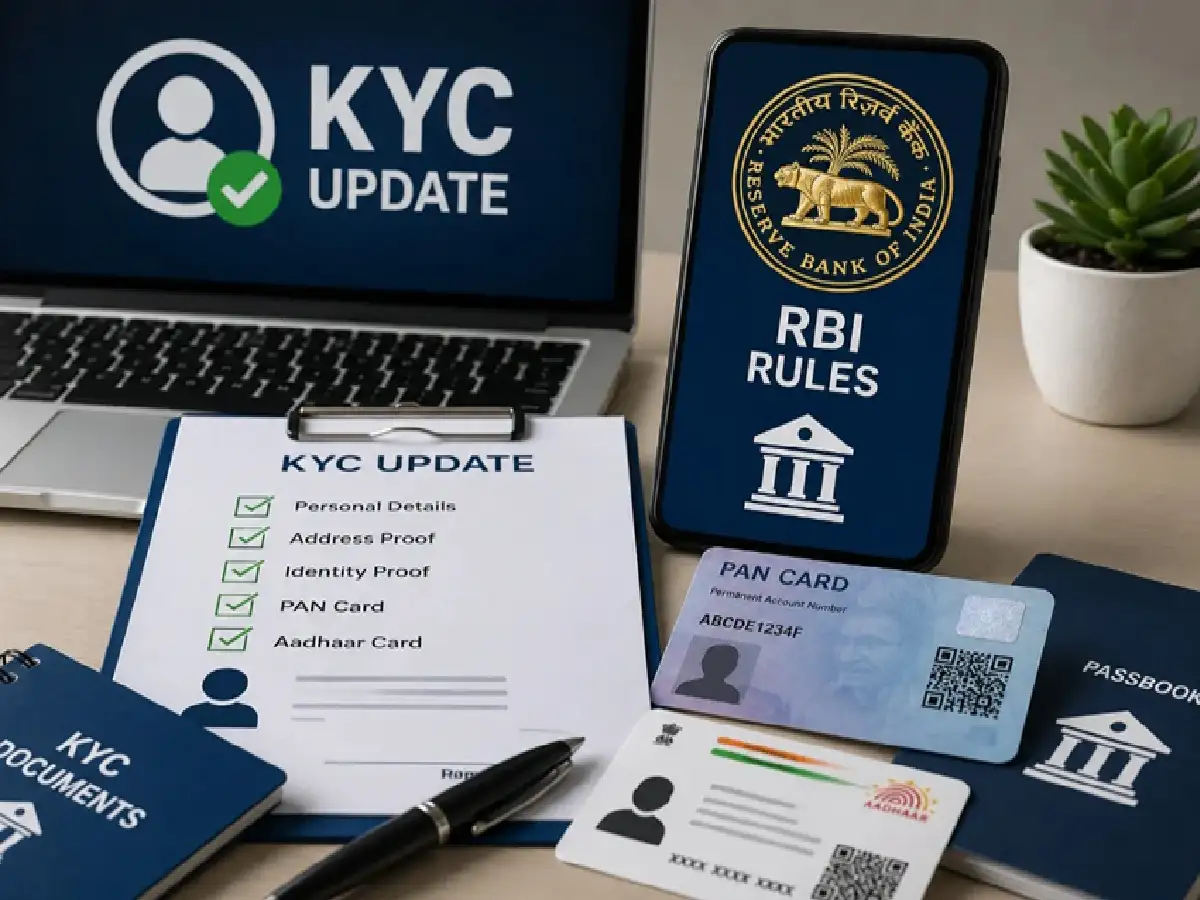
If you have a bank account, it's important to periodically update your KYC. Banks periodically send messages, emails, or notifications to their customers to update their KYC, but often customers ignore these and don't complete their KYC. Now, many people wonder whether a bank can freeze an account if its KYC isn't updated. What do RBI regulations say about this? Today, let's explore this in detail in this article.
What is KYC?
First, KYC is a process by which banks verify their customers' identity, address, business, and financial information. Its purpose is to ensure that banking services are not used for money laundering, terrorist financing, or other illegal activities.
RBI rules regarding KYC of bank accounts
According to RBI regulations, KYC is required when opening a bank account. Additionally, KYC is also required in certain other circumstances, such as:
When a new account is opened in the bank
When a person without an account makes a transaction of Rs 50,000 or more
During international money transfer
If the bank has any doubts about the customer's information
In case of certain financial transactions or credit card payments exceeding Rs 50,000
Can a bank account be frozen if KYC is not done?
According to RBI regulations, no bank can suddenly close or freeze an account without notice simply because it has not updated its KYC. However, if a customer fails to complete their KYC despite repeated notices from the bank, the bank can initiate the account closure process by providing proper notice under the Prevention of Money Laundering Rules, 2005.
If you've received a message or notice from your bank asking you to update your KYC, don't ignore it. Timely KYC updates ensure uninterrupted banking services and prevent account freezes.
PC: Navarashtra