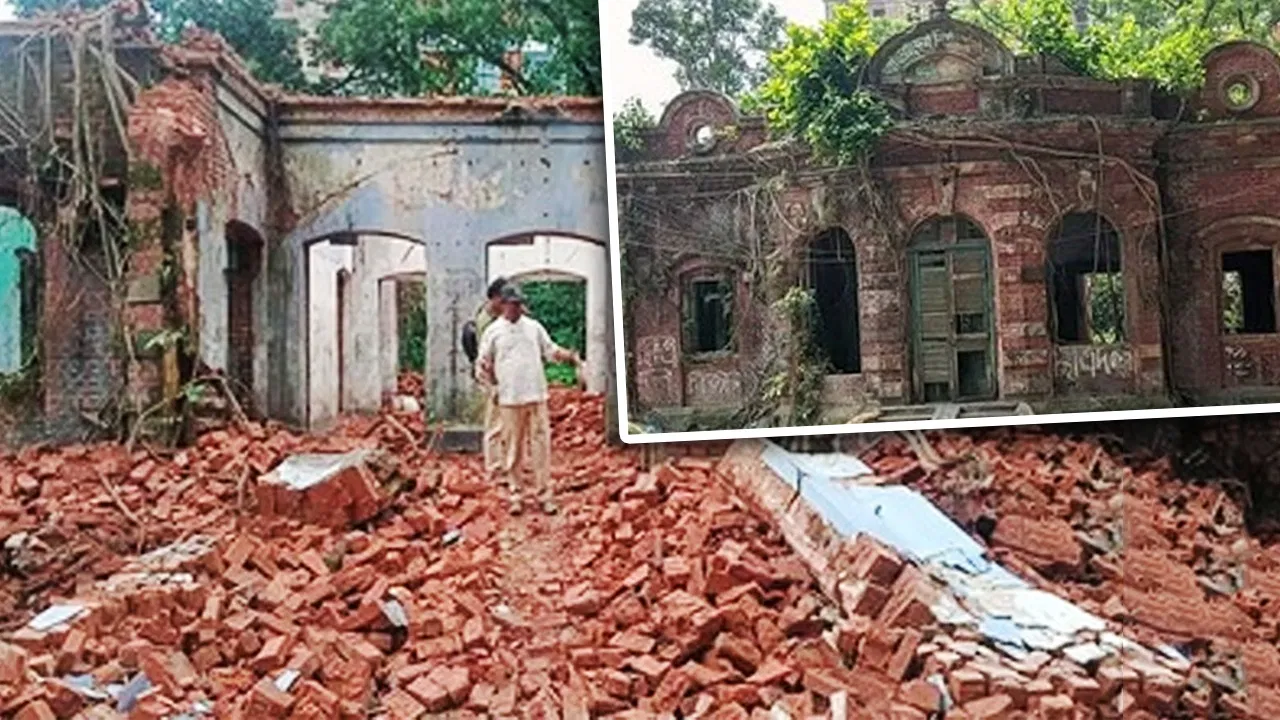
In a significant cultural loss, the ancestral home of legendary Indian filmmaker Satyajit Ray has been demolished in Mymensingh, Bangladesh, despite India's proposal to preserve and restore the historic building. This house once belonged to Ray’s grandfather, Upendrakishore Ray Chowdhury, a celebrated figure in Bengali literature and culture.
The building, which had also housed the Mymensingh Shishu Academy, was reportedly in a dilapidated condition. India had offered assistance to repair and reconstruct the structure due to its immense cultural and historical importance, but the building was still torn down. The Ministry of External Affairs of India expressed regret over the demolition, calling it a missed opportunity to preserve a heritage site tied to a globally revered artist.
Political Reactions in India
TMC leader Abhishek Banerjee expressed deep sorrow over the demolition. In a statement, he said,
“This 100-year-old property, once home to Upendrakishore Ray Chowdhury, was a historical and cultural landmark. Its demolition is not just a loss to architecture, but a blow to our heritage — an erasure of the Ray family’s enduring contribution to global art.”
He urged the Bangladesh government to reconsider such actions and called on the Indian government to engage in bilateral talks to safeguard the shared cultural legacy.
Meanwhile, BJP leader Amit Malviya also criticized the move, calling it,
“Another blow to Bengali heritage. The demolition of Ray’s ancestral house is not just the destruction of an old structure — it’s the erasure of history itself.”
Why the Building Was Demolished
According to Bangladeshi authorities, the demolition was part of a development plan. Officials stated that the site, which hadn’t been in use for nearly a decade due to the building’s deteriorated state, will now be used to construct a new semi-concrete structure for the children’s academy. Mohammad Mehedi Zaman, Dhaka’s child affairs officer, confirmed that the aim is to restart the academy’s activities in a safer and more modern facility.
Despite the explanation, the demolition has triggered widespread criticism from historians, cultural advocates, and the Indian public, who believe that the site could have been preserved as a cultural monument honoring Satyajit Ray’s legacy.
The debate now raises broader questions about cross-border efforts to preserve shared cultural heritage — and whether enough is being done to protect sites of artistic and historical significance in South Asia.