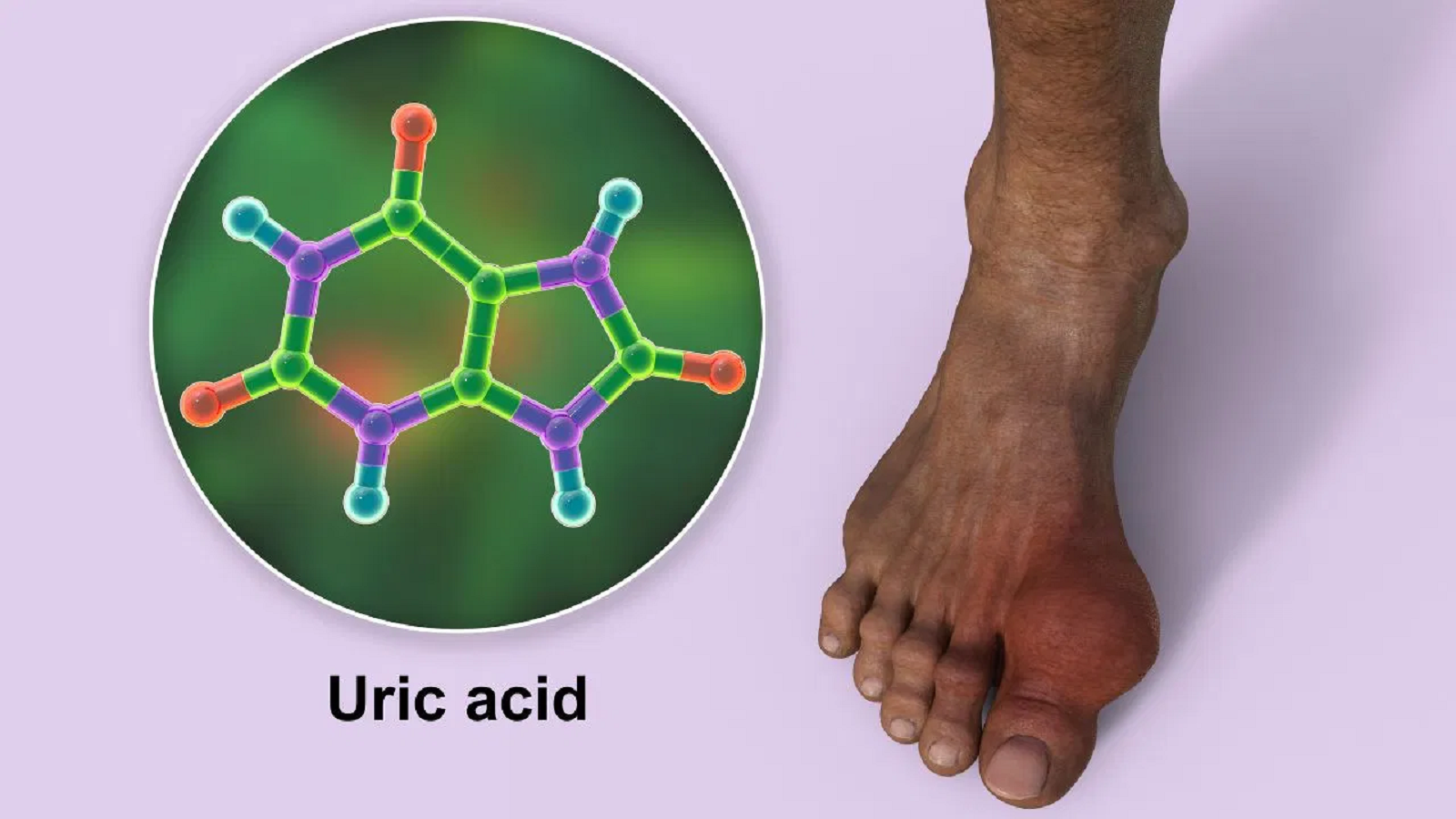
Uric acid is a natural chemical produced when the body breaks down purines—substances found in certain foods and drinks. Normally, it dissolves in the blood and is filtered out by the kidneys through urine. However, when the body produces too much uric acid or the kidneys fail to excrete it efficiently, its level increases, leading to several health issues.
A high-protein diet, alcohol consumption, obesity, poor lifestyle choices, and insufficient water intake are common causes of increased uric acid. Additionally, certain diseases and medications can also contribute to elevated levels. When uric acid levels rise, it can cause swelling and pain in the joints and muscles.
Common Health Problems Caused by High Uric Acid
One of the most common conditions linked to high uric acid is gout, characterized by sudden and severe pain, swelling, and redness in the joints—particularly the toes, knees, and ankles. High uric acid can also cause kidney stones, leading to pain, difficulty urinating, and even infections.
Prolonged elevation may increase the risk of heart disease, high blood pressure, and chronic kidney problems. In addition, it can trigger inflammation and oxidative stress, weakening bones and muscles over time. Ignoring early warning signs often allows the condition to worsen gradually.
Symptoms of Increased Uric Acid
According to Dr. Subhash Giri from RML Hospital, the early signs of elevated uric acid are often mild and mistaken for general fatigue or minor joint discomfort. Common symptoms include:
-
Sudden joint pain and swelling (especially in toes, knees, and ankles)
-
Redness and warmth around the joints
-
Stiffness and reduced mobility
-
Sharp pain that intensifies at night (in gout attacks)
-
Burning sensation during urination or frequent urination (if kidney stones form)
-
Fatigue, muscle weakness, and occasional fever
If these symptoms persist, consulting a doctor is crucial to prevent long-term complications.
How to Control Uric Acid Naturally
-
Limit high-protein and purine-rich foods such as red meat, organ meat, and seafood.
-
Drink plenty of water—at least 7 to 8 glasses daily—to flush out uric acid.
-
Avoid alcohol and sugary drinks, which can worsen the condition.
-
Exercise regularly or go for light walks to maintain a healthy weight.
-
Follow a balanced diet to prevent obesity and reduce uric acid buildup.
-
Take prescribed medicines or supplements under medical supervision.
-
Practice yoga or meditation to manage stress, which can indirectly affect metabolism.