SPORTS
Virender Sehwag Birthday Special: The Time He Deliberately Hit the Ball Out of the Ground to Save His Team
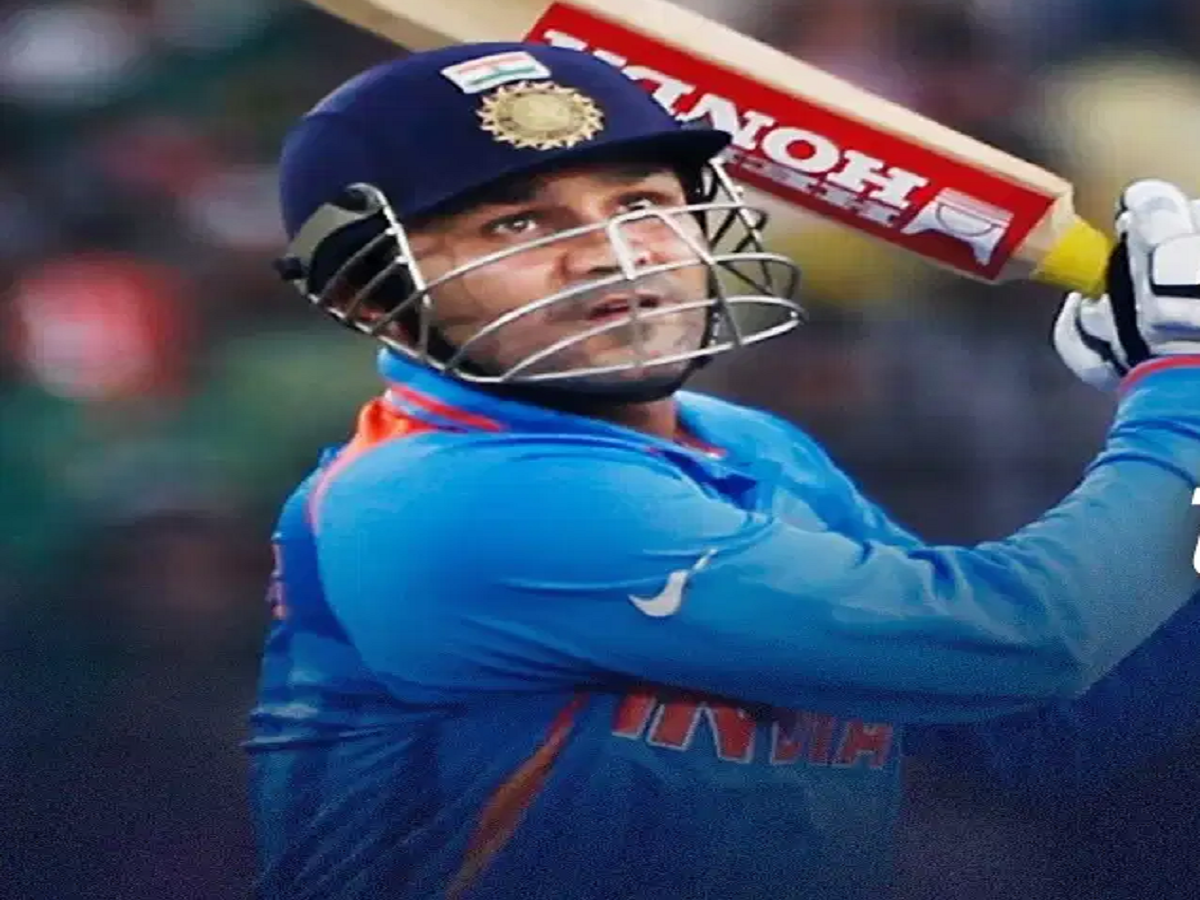
Virender Sehwag, famously known as the Nawab of Najafgarh and the Sultan of Multan, built his cricketing legacy through fearless batting, remarkable records and an ability to change a match within a few overs. One of India's most destructive opening batters, Sehwag entertained fans with an attacking style that often left bowlers searching for answers.
But beyond his spectacular centuries and record-breaking performances, Sehwag also became known for his cricketing intelligence. One unusual incident from his county cricket days in England reportedly demonstrated how he could think beyond simply defending or attacking a delivery.
The story was also mentioned by legendary Australian leg-spinner Shane Warne in his book. It revolves around an unusual decision: Sehwag deliberately sent the ball out of the ground to force the umpires to introduce a replacement.
Why Did Sehwag Hit the Ball Out of the Ground?
During his stint with Leicestershire in English county cricket, Sehwag reportedly faced Middlesex in a match in which Pakistan all-rounder Abdul Razzaq was bowling.
Razzaq was generating reverse swing with the old ball, making life difficult for the batters. Reverse swing can cause an older ball to move unpredictably in the air, making it particularly challenging for a batter to judge its direction and play confidently.
According to the account, Sehwag discussed an unusual plan with his batting partner, Jeremy Snape. He indicated that he would hit the ball out of the ground, forcing the umpires to replace it.
Sehwag subsequently played a shot that sent the ball out of the playing area. With the ball no longer available, the umpires had to arrange a replacement under the applicable playing conditions.
The new ball did not immediately produce the same reverse-swinging effect, giving the batters some relief. Sehwag reportedly remarked that they were now safe for about an hour.
Rather than trying to survive every difficult delivery, Sehwag had identified a way to change the conditions they were facing. The incident became a memorable example of his unconventional approach to cricket.
Shane Warne Was Impressed by Sehwag's Thinking
Shane Warne, one of cricket's greatest leg-spinners, reportedly recounted the incident in his book. The story stands out because it illustrates a side of Sehwag that was not always visible in his explosive batting performances.
Sehwag was widely recognised for his attacking instincts, but his game also involved reading situations and identifying opportunities that other players might overlook.
The incident is particularly memorable because it involved more than a powerful shot. The reported intention behind the stroke was to change the condition of the ball and make batting easier for his team.
It is worth remembering, however, that replacing a ball does not automatically eliminate reverse swing. The amount of movement depends on the condition of the replacement ball, its wear, the bowling conditions and the bowler's ability.
Virender Sehwag's Greatest Cricketing Records
Sehwag's career was filled with achievements that established him as one of India's most aggressive and productive batters.
1. India's highest individual Test score
Sehwag scored 319 against South Africa in Chennai in 2008. The innings remains one of the most memorable performances by an Indian batter in Test cricket.
2. Two Test triple centuries
He became the first Indian to score two triple centuries in Test cricket. His second triple hundred came against South Africa in 2008, while his first was a 309-run innings against Pakistan in Multan in 2004.
3. One of the fastest triple centuries in Test history
Sehwag reached his 300 against South Africa in 278 balls, producing one of the most remarkable displays of attacking Test batting.
4. An exceptional Test strike rate
Sehwag's willingness to attack bowlers made him unusual among top-order Test batters. He finished his Test career with a strike rate of approximately 82, reflecting his aggressive approach across long-format cricket.
5. A devastating ODI opener
Sehwag carried his attacking style into one-day internationals, regularly putting opposition teams under pressure during the opening overs. His quick scoring helped redefine expectations of how an opener could approach the format.
6. A major force in the IPL
Sehwag also made a significant impact in the Indian Premier League. His attacking batting for the Delhi franchise made him one of the competition's most entertaining players during its early years.
Why Sehwag Was Different From Other Batters
Sehwag's approach was built around a simple principle: put pressure on the bowler rather than allow the bowler to dictate the contest.
He attacked deliveries that other batters might defend, used his hand-eye coordination to find boundaries and could score quickly without appearing to make major adjustments to his natural style.
His fearless approach was particularly effective in Test cricket, where his scoring rate could change the momentum of a match. By putting runs on the board quickly, he often forced captains to alter their fields and reconsider their bowling plans.
Yet the county cricket anecdote highlights another aspect of his game. Sehwag was not simply an aggressive batter who relied on instinct; he could also recognise when a change in circumstances might benefit his team.
A Career Remembered for More Than Runs
Virender Sehwag's legacy rests on his extraordinary run-scoring, two Test triple centuries and a style that made him one of the most distinctive batters of his generation.
The reported incident involving Abdul Razzaq and the old ball adds another layer to that legacy. It captures the inventive thinking that can make cricket as much a contest of strategy as a contest of skill.
For fans celebrating Sehwag's birthday, the story serves as a reminder of why he remains so memorable: he could attack a bowler, break records and occasionally find an unexpected solution to a difficult situation—all while playing cricket in his own fearless way.