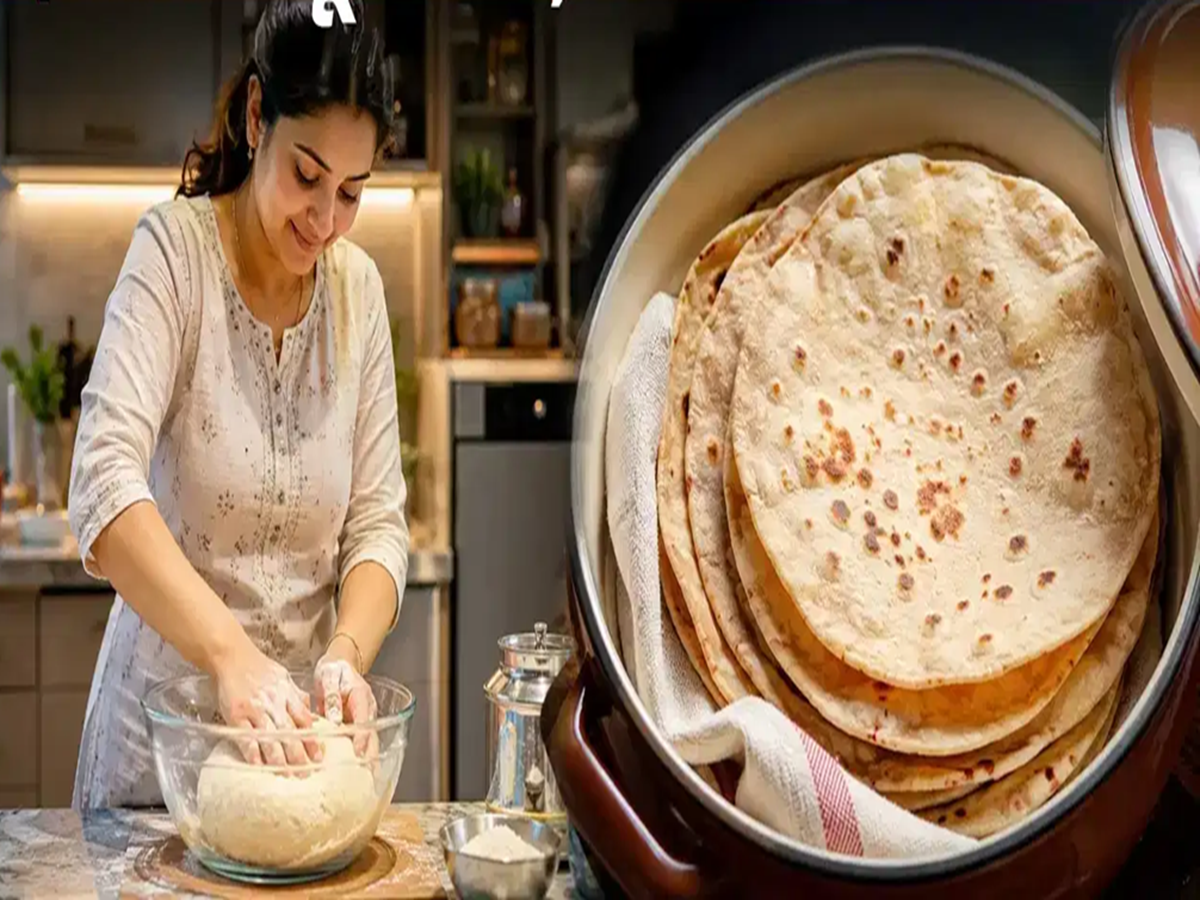
Soft, fluffy rotis can make any meal more enjoyable, but getting them just right isn't always easy. Many people find that their rotis turn dry or hard within minutes of cooking, even when using good-quality wheat flour. The secret often lies not in the flour itself but in how the dough is prepared.
A few simple changes while kneading the dough can help your rotis stay soft, pliable, and fresh for much longer. Here are some easy tips to improve your everyday rotis.
1. Add Water Gradually
Instead of pouring all the water into the flour at once, add it little by little while kneading. This allows the flour to absorb moisture evenly and helps create a smooth, well-balanced dough.
A properly hydrated dough is easier to roll and produces softer rotis.
2. Knead the Dough Thoroughly
Don't rush the kneading process. Spend about 8 to 10 minutes working the dough until it becomes smooth, soft, and slightly elastic.
Well-kneaded dough develops a better texture, which helps the rotis puff up nicely and remain soft after cooking.
3. Mix in a Little Oil or Ghee
Adding a teaspoon of oil or ghee while kneading can improve the texture of the dough. It helps retain moisture and prevents the rotis from drying out too quickly.
This simple step can also make the dough easier to handle while rolling.
4. Let the Dough Rest
After kneading, cover the dough with a plate, damp cloth, or lid and allow it to rest for about 20 to 30 minutes.
Resting gives the flour enough time to absorb the water completely, resulting in softer dough and easier rolling.
5. Aim for the Right Dough Consistency
The dough should be soft and pliable—not overly stiff and not sticky. If the dough feels too dry, the rotis may become hard. If it's too wet, rolling them out can become difficult.
Getting the consistency right is one of the most important steps in making soft rotis.
How to Keep Rotis Soft After Cooking
Even perfectly cooked rotis can become dry if they're not stored properly. To keep them soft:
-
Place freshly cooked rotis in a covered casserole or insulated container.
-
Wrap them in a clean cotton cloth before storing.
-
Brush a light layer of ghee if desired to help retain moisture.
-
Avoid leaving rotis uncovered, as exposure to air causes them to dry out quickly.
Proper storage helps preserve both texture and freshness.
Cook Rotis on Medium Heat
Cooking rotis over very high heat can make them dry and chewy. Medium heat allows them to cook evenly while staying soft inside.
Flip the roti at the right time and avoid overcooking, as prolonged cooking can remove too much moisture.
The Bottom Line
Making soft rotis isn't difficult—it simply requires attention to a few important steps. Adding water gradually, kneading the dough well, letting it rest, maintaining the right consistency, and storing the rotis properly can make a noticeable difference. With these simple techniques, you can enjoy soft, fresh rotis that stay delicious long after they're cooked.