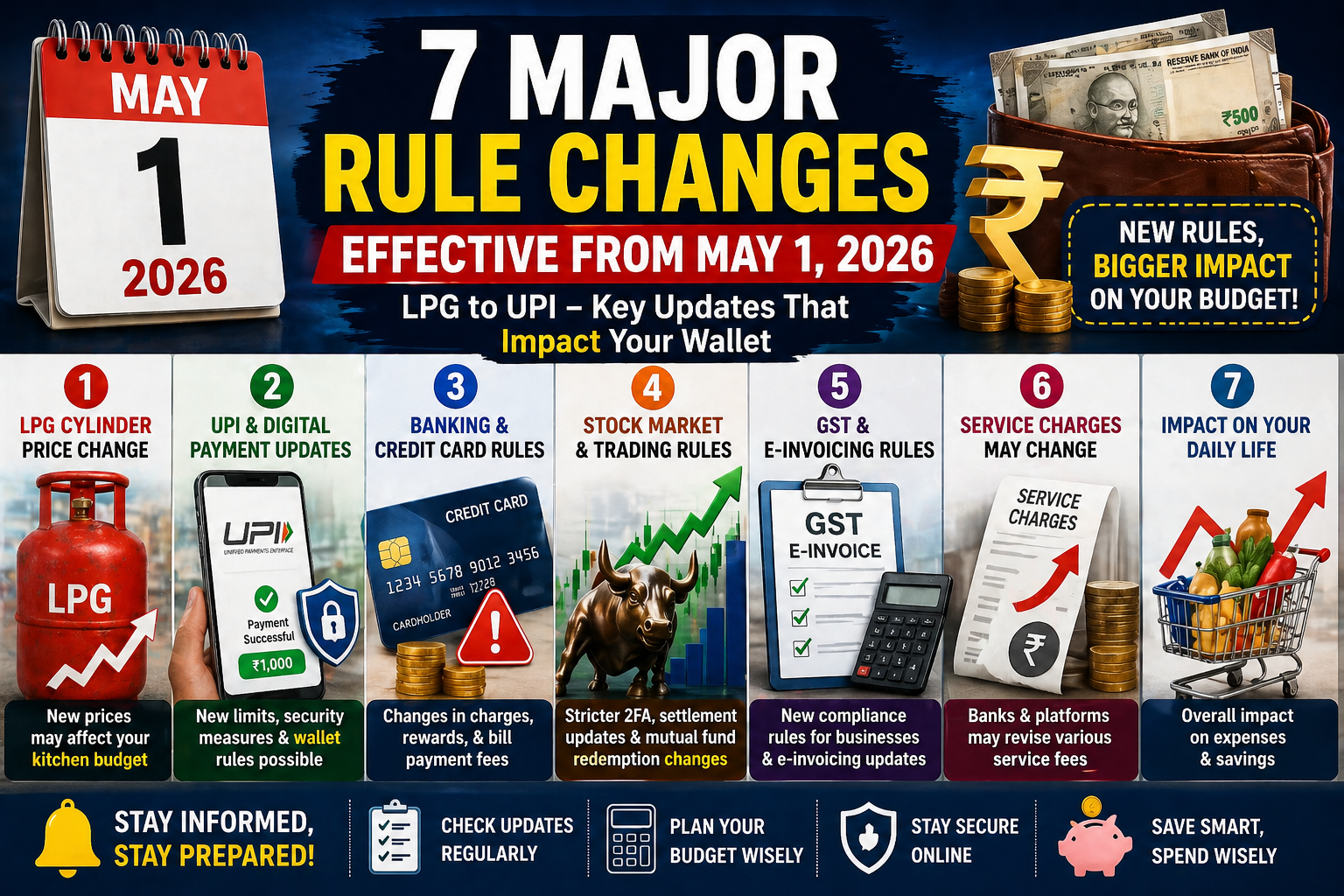
As May 1, 2026 begins, a fresh set of financial and regulatory changes is set to roll out across India. From LPG cylinder pricing to digital payments and banking services, these updates could directly impact your daily expenses and financial planning. While some changes aim to improve transparency and security, others may put additional pressure on household budgets.
Here’s a simplified breakdown of the key rule changes and what they mean for you.
LPG Prices Likely to Be Revised
Every month, oil companies review LPG cylinder prices based on global crude oil trends. Firms like Indian Oil Corporation and other OMCs are expected to announce new rates on May 1.
Given the volatility in international oil markets, both domestic and commercial LPG prices could change. Even a small increase can impact monthly kitchen expenses, especially for middle-income households.
UPI Transactions May See New Limits and Security Changes
India’s widely used digital payment system Unified Payments Interface may also undergo updates.
Possible changes include:
- Adjustments in transaction limits
- Modifications in wallet loading rules
- Stronger fraud prevention systems
Banks and fintech platforms may also revise certain digital transaction charges, making it important for users to stay alert.
Credit Card and Banking Charges to Be Updated
Several banks are likely to revise their service charges and credit card policies.
Changes may include:
- Updated reward point rules
- Additional fees on utility bill payments
- Revised service charges for certain transactions
If you frequently use credit cards for everyday payments, checking the new fee structure can help avoid unexpected costs.
Stock Market Rules Get Tighter
Investors will also see new compliance measures coming into effect under the supervision of the Securities and Exchange Board of India.
Key updates include:
- Enhanced two-factor authentication (2FA) for trading accounts
- Possible tweaks in settlement cycles
- Procedural changes in mutual fund redemptions
These measures are aimed at improving security and protecting investor interests.
GST and E-Invoicing Changes for Businesses
For businesses and MSMEs, new GST-related updates may come into force.
- Improved GST portal features
- Mandatory e-invoicing updates for certain categories
- Increased focus on digital compliance
These changes are expected to enhance transparency but may also influence product pricing over time.
Direct Impact on Your Monthly Budget
The combined effect of these changes could be felt across different areas:
- LPG price changes may increase household expenses
- Digital transaction updates may affect payment habits
- Banking and credit card charges could add to monthly costs
Being aware of these updates can help you adjust your spending and avoid unnecessary financial strain.
Plan Ahead to Stay Financially Safe
Experts suggest taking a proactive approach:
- Track LPG price updates regularly
- Review bank and credit card notifications
- Monitor UPI transaction rules
- Stay updated with investment-related changes
A little awareness can go a long way in protecting your finances.
Final Takeaway
The beginning of May brings not just a new month but also important financial changes that can affect your everyday life. Whether it’s your kitchen budget, online payments, or investments, staying informed is key.
Instead of reacting later, understanding these updates now can help you stay prepared and make smarter financial decisions.