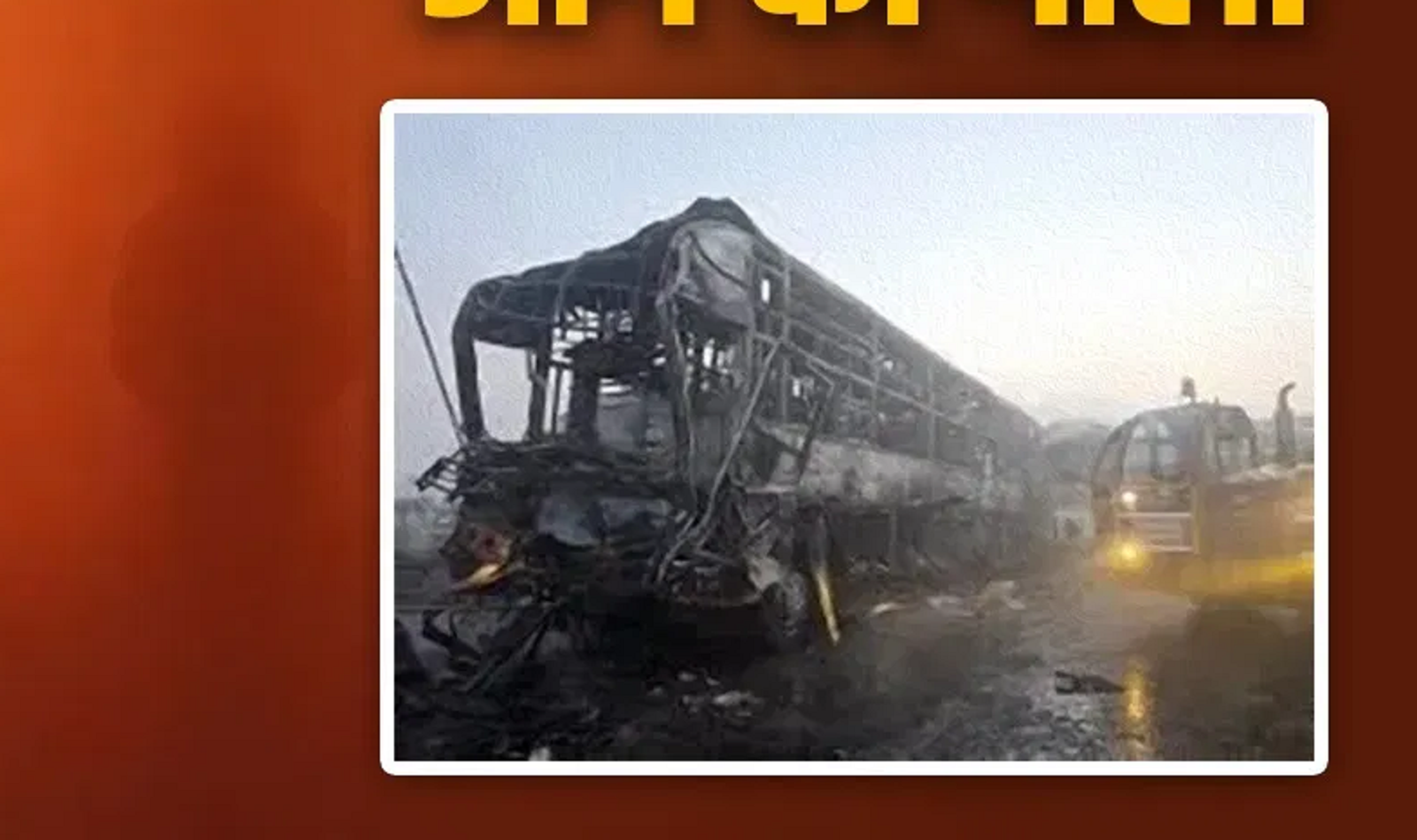
A tragic accident on the Delhi–Agra Expressway in Mathura once again exposed the deadly flaws in India’s passenger transport system. On Tuesday morning, dense fog led to a massive collision involving seven buses and three cars. One of the buses caught fire immediately after the impact, killing 13 passengers on the spot. While some people managed to save their lives by breaking windows or jumping out, many were trapped inside as flames spread rapidly.
Preliminary investigation suggests that overspeeding played a major role and that the fire erupted within seconds of the collision. The intensity of the blaze was so severe that several passengers did not get any chance to escape.
This incident is not an isolated case. Over the past 54 days, nearly 35 people across the country have lost their lives in bus fires following accidents. These recurring tragedies are no longer mere accidents—they are a serious warning about poor safety standards, weak monitoring, and systemic negligence. Despite repeated incidents, accountability remains missing. Every time, there is temporary outrage, an inquiry is announced, and soon the issue fades away without real reform.
Why do bus doors jam during fires?
A common and deadly pattern seen in almost every major bus fire is that the main gate gets jammed or locked as soon as flames break out. Once this happens, the bus effectively turns into a sealed gas chamber. Thick smoke fills the cabin within seconds, making it impossible to breathe.
Experts point to poor-quality interiors, tangled electrical wiring, and non-standard construction as the root causes. During a fire, the electrical system often collapses, causing automatic or power-assisted doors to stop functioning, trapping passengers inside.
Bus interiors themselves fuel the fire
Most buses use highly flammable materials for interiors. Seats and ceilings are often made of foam and rexine, which catch fire extremely fast. Electrical wiring runs through these materials, increasing the risk of short circuits. Even a minor spark can engulf the entire bus in flames within moments.
More seats, narrower aisles, higher risk
To maximize profits, many private buses install extra seats, drastically narrowing the aisle space. During an emergency, this leads to panic and chaos, making evacuation nearly impossible. As passengers struggle to move, doors may lock due to electrical failure, sealing their fate.
Fire department officials warn that a bus fire can spiral out of control in less than 30 seconds. Within five minutes, temperatures rise so high that almost everything inside the bus ignites at once. Clothes can melt and stick to the skin, leaving victims helpless.
When a bus becomes a gas chamber
In a bus fire, temperatures can cross 100 degrees Celsius within seconds. At head and eye level, it can reach up to 600 degrees Celsius. Toxic gases quickly fill the cabin, burning the lungs from inside. If exits are blocked, the bus becomes a deadly gas chamber, where survival becomes nearly impossible.