INTERNATIONAL
80 Drone Attacks in 36 Hours: Pakistan Admits India Struck Noor Khan Airbase During Operation Sindoor
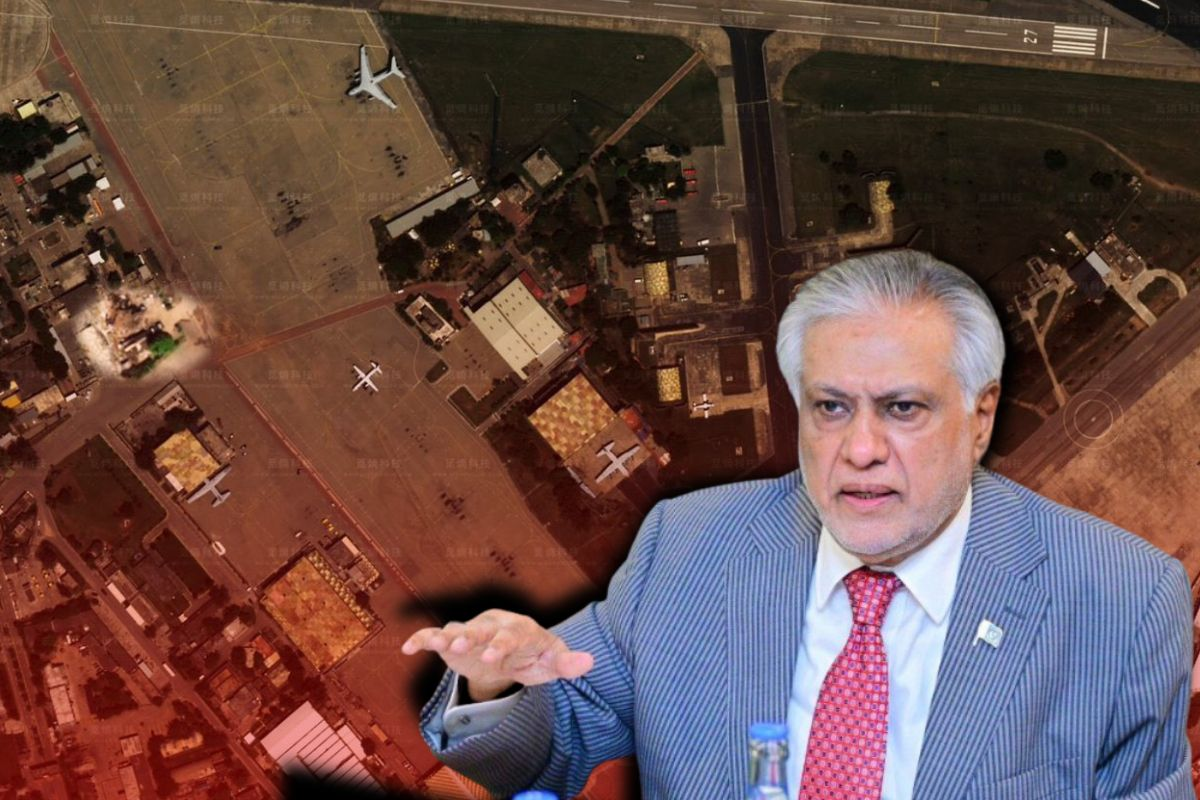
A major revelation has emerged regarding the four-day military confrontation between India and Pakistan in May 2025. Nearly eight months after the standoff, Pakistan has publicly acknowledged for the first time that the Indian Air Force targeted the Noor Khan Airbase during ‘Operation Sindoor’. The admission was made by Pakistan’s Deputy Prime Minister and Foreign Minister Ishaq Dar, marking a significant shift from Islamabad’s earlier stance.
Claim of 80 Drone Attacks Within 36 Hours
According to Ishaq Dar, India launched around 80 drones within a span of 36 hours during the escalation. He claimed that Pakistan’s air defense systems shot down 79 of these drones, following which India carried out a direct strike on the Noor Khan Airbase on the morning of May 10. Dar described the airbase strike as a “strategic mistake” by India and said Pakistan responded militarily after that incident.
India has not officially confirmed these claims, and Pakistan has not presented independent evidence to substantiate several of its assertions.
Operation Sindoor After the Pahalgam Attack
Dar also confirmed that India initiated Operation Sindoor on May 7, 2025, in response to the terror attack in Pahalgam, Jammu and Kashmir, which claimed the lives of 26 civilians. India had blamed terror infrastructure operating from Pakistan and Pakistan-occupied Kashmir (PoK) for the attack.
Following India’s cross-border strikes on alleged terror facilities, tensions rapidly escalated, resulting in intense military exchanges between the two nuclear-armed neighbors over four days.
Role of the US and Saudi Arabia in Ceasefire
The Pakistani foreign minister stated that Pakistan did not formally seek mediation from India, but international diplomatic efforts played a role in defusing the situation. He claimed that US Secretary of State Marco Rubio and Saudi Foreign Minister Prince Faisal bin Farhan independently reached out to help de-escalate the conflict.
Dar said he received a call from the US Secretary of State at around 8:17 AM on May 10, conveying that India was ready for a ceasefire and seeking Pakistan’s consent. He added that Pakistan had no desire for war. Shortly afterward, the Saudi foreign minister also contacted him to seek permission to speak with Indian officials, following which the ceasefire agreement was finalized.
Disputed Claims on Aerial Combat
Reiterating Pakistan’s earlier position, Dar claimed that seven Indian fighter jets were shot down during the aerial engagements on May 7. However, he did not provide any verifiable proof to support this claim. India has consistently rejected such assertions in the past.
Defense analysts believe these statements may be aimed at reinforcing Pakistan’s narrative amid internal and international scrutiny.
Kashmir Issue Raised Again
In his concluding remarks, Ishaq Dar repeated Pakistan’s long-standing position that lasting peace in South Asia is not possible without resolving the Jammu and Kashmir dispute. He described the issue as central to stability and long-term peace between India and Pakistan.
Why This Admission Matters
Experts say Pakistan’s public acknowledgment of an Indian strike on the Noor Khan Airbase is a significant development. It suggests that the May 2025 conflict was more intense than previously acknowledged and highlights the growing role of drone warfare and precision strikes in regional military strategies.
Overall, this disclosure offers fresh insight into the scale of the confrontation and underscores how fragile peace remains in South Asia, with future stability depending heavily on diplomatic engagement and crisis management mechanisms.