ENTERTAINMENT
Blockbuster Film Trivia: This 65-Year-Old Classic’s Song Was Rewritten 105 Times, and Its Set Was Inspired by a Pakistani Palace
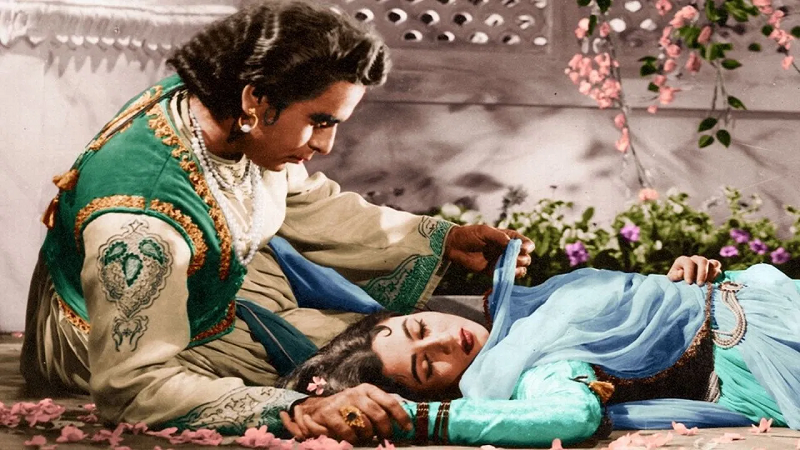
Stories from classic Hindi cinema are fascinating, but the tales behind their making are even more extraordinary. When old Bollywood blockbusters are discussed, one name that always stands out is Mughal-e-Azam. Released in 1960, the film may be 65 years old today, but its grandeur, music, and legendary scenes continue to captivate audiences.
Among its many highlights, the songs of Mughal-e-Azam remain timeless. One song in particular—Jab Pyar Kiya To Darna Kya—is remembered not just for its melody, but also for the astonishing effort and scale involved in its creation.
A song that took years to perfect
While songs today are often shot and completed quickly, filmmaking in that era was a test of patience and perfection. Director K. Asif was known for his uncompromising vision. Reports suggest that the lyrics of “Jab Pyar Kiya To Darna Kya” were rewritten 105 times before Asif finally approved the version that made it to the screen.
The song reportedly took nearly two years to complete and cost around ₹1 crore, an enormous amount at the time. For a single song to command such resources was unheard of, making it one of the most expensive song sequences of its era.
Why the song was recorded in a bathroom
The effort didn’t stop at visuals. Legendary singer Lata Mangeshkar lent her voice to the song, but in a rather unusual way. Music director Naushad asked her to sing the song in a bathroom to achieve the desired echo and resonance. Surprisingly, this technique worked perfectly, and the song went on to become one of the most iconic melodies in Indian cinema.
A set inspired by Lahore’s Sheesh Mahal
Another lesser-known fact is the breathtaking set on which the song was filmed. The sequence was shot at Mohan Studios, where an elaborate replica of the Sheesh Mahal was constructed. This mirrored palace, originally part of the Lahore Fort in present-day Pakistan, inspired the dazzling visual aesthetic of the song.
Building this set alone reportedly took two years, reflecting the scale and ambition behind the film’s production.
A timeless cinematic achievement
Mughal-e-Azam featured a legendary cast including Prithviraj Kapoor, Dilip Kumar, Madhubala, and Ajit. Released originally in black and white, the film went on to become a massive box-office blockbuster and a benchmark for cinematic excellence.