NATIONAL
China Deploys HQ-16 Missiles Near Pangong Lake: Satellite Images Reveal Strategic Military Buildup
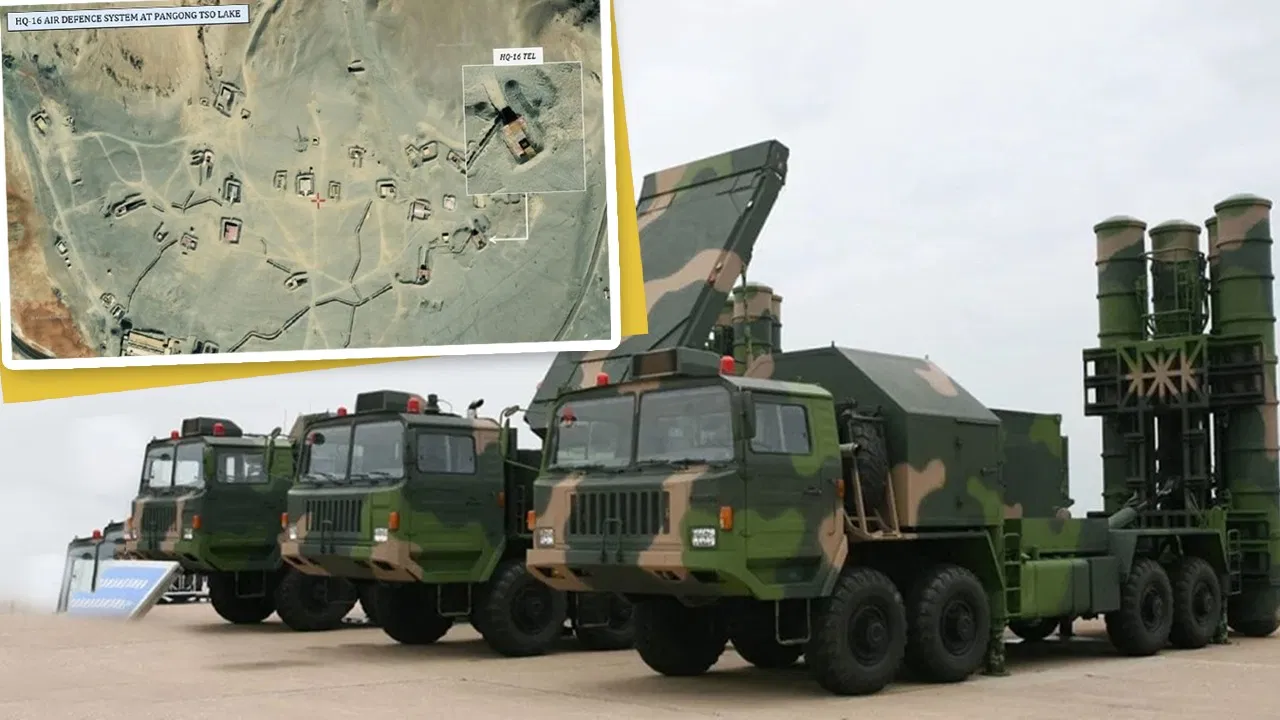
China appears to be stepping up its military preparedness near the Line of Actual Control (LAC), with satellite images now confirming the deployment of HQ-16 surface-to-air missile systems near Pangong Lake in eastern Ladakh. This development is being closely monitored by Indian security agencies, as it could alter the strategic air defense equation in the region.
What the Satellite Images Reveal
Recent high-resolution satellite imagery shows:
-
Deployment of HQ-16 missile systems near the disputed Pangong Lake region.
-
Transporter Erector Launcher (TEL) vehicles, which carry and launch missiles, clearly visible in the area.
-
A full air defense setup, indicating China’s intent to maintain a permanent or semi-permanent military presence close to the India-China border.
What is the HQ-16 System?
The HQ-16 is a medium-range air defense missile system, co-developed with Russian technology (based on the BUK series). It is designed to:
-
Engage aerial threats such as fighter aircraft, helicopters, drones, cruise missiles, and some precision-guided munitions.
-
Strike targets up to 40 to 70 kilometers away, depending on the variant.
-
Operate from mobile launchers with four missiles per unit, allowing rapid movement and redeployment.
-
Use 3D tracking radar and ECCM capabilities to resist enemy jamming and respond to air threats quickly.
Why This Matters to India
-
Strategic pressure: Placing air defense systems in this region increases China’s ability to control the airspace over contested zones, complicating Indian air operations.
-
Post-Galwan message: After the 2020 Galwan Valley clashes, this move could be part of a larger military posture shift by China to assert dominance and deter Indian movements.
-
Tactical threat: HQ-16 systems enhance China’s area denial capability, reducing India's flexibility in any future standoff or escalation.
India’s Response
-
Indian defense officials are said to be closely monitoring this buildup using their own surveillance systems.
-
The Indian Air Force maintains forward deployments in Ladakh and has enhanced air patrols in the region.
-
Diplomatic and military talks between the two nations continue, but this deployment could signal China’s reluctance to de-escalate on the LAC.