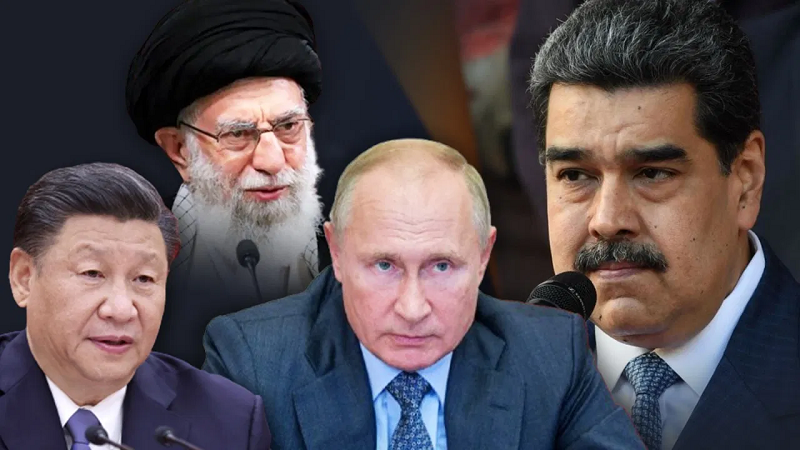
Following reports of explosions in the Venezuelan capital and a subsequent state of emergency, international attention has turned to the geopolitical chessboard. With the United States bolstering its military presence in the Caribbean, the Maduro administration faces a critical question: which global powers will move beyond rhetoric to offer tangible support?
The Catalyst for Conflict
The current friction stems from a rapid breakdown in diplomacy. Following Venezuela’s arrest of five U.S. citizens, Washington intensified its regional presence, deploying reconnaissance aircraft and approximately 15,000 troops. Recent maritime skirmishes and the seizure of an oil tanker have pushed the two nations toward what many fear is an open confrontation.
Russia: A Distracted Ally
While Moscow has historically been Venezuela's most reliable military and economic partner, the "special relationship" is currently under strain.
-
The Constraint: Russia remains deeply committed to its own front lines in Ukraine.
-
The Reality: Despite long-standing ties, experts suggest Moscow is unlikely to commit significant military assets to the Western Hemisphere while facing heavy Western sanctions and domestic military demands. Support for Maduro may remain limited to diplomatic backing and phone consultations.
China: The Economic Stakeholder
Beijing’s interest in Venezuela is primarily rooted in energy security and long-term debt recovery.
-
The Strategy: China has voiced formal protests against U.S. intervention but maintains a policy of "non-interference."
-
The Outlook: While China will likely champion Venezuela’s cause at the UN Security Council, analysts expect Beijing to avoid any direct military engagement that would jeopardize its complex trade relationship with the United States.
Regional and Ideological Support: Colombia, Iran, and Cuba
-
Colombia: Emerging as a vocal defender, the Colombian government has decried U.S. maneuvers as missile-led aggression. Utilizing its current seat on the UN Security Council, Bogota is pushing for an emergency international summit to de-escalate the crisis.
-
Iran: Though a staunch ideological ally, Tehran is currently preoccupied with its own domestic unrest and economic volatility. Its support is expected to be more symbolic than material.
-
Cuba: Havana remains Maduro’s closest ideological confidant, with deep ties to Venezuela's intelligence services. However, Cuba's own economic fragility limits its ability to provide any large-scale military or financial relief.
Conclusion
As Caracas enters a state of emergency, the Maduro government finds itself in a precarious position. While it maintains a network of allies, the domestic and international burdens facing Russia, Iran, and China suggest that if a full-scale conflict erupts, Venezuela may have to rely more on diplomatic maneuvering than foreign military intervention.