INTERNATIONAL
Even the contraceptive coil could not stop the birth; the baby was seen holding the contraceptive coil in his hand as soon as he was born
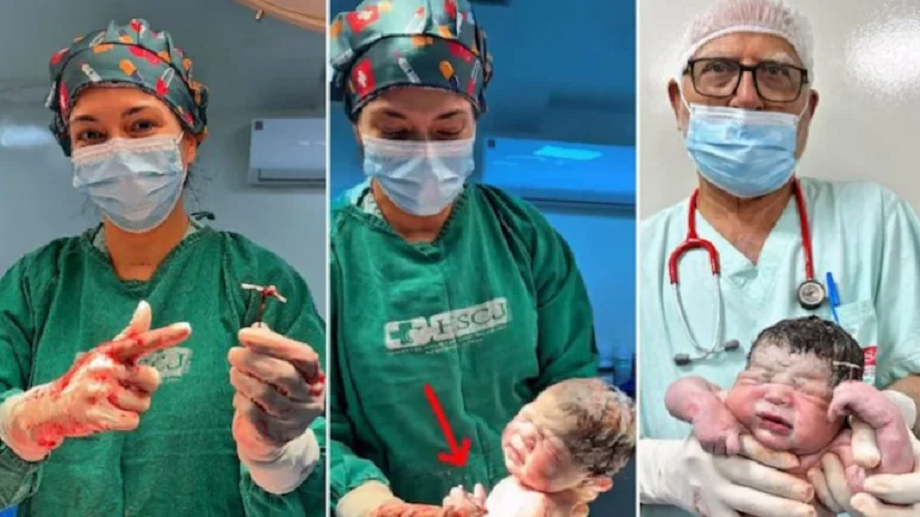
A strange case in Brazil has shocked everyone. A newborn baby was found clutching a contraceptive coil immediately after birth. This was the very device that was supposed to prevent his mother from becoming pregnant.
A baby boy born in Brazil has garnered attention online after a photo of him holding a contraceptive coil went viral. The baby, named Matheus Gabriel, was born at the Hospital Sagrado Coraxo de Jesus in Nerópolis, Goiás, reports the Mirror.
More than 99 percent effective in preventing pregnancy
According to the report, her mother, Quedy Araújo de Oliveira, had been using an intrauterine device (IUD), also known as a copper coil, for about two years. This device is considered more than 99 percent effective in preventing pregnancy.
An IUD is a small, T-shaped device that is placed inside the uterus to prevent conception. It releases copper into the uterus, creating an unfavorable environment for sperm. Depending on the type, it can remain effective for 5 to 10 years.
During the examination, it was found that she was pregnant.
Kwedi discovered she was pregnant during a routine checkup. Since the coil was still in place, doctors explained that removing it could endanger the pregnancy, so it remained in her womb for the rest of her life. Her pregnancy was fraught with challenges, as she experienced bleeding and partial detachment. Despite these difficulties, her baby was born safely.
Both mother and child are healthy and safe
Immediately after birth, the attending physician, Natalia Rodrigues, saw the IUD and placed it in the newborn's hand. A photo taken in the delivery room shows Mathias holding the device as if it were a small trophy. Rodrigues shared photos of Mathias on Instagram. The caption accompanying the photo read: "Holding my trophy of victory: the IUD that couldn't hold me!" According to reports, both mother and baby are healthy and safe.
PC:NDTVINDIA