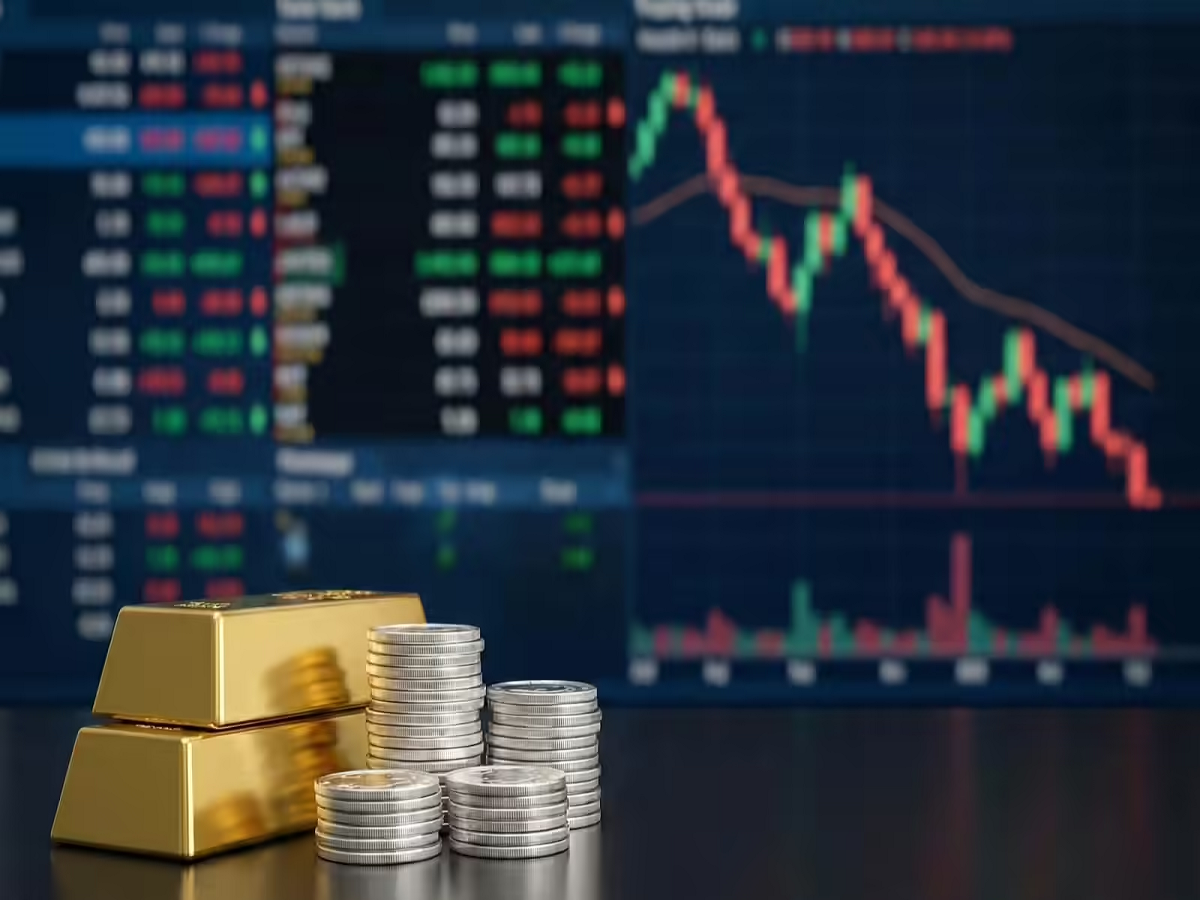
Gold and silver prices witnessed a noticeable dip on Tuesday, bringing relief to buyers who have been waiting for a price correction. Both precious metals traded lower in domestic as well as international markets, reflecting weak sentiment and cautious investor positioning. Market data indicates that sluggish global cues and shifting interest rate expectations are weighing heavily on bullion prices.
Latest Gold and Silver Rates in India
According to the latest figures from the domestic bullion market, gold prices dropped sharply, falling by around ₹1,230 per 10 grams. After this decline, gold is now trading close to ₹1.54 lakh per 10 grams, a level that has caught the attention of both jewellers and retail buyers.
Silver saw an even steeper fall. The price of silver declined by nearly ₹4,830 per kilogram, bringing the rate down to approximately ₹2.36 lakh per kg. This sharp correction suggests reduced demand and profit booking at higher levels.
The weakness was also visible on the Multi Commodity Exchange (MCX) during early trade. On the exchange:
-
Silver futures slipped by ₹4,131 to trade around ₹2.40 lakh per kg
-
Gold futures fell by ₹1,145, hovering near ₹1.54 lakh per 10 grams
The muted opening clearly reflected a cautious market mood.
Weakness in International Markets Adds Pressure
The decline in domestic prices closely mirrors trends in the global bullion market. For the second consecutive session, gold and silver lost ground overseas.
During Asian trading hours:
-
Spot gold fell by 0.43%, slipping below $4,992 per ounce
-
Silver dropped nearly 3%, sliding to around $74.24 per ounce
This sharp fall in silver prices overseas intensified selling pressure in the Indian market as well. Global investors appear hesitant, with risk sentiment swinging frequently amid mixed economic signals.
Why Are Gold and Silver Prices Falling?
One of the biggest reasons behind the current decline is recent economic data from the United States. Inflation numbers released for January came in lower than market expectations, while employment data remained strong. This combination has created uncertainty among investors regarding the future course of monetary policy.
Lower inflation generally supports gold prices, but strong job data suggests that interest rates may remain elevated for longer. This tug-of-war between indicators has confused the market and triggered selling pressure in bullion.
Another key factor is the evolving outlook on interest rates set by the Federal Reserve. Interest rate expectations play a crucial role in gold and silver pricing, as higher rates reduce the appeal of non-yielding assets like precious metals.
What Are Market Experts Saying?
Market analysts believe the Federal Reserve is likely to keep interest rates unchanged at its upcoming policy meeting scheduled for March 18. However, traders are increasingly betting on a rate cut by July, with some even factoring in the possibility of a June cut.
Typically, gold performs well when interest rates are expected to fall. But the lack of clarity around the timing and scale of rate cuts is currently pressuring prices. Until there is stronger confirmation from economic data, bullion markets may remain volatile.
Key Data Investors Are Watching Closely
Investors are now closely tracking several important economic indicators that could influence the next move in gold and silver prices:
-
Minutes of the Federal Reserve’s policy meeting
-
Fourth-quarter GDP growth data from the US
-
The core PCE price index, which is the Fed’s preferred inflation gauge
Any surprise in these figures could lead to sharp movements in precious metal prices in the coming sessions.
Global Events and Low Trading Volumes Add to Volatility
Global developments are also playing a role in shaping bullion prices. Recently, an Iranian diplomat indicated interest in reaching a nuclear agreement with the United States that could bring economic relief. Such geopolitical signals often reduce safe-haven demand for gold.
Additionally, market activity remained subdued due to holidays. The US observed Presidents’ Day, while several Asian markets, including China, were closed for the Lunar New Year. Lower trading volumes during holidays tend to exaggerate price movements, contributing to sharp fluctuations.
What This Means for Buyers and Investors
For buyers, the current dip presents a potential opportunity to accumulate gold and silver at relatively lower levels. However, experts advise caution, as prices may continue to fluctuate in the short term due to global uncertainty.
For investors, staying alert to economic data and central bank signals remains crucial, as bullion markets are highly sensitive to policy expectations.