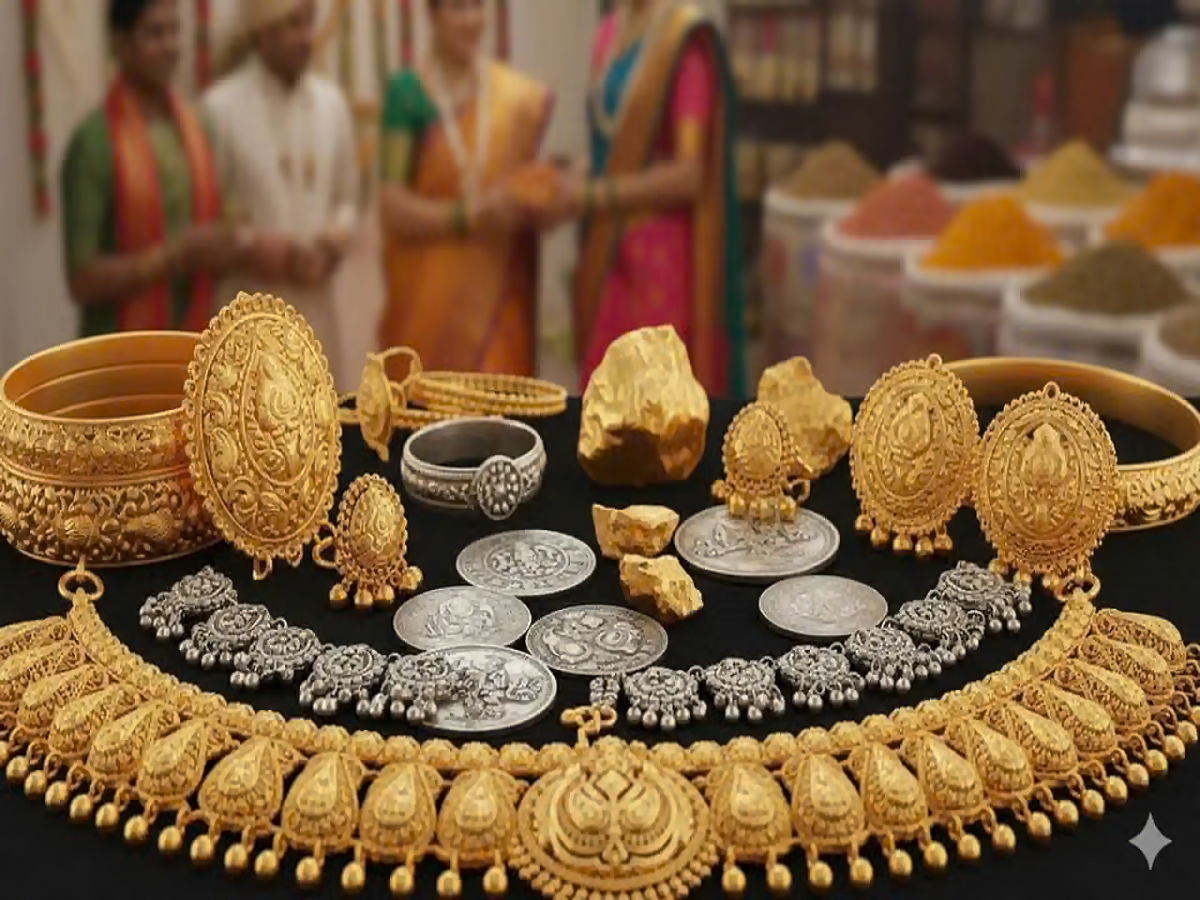
Gold has long been an important part of India's festive traditions, with families purchasing jewellery, coins and bars during Dussehra, Diwali and the wedding season. But elevated prices are changing how consumers approach these purchases. While some buyers are choosing lightweight jewellery, others are exploring gold coins, bars and gold exchange-traded funds (ETFs).
With international gold prices reportedly falling sharply from their record highs, an important question has emerged: is this a buying opportunity, or could prices decline further?
The answer depends on several factors, including interest rates, the US dollar, global economic uncertainty and domestic demand. For Indian buyers, currency movements, import costs, taxes and local jewellery premiums also influence the final price.
Gold Prices Recover Slightly as Investors Watch the US Federal Reserve
Gold prices reportedly edged higher on Tuesday as the US dollar weakened. Investors were also watching the US Federal Reserve's October 27–28 policy meeting for clues about the future direction of interest rates.
According to the supplied market report, spot gold rose 0.1% to $4,145.22 per ounce, while US gold futures for December delivery gained 0.1% to $4,164.70.
The modest recovery followed a reported decline of more than 26% from the record high reached in January 2026. Such a correction can attract buyers who previously found gold too expensive, although a fall in prices does not necessarily mean that the market has reached its bottom.
These figures relate to the international market and should not be confused with the retail price of gold in India. Domestic prices also depend on the rupee-dollar exchange rate, import duties, applicable taxes and local market conditions.
Why Do Interest Rates Matter for Gold Prices?
Interest rates are among the key factors influencing gold's performance.
Unlike bank deposits and bonds, gold does not generate regular interest income. When interest rates rise, investors may find interest-bearing assets more attractive, increasing the opportunity cost of holding gold.
When markets anticipate lower interest rates, gold can become more appealing, particularly if investors are also concerned about inflation or economic uncertainty.
The supplied report cites expectations surrounding the Federal Reserve's October meeting and possible policy changes in December. However, market expectations can shift quickly as new economic data and central-bank statements emerge.
For gold buyers, the important point is that interest-rate decisions can influence prices, but their impact depends on what investors have already anticipated. A rate cut, for example, does not automatically guarantee that gold prices will rise.
How Does a Weaker US Dollar Affect Gold?
Gold is traded internationally in US dollars. When the dollar weakens, gold can become less expensive for buyers using other currencies, potentially supporting demand.
A stronger dollar can have the opposite effect by making dollar-denominated gold more expensive for overseas buyers.
However, Indian consumers should remember that international prices are only one part of the calculation. If the rupee weakens against the dollar, the domestic price of gold may remain elevated even when international prices decline.
This is why Indian gold buyers should follow both global market movements and domestic retail rates before making a purchase.
Will Indians Buy Less Gold This Festive Season?
High gold prices can influence purchasing decisions without eliminating festive demand.
Some families may reduce the weight of jewellery they purchase, choose simpler designs or postpone non-essential purchases. Others may prefer coins and bars, while investors seeking exposure to gold without storing physical metal may consider gold ETFs.
Jewellery purchases also involve making charges, which can vary significantly between jewellers and designs. Buyers should therefore compare the total bill rather than focusing only on the quoted gold rate.
Gold ETFs offer a different approach for eligible investors who want to track gold prices without purchasing physical jewellery. However, they carry market-related risks and may involve fund expenses and brokerage costs.
Each option serves a different purpose: jewellery combines personal use with a gold purchase, coins and bars provide physical ownership, and ETFs offer investment exposure through financial markets.
Is the Current Price Correction a Buying Opportunity?
A substantial price decline may make gold more attractive to people who were waiting for lower rates. But attempting to identify the exact bottom of the market is difficult, even for experienced investors.
Before purchasing, buyers should consider three factors:
1. Your purpose for buying
If you need jewellery for an upcoming wedding or festival, the decision may depend more on your timing and budget than on predicting short-term market movements. If you are investing, your time horizon and overall financial plan matter more.
2. Your ability to handle further declines
Gold prices can remain volatile. Buyers should avoid investing money they may need urgently and should not assume that a recent correction guarantees an immediate recovery.
3. The total cost of ownership
For physical gold, check purity, hallmarking, making charges, applicable taxes and the jeweller's buyback policy. For investment products, compare costs, liquidity and the risks involved.
Investors who are uncertain about short-term price movements may consider spreading purchases over time rather than committing their entire intended amount at once. This approach can reduce the risk of buying everything at an unfavourable price, although it does not guarantee better returns.
Gold Buying Tips for Dussehra and Diwali
If you are planning a festive gold purchase, a few simple precautions can help you make a more informed decision.
-
Compare rates from multiple established jewellers.
-
Check the purity and hallmark details before buying jewellery.
-
Ask for an itemised bill showing gold weight, making charges and applicable taxes.
-
Compare the final price of different designs, not just their making-charge percentages.
-
If buying for investment, understand the difference between physical gold, ETFs and other gold-linked products.
-
Avoid borrowing heavily or investing emergency savings based on expectations of a price rebound.
Final Verdict: Buy Now or Wait?
Gold's recent price correction may offer some relief to buyers, but it is not a guarantee that prices will rise from here. Interest-rate expectations, movements in the US dollar, global uncertainty and the rupee's performance could all influence the market in the coming weeks.
For families purchasing jewellery for Dussehra, Diwali or a wedding, buying according to a clear budget and comparing the final retail price may be more practical than trying to predict every market movement.
For investors, gold should be considered in the context of their broader financial goals, risk tolerance and investment horizon.
The key takeaway is simple: a lower price can create an opportunity, but a sensible purchase depends on affordability, purpose and risk management—not just the hope that gold will become more expensive again.