BUSINESS
Kim Jong Un Death Rumours: North Korea Releases Photos of Leader Amid Brain Haemorrhage Claims
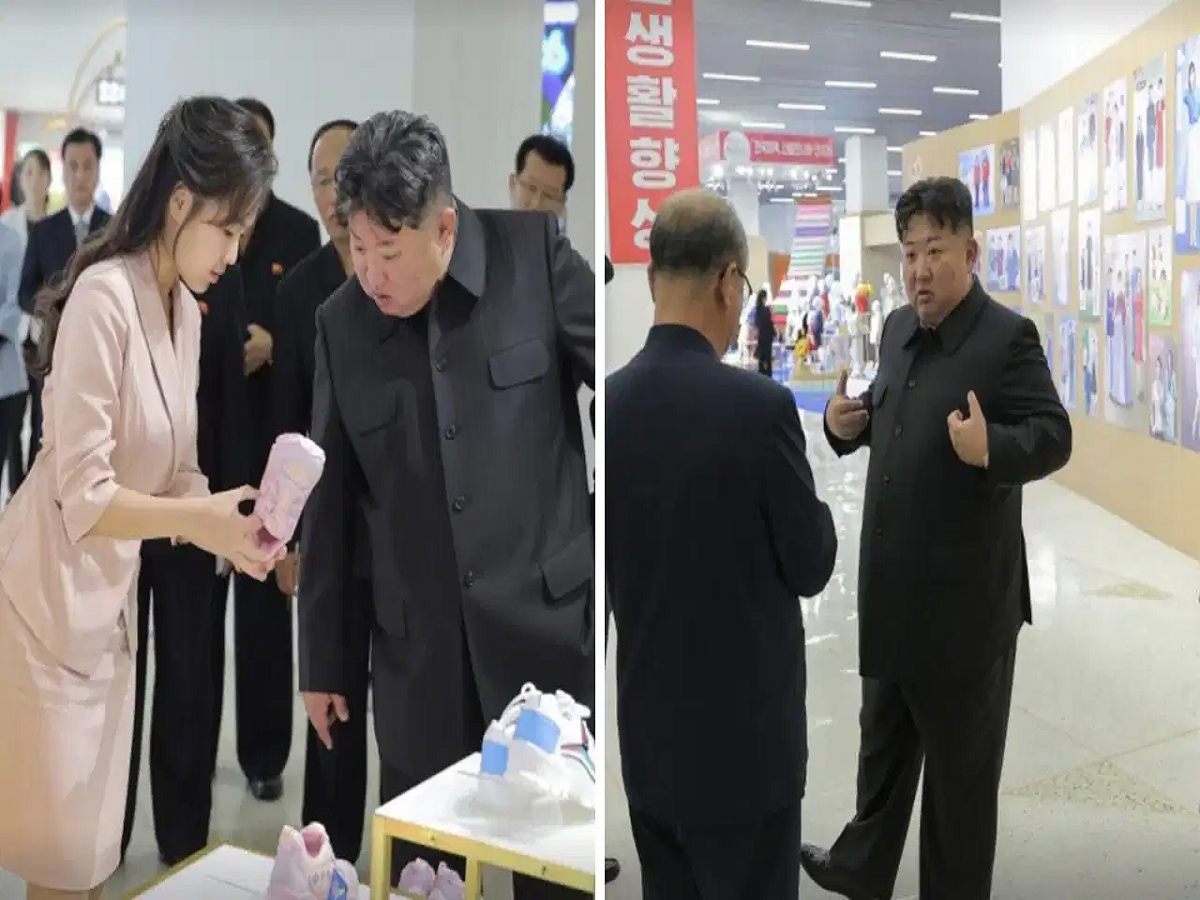
Rumours about the health of North Korean leader Kim Jong Un have sparked fresh speculation on social media, with unverified claims suggesting that he suffered a brain haemorrhage, fell into a coma or even died. Amid the growing speculation, North Korean state media has released photographs reportedly showing Kim inspecting products at an exhibition.
The images show the North Korean leader examining footwear, looking at women's clothing and interacting with officials. However, the photographs have not been independently verified, and their exact date remains unclear. As a result, they cannot conclusively establish Kim's current health condition or disprove claims about his alleged medical emergency.
What Do the Newly Released Photos Show?
According to reports citing North Korea's state-run Korean Central News Agency (KCNA), Kim Jong Un visited an exhibition showcasing various products. The released photographs reportedly show him examining items on display and speaking with officials accompanying him.
In one image, Kim is seen leaning forward to inspect a small pink shoe held by a woman wearing a light-coloured dress. Another photograph shows him gesturing while speaking with officials, apparently discussing the products on display.
A separate image shows the leader examining the sleeve of a brownish-red women's coat displayed on a mannequin.
North Korean state media frequently publishes photographs and reports of Kim's public engagements. Such releases can provide information about activities the government wishes to publicise, but their timing and context are important when assessing claims about his whereabouts or health.
In this case, the lack of independent confirmation about when the photographs were taken limits what can be concluded from them.
How Did the Brain Haemorrhage and Death Rumours Begin?
The latest speculation reportedly gained momentum after Wanjun Ji, a China-related political commentator affiliated with the Chinese Democratic Party, made a series of claims on social media platform X.
According to the supplied report, Ji initially claimed that Kim Jong Un had died. He also alleged that China had sent approximately 9,000 troops to Pyongyang amid concerns about a possible succession crisis in North Korea.
Ji subsequently claimed that Kim had suffered a severe brain haemorrhage and that medical specialists from Peking Union Medical College Hospital in Beijing had travelled to North Korea to treat him.
However, these allegations have not been substantiated by independently verified evidence in the supplied report. The claims about Chinese troop movements, Kim's medical condition and his alleged death should therefore be treated as unconfirmed rather than established facts.
Can the Released Photographs Confirm Kim Jong Un's Health?
Not necessarily. Photographs can show a person participating in an activity at a particular time, but they cannot establish their current medical condition unless their timing and authenticity are confirmed.
If the images were taken recently, they could provide evidence that Kim attended the reported event. If they were taken earlier, however, their release would not necessarily address the latest rumours.
North Korea's tightly controlled media environment also makes independent verification of information about the leadership challenging. Official statements and state-media reports are important sources, but claims involving major medical emergencies or a leader's death require careful corroboration.
At present, the photographs alone are insufficient to determine whether Kim Jong Un has experienced a medical emergency.
Why Does Kim Jong Un's Health Matter Internationally?
Kim Jong Un's health is closely watched because he leads a country with nuclear weapons and a highly centralised political system. Any confirmed development affecting his ability to govern could have implications for North Korea's domestic politics, its military leadership and its relationships with neighbouring countries.
Uncertainty about a possible succession could also attract attention because North Korea's political system is built around the Kim family, and the process for managing a sudden leadership transition is not fully transparent to the outside world.
Nevertheless, speculation about a succession crisis should not be confused with evidence that one is actually taking place.
What Is Confirmed So Far?
The key distinction is between the photographs released by North Korean state media and the allegations circulating on social media.
-
North Korean state media reportedly published photographs showing Kim Jong Un at an exhibition.
-
The images show him examining footwear and clothing and interacting with officials.
-
The exact date of the photographs has not been independently established in the supplied report.
-
Claims that Kim suffered a brain haemorrhage, entered a coma or died remain unverified.
-
The allegations concerning Chinese troops and foreign medical specialists also lack confirmation in the supplied report.
Final Word
The release of photographs of Kim Jong Un has drawn attention amid rumours about his health, but the images do not settle the question. Without independently verified information about when they were taken and reliable confirmation of the medical allegations, neither the rumours nor conclusions drawn from the photographs should be treated as definitive.
For now, the most responsible approach is to distinguish confirmed reporting from social media speculation and wait for credible, corroborated information before drawing conclusions about the North Korean leader's condition.