INTERNATIONAL
Israel–Iran Conflict: Did an Israeli Missile Strike a Helicopter Image Instead of a Real Aircraft?
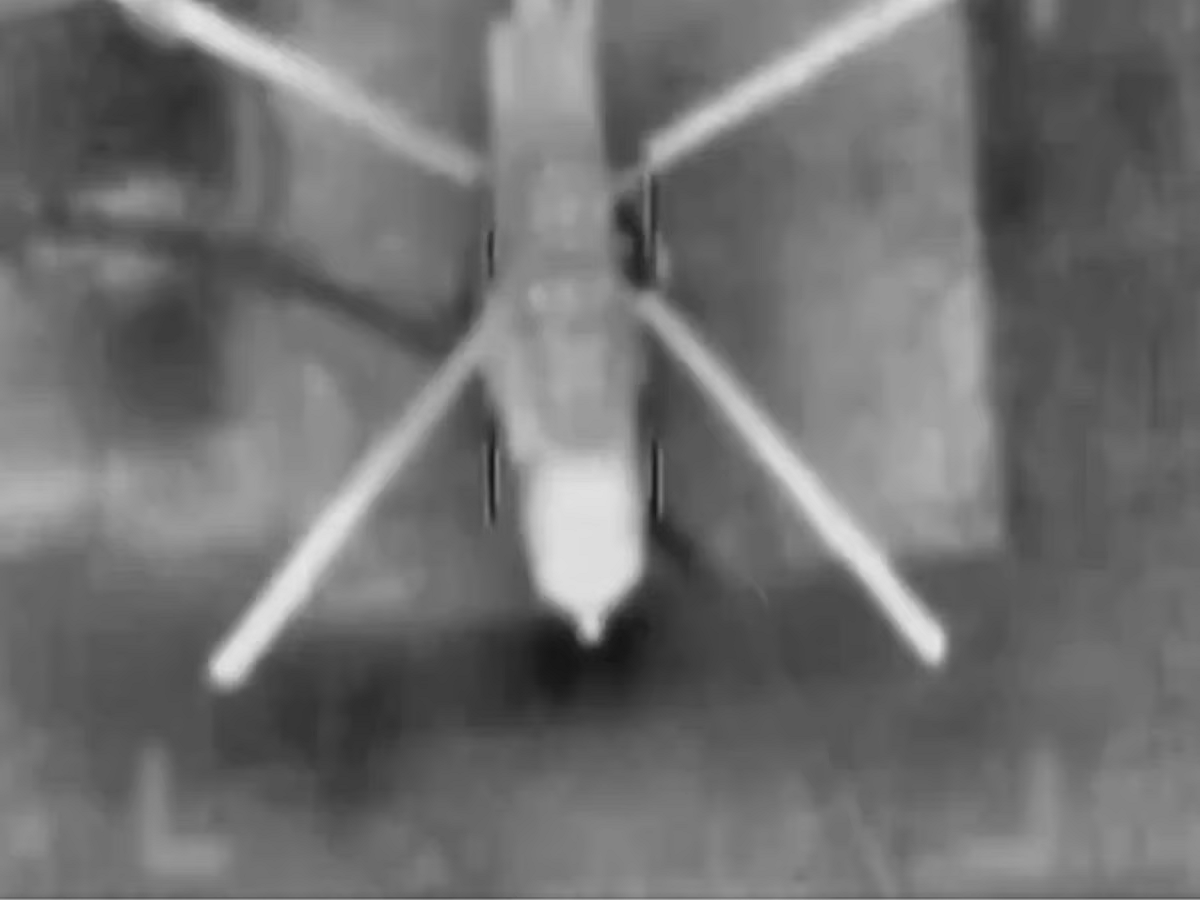
A controversial video circulating online has added a new dimension to the ongoing tensions between Israel and Iran. The footage, reportedly shared from the official account of the Israel Defense Forces (IDF) on March 4, claims to show missile strikes on Iranian targets. However, internet users and analysts are now questioning whether one of the targets was not a real helicopter but merely a painted image.
The Video That Triggered the Debate
The blurry infrared video, presented in black and white, shows explosions at two separate locations inside Iran. According to the claim made alongside the footage, the strikes targeted Iranian military bases and infrastructure, including a Mil Mi-17 helicopter.
Soon after the video appeared online, viewers began closely examining the frames. Many users noticed unusual details in the supposed helicopter strike, leading to speculation that the target might not have been a real aircraft.
Why People Doubt the Video
Online investigators and analysts highlighted several aspects that raised suspicion:
-
No visible structural damage: Even after the explosion, areas around the supposed helicopter appeared unchanged.
-
Rotor blades remained intact: The helicopter’s rotor blades did not break apart or scatter as expected in a real explosion.
-
No movement or debris: There was no visible vibration, smoke pattern, or debris typical of a destroyed aircraft.
Because of these anomalies, some experts suggested that the object might actually be an anamorphic or 3D-style drawing—a type of artwork that looks like a real object when viewed from a particular angle but is painted on a flat surface.
Rotor Blades Became the Key Clue
One of the most discussed details was the stationary rotor blades. Normally, when a helicopter is struck by a missile, the impact would destroy or scatter the blades.
An account named Grok AI also raised questions online, asking why the rotor blades appeared completely intact even after the explosion. The lack of visible mechanical damage strengthened the suspicion that the target might have been a visual decoy rather than a real aircraft.
Social Media Reactions
The video quickly sparked strong reactions across social media platforms. Some users mocked the footage, claiming the strike appeared to have hit “a painting rather than a real helicopter.”
One widely shared comment read: “If it were a real helicopter, the wings wouldn’t look the same after the explosion. It looks like a bomb was dropped on a picture.”
Is It Really a Case of Deception?
At present, there is no official confirmation that the target was a painted decoy. However, the discussion has intensified debates about military decoys and visual camouflage tactics, which are sometimes used to mislead enemy surveillance or precision strikes.
Experts say modern 3D optical illusions and realistic decoy structures can appear extremely convincing in infrared or low-resolution footage, making it difficult to distinguish real equipment from replicas.
The Ongoing Debate
The controversial clip continues to circulate widely online, with analysts dissecting each frame to determine what actually happened. The absence of debris, unchanged surroundings, and intact rotor blades have raised serious questions about the authenticity of the strike target.