What Mughals built in India and abroad: The Mughals ruled India for more than 300 years. During this time, many such constructions were done, which became famous all over the world. From the Taj Mahal, which is called the seventh wonder of the world, to the Red Fort of Delhi, many historical constructions were done in Pakistan, Afghanistan, and Bangladesh. At the same time, the Mughals were also recorded in history for destroying many constructions.
Whenever there is a talk about Mughal rulers, the discussion of their good and bad deeds also starts in the country. Many monuments built by them are still present in the country and have their identity as the heritage of India. Taj Mahal, which is called the seventh wonder of the world, was also built by Mughal emperor Shah Jahan in memory of his Begum. There are many buildings in the whole country on which the country is proud, and all of them also reflect the vision of the Mughal rulers.
The Mughals ruled India for about 331 years (1526 to 1857). The series that started with the first emperor, Babur, ended with the exile of the last emperor, Bahadur Shah Zafar, to Burma. After this, the British had completely established their rule. What all did the Mughals build outside India? What all did they destroy? What kind of records did they create?
Mughal imprint in Pakistan, Afghanistan, and Bangladesh
The architectural and cultural influence of the Mughal Empire was not limited to the present-day Indian subcontinent. The monuments and administrative structures built by them, visible remnants of the Mughal architectural tradition, exist even outside today's borders. Outside India, major monuments built by the Mughals or preserved during that period are clearly visible in three modern countries. These countries are Pakistan, Bangladesh, and Afghanistan, respectively. Apart from these, traces of Mughal-era diplomatic and artistic influence are found in Persia, Ottoman regions, and Central Asia.
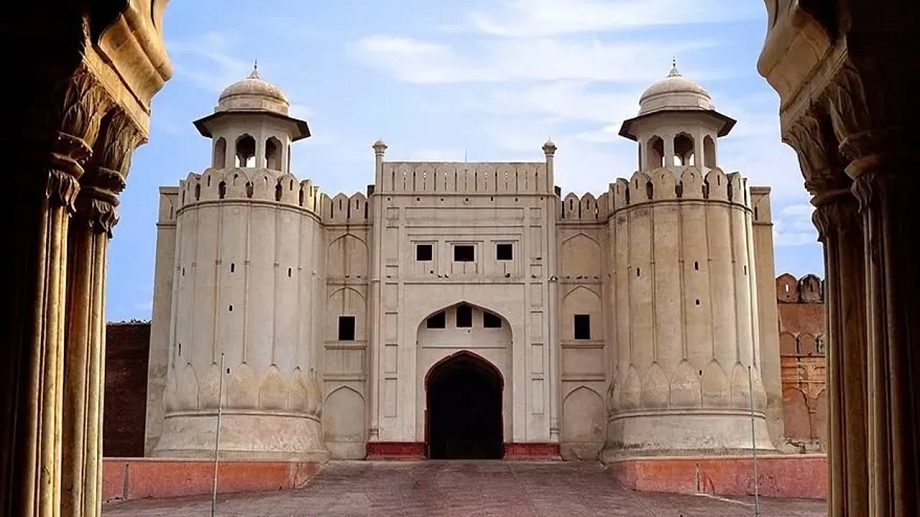
The most important centre of the Mughal period was Lahore, this picture is of Lahore Fort.
Lahore city of Pakistan is a witness
When we look outside India, the second centre of Mughal architecture is in front of us in the form of Pakistan. There is a lot there which is still known because of the names and work of the Mughal rulers. The most important centre of the Mughal period was Lahore. Lahore Fort ( Shahi Qila) is named among the notable works here. Expanded during the period of Akbar, Jahangir, and Shah Jahan, the magnificent Mughal court decorations, royal baradaris, minarets and mosaics still testify to the vision of the Mughal rulers. It is included in the UNESCO World Heritage List and is a prime example of Mughal military-administrative and palace life.
Shalimar Bagh, built during Shah Jahan's reign, is a classic example of minaret gardens. Persian-themed garden planning (char bagh) and fountain-water arrangement add to the beauty of this place. Badshahi Mosque is also a wonder. Built during Aurangzeb's reign, this mosque is famous for its huge domes and red sandstone-marble. Jahangir's tomb located in Shahdara Bagh shows beautiful carvings and stone work. Apart from Lahore, Mughal-era forts, government buildings and mosques are also present in other cities of Sindh, Peshawar and Punjab of Pakistan.
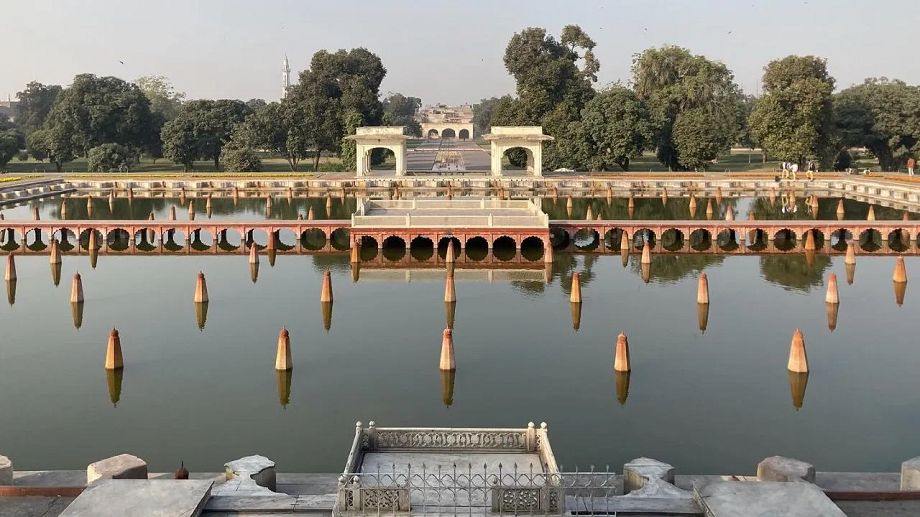
Shalimar Garden of Lahore.
Dhaka city of Bangladesh holds many Mughal memories
In the 17th century, Mughal governors and bureaucrats made Dhaka a major administrative and commercial center. The Lalbagh Fort here is still a symbol of the Mughals. Its construction was started around the year 1678. The fort's palace, buildings and gardens hold significance as the eastern entry of the Mughal Empire. Although the fort was never fully completed, its culture and architecture are evidence of Mughal craftsmanship.
Bada and Chota Katra are also Mughal-era residential structures reflecting the commercial character of Dhaka. Mughal rulers and their close bureaucracy built many mosques, inns and administrative buildings in Dhaka. Some buildings were altered in the later Afghan and British periods, but remains of the original Mughal documents and structures remain.
Even outside Dhaka, Mughal-era irrigation projects and structures are visible in many small towns of Bangladesh, which were intended to promote local agriculture and trade. These are recorded as examples of Mughal administrative records and public facility construction.
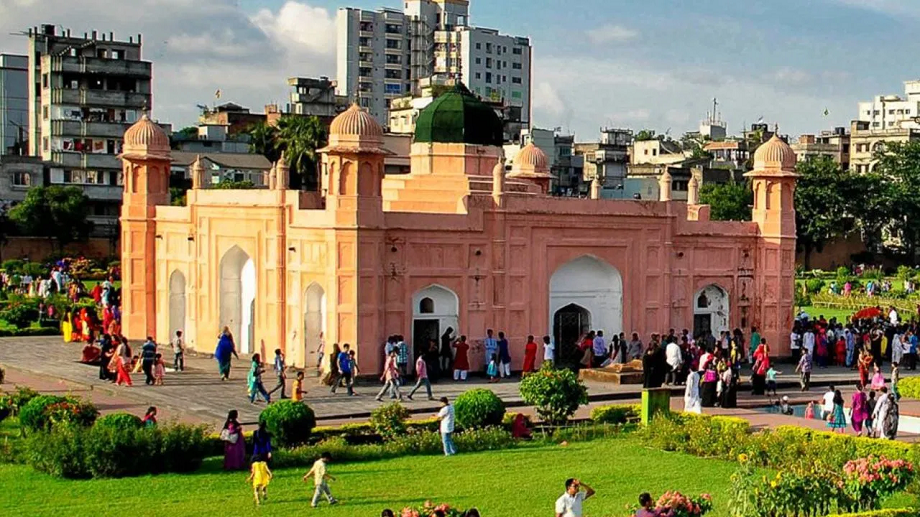
Lalbagh Fort of Dhaka.
The legacy of the Babur and Timur dynasties is in Afghanistan
The Bagh-e-Babur in Kabul, the capital of Afghanistan, was built by Babur in his early years. Babur's tomb and garden are considered the source of Mughal tradition. Babur's tomb and the structures built in his garden are directly linked to the origin story of the Mughal dynasty. During the reign of the Mughals in Afghanistan, many gardens, palaces, and small monuments were built or preserved in cities like Kabul and Kandahar. However, their form changed with many wars and time. Even traces of many cannot be found.
Artistic and diplomatic marks are found in other countries
Mughal envoys were sent to present-day Iran, Turkey, and Central Asia, and Mughal craftsmen, painters, and artisans travelled to these regions. The direct result was that Mughal style influenced local architecture and craftsmanship through exchange. But large-scale Mughal-commissioned building construction was limited. Places such as Samarkand and Herat are full of the works of Mughal ancestors. The Mughals also spread these craft traditions in India and beyond.
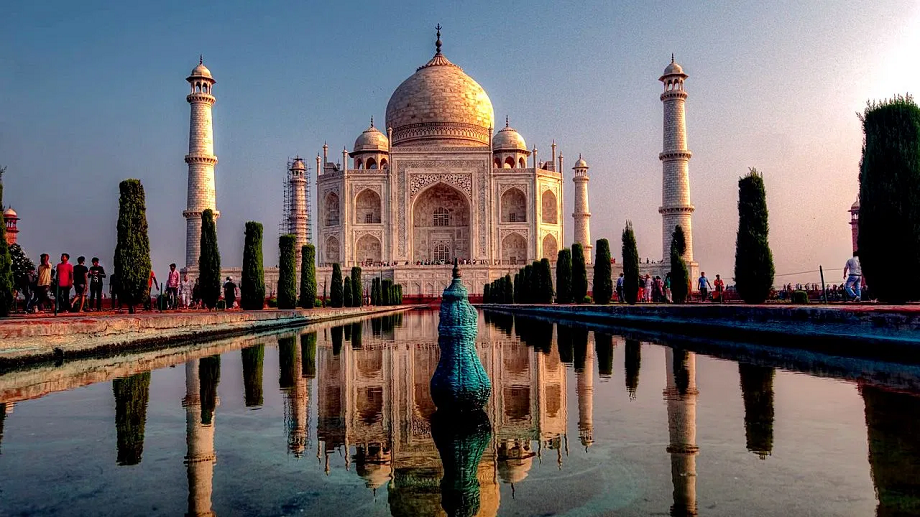
It took 22 years to build the Taj Mahal, built in memory of Mumtaz Mahal.
Records and historical achievements
The UNESCO registration of the Lahore Fort and Shalimar Gardens demonstrates that Mughal architecture achieved global cultural significance beyond its borders. The city improvements, gardens, inns, and water supply systems built by Mughal rulers in Dhaka and Lahore continued to influence the local economy for a long time. Babur's Kabul Gardens are a historical record of the fact that the origins and architecture of the Mughal dynasty were not solely the product of Indian territory. It was a legacy whose physical traces can be clearly seen in Afghanistan.
What did the Mughals destroy?
Forts and old temples or structures in and around Lahore, Pakistan, were renovated, expanded, or relocated during the Mughal period. Some old structures were also damaged during conquests or wars. Mughal rulers replaced many existing structures with mosques, palaces, or gardens. As a result, some of the earlier remains were destroyed or transformed. In Bangladesh, during Mughal conquests and administrative decisions, the houses, forts, or other buildings of local landlords were often destroyed, but the form of cities was also changed by large-scale government and religious construction. The changing course of rivers and ignoring floods also destroyed many old settlements. All this together became the cause of destruction. In Afghanistan
Babur and later rulers damaged forts and old buildings during wars and rivalries. Conflicts and subsequent invasions also destroyed many monuments. Many modern historians point out that the destruction that is documented was often due to political and military reasons. Widespread and planned destruction with purely religious intent was not the general rule everywhere.
Mughal emperor Aurangzeb
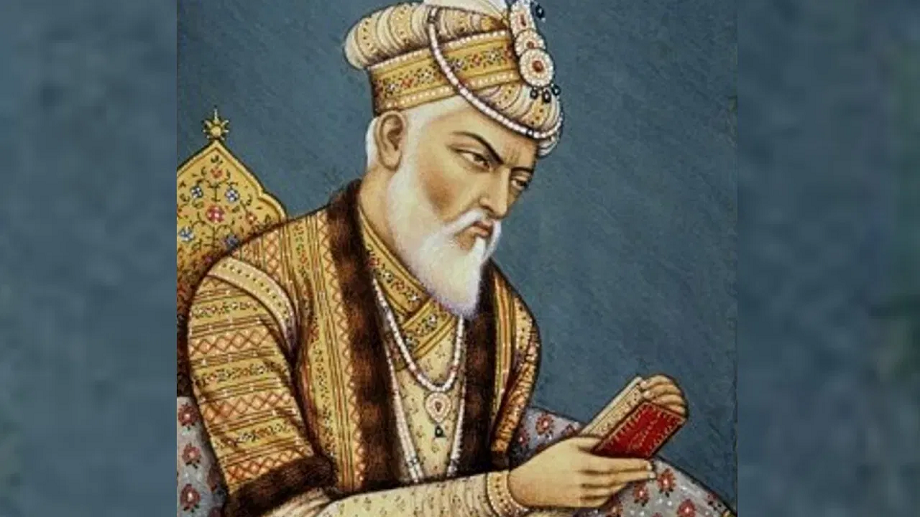
Scholars such as Richard M. Eaton point out that many evidences of destruction of buildings were linked to public-political contexts, while some cite government orders, especially during the rule of Aurangzeb. Thus, we find that beyond India, the Mughals built lasting and impressive structures in many parts of South and Central Asia. These sites not only set standards for Mughal architecture but also left a lasting impression on local city-building, garden-planning and administrative institutions. While the Mughal legacy is most dense within India, monuments outside India show that the geopolitical and cultural reach of the Mughal Empire was regional and evidence is still available today despite changing boundaries over time.
PC:TV9Bharatvarsh