NATIONAL
Matua Community’s Citizenship Demand Reaches Rahul Gandhi: Why TMC and BJP Are on Edge in West Bengal
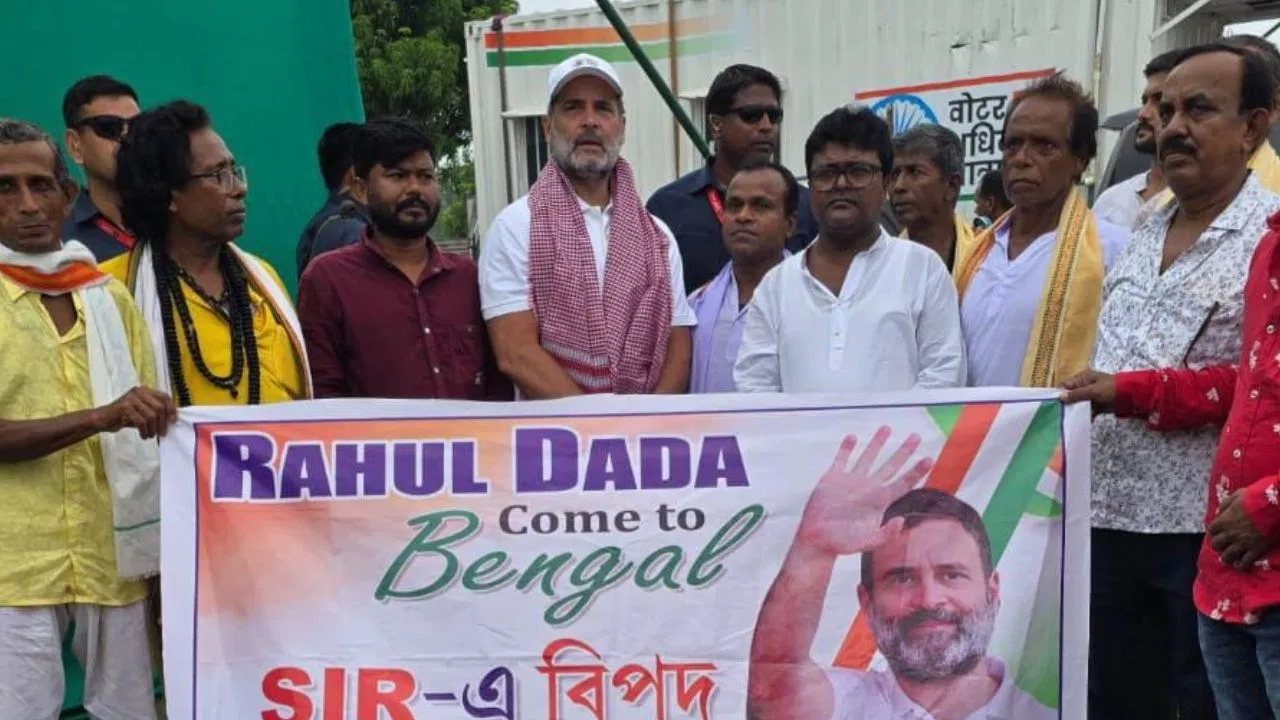
The political landscape of West Bengal may face new tremors as the Matua community, a decisive vote bank in the state, has begun engaging with Congress leader Rahul Gandhi. During his recent Voter Rights Yatra in Bihar’s Saran district, a delegation of 24 Matua representatives met Rahul Gandhi on August 30, bringing forward their long-standing concerns over citizenship.
This meeting has raised eyebrows within both the Trinamool Congress (TMC) and the Bharatiya Janata Party (BJP), as the Matua vote has historically played a game-changing role in Bengal elections.
Who Are the Matuas and What Do They Want?
The Matua community traces its origins to East Pakistan (now Bangladesh). Large numbers of Matuas migrated to India during the Partition of 1947 and later during the Bangladesh Liberation War of 1971, fleeing religious persecution.
Despite decades in India, many Matuas still feel uncertain about their legal status. They hold Aadhaar cards, voter IDs, and ration cards, but demand “formal citizenship” under Indian law. This demand gained prominence during the debates around the Citizenship Amendment Act (CAA) 2019, which promised to simplify citizenship for persecuted Hindus from neighboring countries.
For the Matuas, recognition as full Indian citizens is not merely symbolic—it directly affects their sense of security, access to welfare benefits, and participation in politics.
Why Rahul Gandhi’s Meeting Matters
Congress leader Adhir Ranjan Chowdhury, who has close ties with the Matua community, revealed that members have grown disillusioned with both TMC and BJP. According to him, the community feels it has been “used as a political tool” by both ruling forces in Bengal, with little attention paid to its core citizenship concerns.
“Some Matuas met me in Murshidabad earlier. They are disappointed with TMC and BJP and are considering Congress as an option. I conveyed this to Rahul Gandhi and facilitated the meeting in Patna,” Chowdhury said.
At the Bihar rally, the Matua delegation spoke to Rahul Gandhi for around 15 minutes. They presented their worries about citizenship documentation and possible exclusion from voter lists. Gandhi reportedly assured them of continued engagement, even inviting them to Delhi for a detailed dialogue.
Political Headache for TMC and BJP
Both TMC and BJP are watching these developments closely.
-
For the BJP: The Matua community has been one of its most loyal support bases since 2019. The BJP swept 18 of Bengal’s 42 Lok Sabha seats that year, with Matuas playing a critical role in key constituencies. Their backing was largely based on the BJP’s CAA promise. However, delays in implementation have caused frustration. The fact that a local BJP worker, Tapan Haldar, led the Matua delegation to Rahul Gandhi adds to the saffron party’s worries.
-
For the TMC: Matuas also matter to Mamata Banerjee’s party, especially in districts where Scheduled Castes dominate assembly segments. The ruling party has tried to balance welfare promises with outreach programs, but growing restlessness within the community could chip away at its voter base.
The possibility of Matuas considering Congress as a third option is a scenario neither BJP nor TMC wants to face ahead of the next West Bengal Assembly elections.
Congress’s Weak Position but New Opening
While Congress currently holds only one Lok Sabha MP from Bengal and no MLAs, this outreach could give the party a chance to re-enter Bengal’s competitive political scene. For Rahul Gandhi, aligning with the Matuas is not just about Bengal—it strengthens his national narrative of defending voter rights and marginalized communities.
Silence from Rivals
TMC spokesperson Kunal Ghosh refused to comment on the Matua-Rahul meeting, while BJP’s senior leader Rahul Sinha dismissed its significance, calling it politically irrelevant. Yet, the unease within both parties suggests the opposite.
The Road Ahead
The Matua question underscores a larger political dilemma: citizenship remains an unsettled issue for a community that has been in India for over seven decades. With Assembly elections approaching, how parties address—or ignore—these demands could reshape Bengal’s political arithmetic.
For now, the Matuas have made it clear—they are willing to shift loyalties if their long-standing demands remain unfulfilled. And that is enough to keep both BJP and TMC on edge.