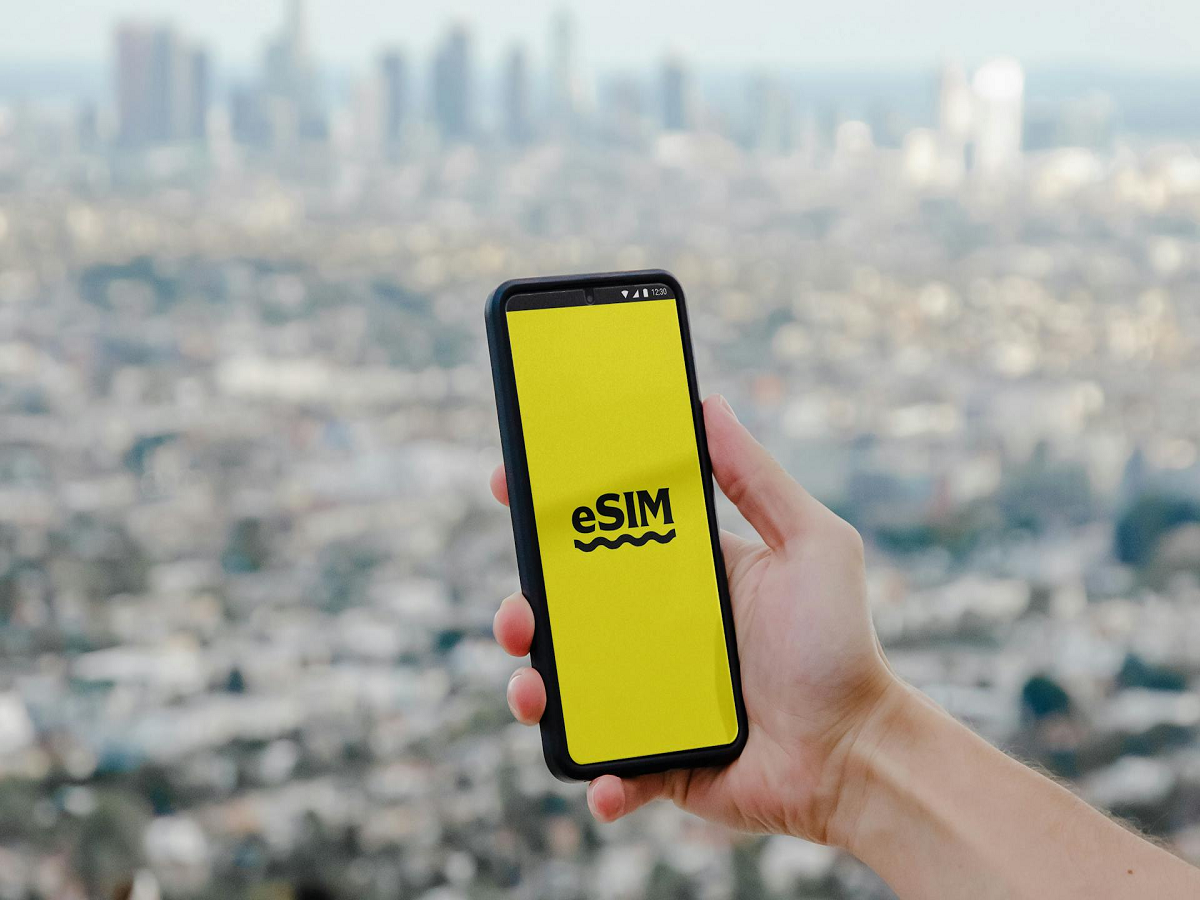
Remember the tiny plastic SIM card that you had to remove with a pin whenever you changed phones or switched mobile operators? That familiar process is gradually becoming less important as eSIM technology changes how smartphones connect to mobile networks.
From activating a new mobile number without visiting a store to using a local data plan while travelling abroad, eSIMs are making mobile connectivity more flexible. Some newer smartphones are even being designed without a physical SIM-card slot.
But is eSIM really better than a traditional SIM, and should you consider switching?
What Exactly Is an eSIM?
An eSIM, short for embedded SIM, is a digital SIM built into a compatible device. Unlike a traditional SIM card, it does not need to be physically inserted or removed.
Instead, the device can download a mobile network profile that allows it to connect to a supported telecom operator. Depending on the operator and device, activation may happen through a QR code, an app or the phone's settings.
The important distinction is that an eSIM is not a separate mobile network. It performs the subscriber-identification role of a conventional SIM, but the profile is provisioned digitally.
How Does eSIM Activation Work?
The process varies between telecom operators, but it generally follows a few simple steps.
First, the user checks whether the smartphone supports eSIM and whether the mobile operator offers the service for that device and connection.
Next, the operator provides activation instructions, which may involve scanning a QR code or using its official application. The phone downloads the profile and connects to the network once activation is complete.
Some operators allow users to convert an existing number to eSIM, while others may require a new activation process. Users should follow their operator's instructions carefully because the timing of the transfer can affect connectivity.
Five Reasons eSIM Is Becoming Popular
1. Switching Networks Can Become Easier
With a compatible device and participating operator, users can activate a new mobile plan without obtaining a physical SIM card.
However, eSIM does not eliminate every step involved in switching operators. Identity verification, number portability rules and operator-specific procedures may still apply.
2. Travelling Abroad Can Be More Convenient
International travellers can purchase an eSIM data plan for a destination before departure or after arrival, depending on availability.
This can help them avoid searching for a local SIM vendor. Travellers should still compare prices, data limits, supported countries and roaming conditions before purchasing a plan.
3. One Phone Can Support Multiple Plans
Many eSIM-compatible devices can store multiple mobile profiles. Some can use two lines at the same time, such as a personal number and a work number.
The exact number of stored profiles and simultaneously active connections depends on the phone model. Not every device supports every possible combination.
4. There Is No Tiny Card to Lose
Because the SIM profile is digital, users do not need to worry about misplacing a removable SIM card while changing phones.
However, losing a phone can still create problems. Users should protect their device with a strong screen lock and understand their operator's process for recovering or transferring an eSIM.
5. It Gives Manufacturers More Design Flexibility
Removing a physical SIM tray can free up some internal space and simplify the device's design. Manufacturers may use that space for other components or structural improvements.
This does not mean every eSIM-only phone will automatically have better battery life or greater durability. Those benefits depend on the overall design.
Is eSIM Safer Than a Physical SIM?
eSIM has some security advantages, but it is not completely risk-free.
A removable SIM card can be physically taken out of a stolen phone. An embedded SIM cannot be removed in the same way, which may make certain forms of tampering more difficult.
However, criminals can still target mobile accounts through social engineering, fraudulent SIM transfers, stolen account credentials or compromised devices.
Users should enable strong account security, avoid sharing activation QR codes and contact their operator promptly if they suspect an unauthorised SIM transfer.
Can You Use eSIM in India?
Yes, eSIM services are available in India through participating telecom operators, but support depends on the operator, device and type of connection.
Before converting your number, confirm that your smartphone model is supported and check the operator's current activation procedure. Some devices sold in other countries may have different SIM configurations.
It is also wise to ensure that you can access your operator account and recovery instructions before beginning the transfer.
What Happens When You Change Your Phone?
This is one of the most important differences between a physical SIM and an eSIM.
With a traditional SIM, users can often move the card to another compatible phone. An eSIM generally needs to be transferred or reactivated on the new device.
Some manufacturers and operators support direct transfers between compatible phones. Others require a new QR code or assistance from customer support.
Therefore, before resetting, selling or trading in your old phone, make sure your number has been successfully transferred and that you can still receive calls and messages on the new device.
Are There Any Disadvantages?
Despite its convenience, eSIM has a few limitations.
-
Device compatibility: Older phones and certain regional models may not support it.
-
Operator support: Not every telecom provider offers eSIM for every plan.
-
Transfers: Moving the number to a new device may require additional steps.
-
Connectivity during setup: Activation can require internet access or assistance from the operator.
-
Travel restrictions: International eSIM plans vary in coverage, pricing and terms.
For people who frequently change phones or use devices that lack eSIM support, a physical SIM may remain more convenient.
Will Physical SIM Cards Disappear Completely?
The transition is likely to happen gradually rather than overnight.
Physical SIM cards remain useful because they are familiar, widely supported and easy to move between compatible devices. eSIM adoption will depend on consumer demand, operator support, device pricing and the availability of straightforward transfer processes.
In the longer term, digital SIM technology could become increasingly common across smartphones, tablets, smartwatches, connected vehicles and other devices.
Conclusion
eSIM technology is changing mobile connectivity by replacing a small physical card with a digitally managed network profile. It can simplify activation, make travel connectivity more convenient and allow compatible phones to manage multiple mobile plans.
However, it is not automatically the best option for every user. Device compatibility, operator support and the ease of transferring a number remain important considerations.
As more devices and telecom networks adopt the technology, the process of getting connected may become less about handling a SIM card and more about activating a service directly from your device.