NATIONAL
The Hormuz crisis disrupted LPG supplies, but why piped gas remained largely unaffected? Understand the full math of LPG vs. LNG
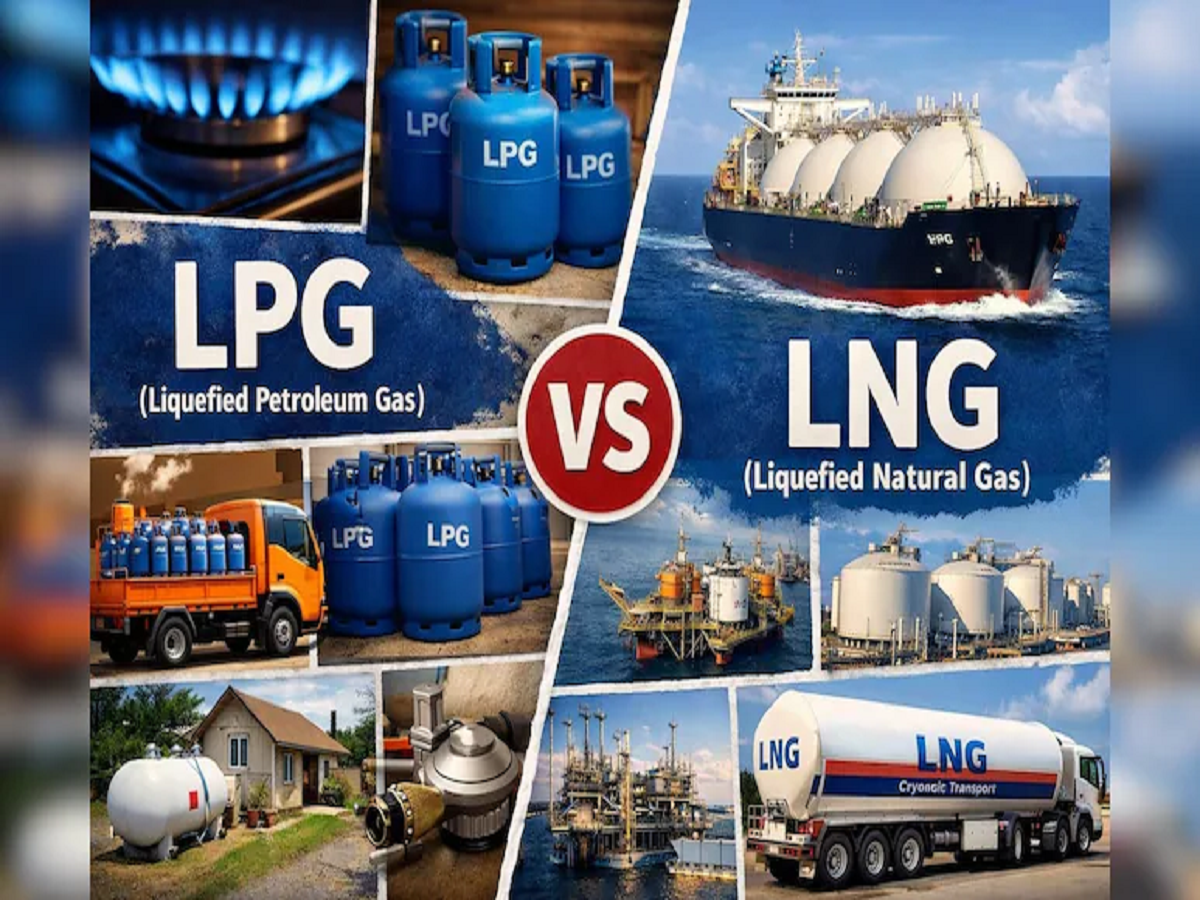
How will the growing energy crisis caused by the Strait of Hormuz's closure affect LNG and LPG? Read on to understand the impact it could have on everything from your kitchen to industry.
The ongoing war in the Middle East between Iran and the US and Israel has reduced the movement of oil tankers through the Strait of Hormuz. The Strait of Hormuz transports approximately 20 percent of the world's oil. India is highly dependent on this route. Consequently, the partial closure of the Strait of Hormuz, one of the most important oil and gas supply routes, has directly impacted India's import-dependent energy purchases. However, the central government has clearly stated that the situation regarding India's oil needs is under control and that India has strategic oil reserves.
Furthermore, following the sharp rise in international crude oil prices, the government reduced the excise duty on both petrol and diesel by ₹10 per liter with immediate effect, ensuring no change in the retail pump prices of petrol and diesel and a direct impact on the common man. However, one petroleum product whose prices have recently risen is LPG, or liquefied petroleum gas.
The Ministry of Petroleum and Natural Gas, in an update on key sectors related to developments in the Middle East on Sunday, stated that adequate stocks of petrol and diesel are available at all petrol pumps in the country. Urea plant supplies remain at 70-75% of the previous six-month average. Additional arrangements for LNG and RLNG are being made. It should be noted that LNG and LPG play as important a role in India's energy needs as petrol and diesel. However, their nature, uses, and dependency differ. This difference makes their impact in this crisis different.

Photo Credit: AFP
What is LNG?
LNG stands for Liquefied Natural Gas. Natural gas is cooled to a temperature of -162°C. Upon cooling, the gas becomes liquid. When gas becomes liquid, its volume reduces by 600 times, meaning it takes up 600 times less space. This facilitates its transportation in large quantities. This is why it is easy to transport LNG in liquid form over long distances, either by loading it into ship tankers or loading it onto trucks. However, this entire process requires very expensive infrastructure: dedicated LNG plants, cryogenic tanks, and specialized NLNG vessels. The entire process, from LNG storage to transportation, is highly technical. Once the LNG reaches its destination, it is converted back into gas and ready for use.

Photo Credit: AFP
What is RLNG?
When LNG is converted back into gas, it's called RLNG, or regasified liquefied natural gas. RLNG is LNG that's been converted back to its gaseous state through a process called regasification. When LNG reaches its destination, it's stored in tanks and then passed through a regasification terminal, where it's heated and converted back to its natural gaseous state. Once regasified, RLNG is exactly the same as gas extracted directly from gas reserves. It can be transported through pipelines for use in homes, businesses, power plants, and other locations.
Now let us also understand what is the LPG about which there is a rumour in the entire country that there is a shortage of it and how is it different from LNG?
LPG supply across the country remains stable and well supported by strong domestic production and secured imports. Following recent measures, domestic refinery production has increased by 40%, raising daily LPG output to 50 TMT, which now meets over 60% of India’s total… pic.twitter.com/0hZO1WFhMm
— Bharat Petroleum (@BPCLimited) March 26, 2026
What is LPG?
LPG stands for Liquefied Petroleum Gas. It is a gas derived from natural gas and petroleum. It primarily consists of two gases: propane and butane. LPG can be stored in liquid form in cylinders under slight pressure even at room temperature. This is why LPG cylinders are used for cooking in homes. Domestic gas distribution in India is primarily handled by three companies: Indian Oil Corporation, Bharat Petroleum, and Hindustan Petroleum. These companies have thousands of bottling plants and millions of dealer networks across the country.

Photo Credit: AFP
What is the real difference between LNG and LPG?
People often think the two are the same gas, but they are actually completely different. LPG is derived from both natural gas and petroleum. It is used for cooking in homes and is filled in cylinders. Meanwhile, LNG is produced from natural gas and is used in power generation and industries. It is supplied through pipelines. This means that their uses, composition, and storage methods are different.
LNG primarily consists of methane gas, which is stored in liquid form at -162 degrees Celsius. LPG, on the other hand, is propane/butane, which is stored in liquid form at normal pressure. LPG is heavier than air, while LNG is a lighter gas.

What is the crisis regarding LPG in India?
In fact, India imports approximately 60 percent of its LPG needs. According to an update from the Petroleum Ministry, while import dependence remains high, refineries have increased production to 50,000 metric tons per day, which meets more than 60% of the country's needs. This has resulted in import dependence falling to only 30,000 metric tons. It's worth noting that approximately 90 percent of India's petroleum imports pass through the Strait of Hormuz.
LNG vs LPG – Which one is more dependent?
India is heavily dependent on imports for both LPG and LNG. LPG is essential for cooking in homes, while LNG is primarily used for industrial purposes, electricity, and expanding gas networks in cities. India's annual LPG consumption is approximately 33 million tons, with domestic production of only 13 million tons. This means that approximately 60% of LPG is imported. Of this, 90% of the supply comes through the Strait of Hormuz. This clearly means that if the Strait of Hormuz is closed, it will have a direct and significant impact on LPG supply. The total impact on LPG supply due to the Strait of Hormuz is estimated to be around 54%. Therefore, if this crisis continues for a long time, the first impact will be seen on LPG cylinders. Cylinder prices may increase further, and supply may be delayed. Furthermore, the government's subsidy burden may increase.

Photo Credit: AFP
The situation with LNG is slightly different.
51% of natural gas needs (mostly LNG) are met through imports. Of this, approximately 60% comes from the Strait of Hormuz. This means that approximately 30% of LNG supply through this route has been affected. Given that India's annual LNG consumption is approximately 71 billion cubic meters, with domestic production accounting for approximately 35.6 billion cubic meters, there is an impact, but not as direct or profound as LPG. However, if LNG prices rise in the future, CNG and PNG prices may increase. Production costs in industry will increase. Prices of basic commodities like cement, steel, and electricity will be affected, leading to higher prices for related goods.

What update did the government give on LPG?
In its Sunday update, the Ministry of Petroleum stated that despite the continued closure of the Strait of Hormuz, proactive measures are being taken to maintain uninterrupted availability of petroleum products and LPG throughout the country. Domestic LPG production from refineries has been increased to meet domestic demand. The central government also reported that two cargo ships carrying approximately 94,000 metric tons of LPG are transiting the Strait of Hormuz, heading towards Indian shores.
Why was there not much heat on the pipe gas?
However, the supply of piped gas or PNG remained unaffected during the Hormuz crisis, primarily because PNG reaches households directly through pipelines, without the logistical hassles of cylinders, trucks, or bottling plants.

Dependence on Gulf countries for LPG
Union Petroleum Minister Hardeep Singh Puri told the country's Parliament that India previously imported approximately 60 percent of its LPG needs from Gulf countries such as Qatar, UAE, Saudi Arabia, and Kuwait, while 40 percent was produced domestically. In addition to the available sources in the Gulf countries, LPG shipments are now being procured from the United States, Norway, Canada, Algeria, and Russia. Domestic refineries are also increasing LPG production.
PC:NDTVINDIA