NATIONAL
Vice Presidential Election: 7 Votes to Fall Short, J&K to Miss Out for Second Time in a Row
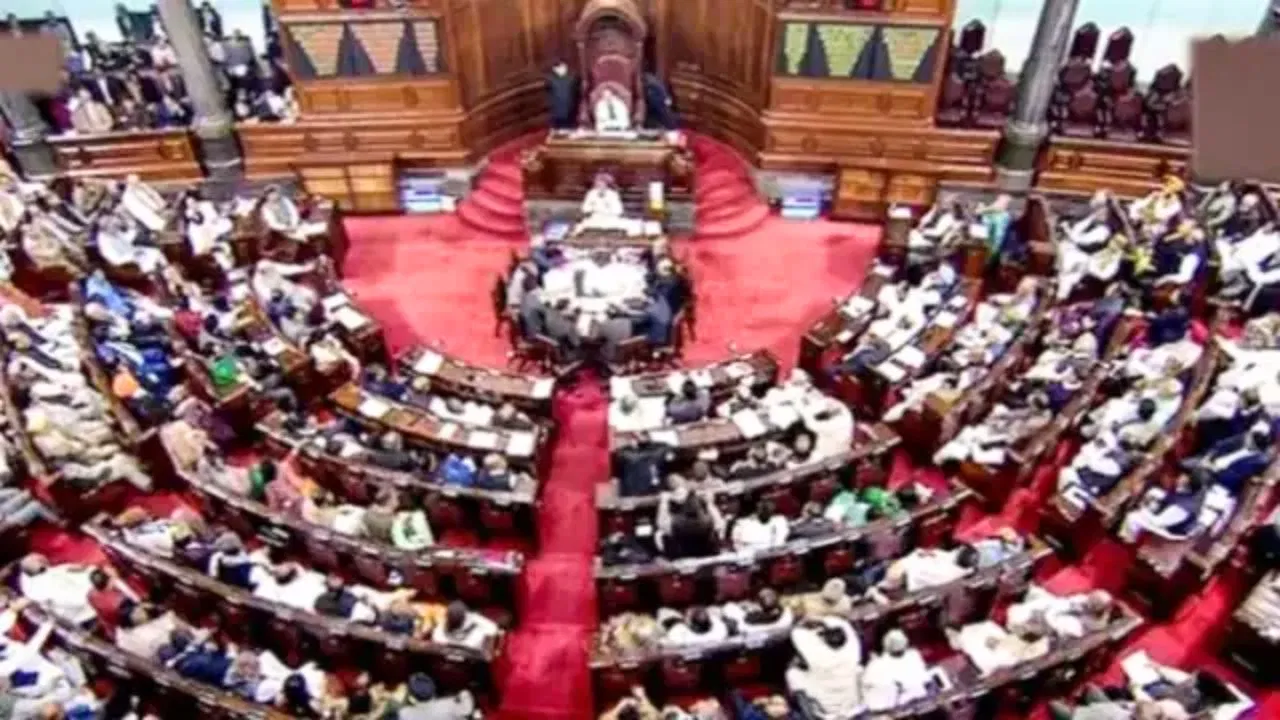
The Vice Presidential election is scheduled for 9 September, following the resignation of Jagdeep Dhankhar, who stepped down citing health reasons before completing his term (2022–2027). With the NDA holding a comfortable majority in both Houses, the victory of its candidate CP Radhakrishnan is almost certain.
However, the contest will see 7 votes fall short, making this the second consecutive major election where Jammu and Kashmir has no representation in the Rajya Sabha. Earlier, J&K MPs could not vote in the 2022 Presidential election as well.
Why J&K Has No Representation
Since 15 February 2021, Jammu and Kashmir has had no Rajya Sabha MPs. The last members, Ghulam Nabi Azad and Nazir Ahmed, completed their terms then. Earlier, Fayaz Mir and Shamsher Singh retired on 10 February 2021. Despite the Assembly elections being held 10 months ago, Rajya Sabha polls have not been conducted for the UT.
Breakdown of Vacant Seats
This year’s Vice Presidential election will see 7 vacant seats:
-
1 Lok Sabha seat: Bashirghat, West Bengal
-
6 Rajya Sabha seats: 4 from Jammu & Kashmir, 1 from Jharkhand (after Shibu Soren’s death), and 1 from Punjab (after AAP MP Sanjeev Arora’s resignation).
Out of a total 781 seats in both Houses, the effective strength has dropped, but the winning candidate still requires 391 votes. The NDA, with 293 MPs in the Lok Sabha and 129 in the Rajya Sabha, commands 422 votes, comfortably above the halfway mark.
Law Ministry Rejects EC’s Demand
The Election Commission of India had earlier written to the Law Ministry, seeking a Presidential order to stagger the tenure of J&K’s Rajya Sabha seats, so that one-third would retire every two years as per Article 83.
But the Law Ministry rejected the proposal, saying the law has no provision for such an arrangement.
The issue arises because, due to repeated imposition of President’s Rule in J&K over the past 30 years, the tenure of all four Rajya Sabha seats became synchronized, leading to simultaneous expiry in February 2021. A similar situation exists in Punjab and Delhi owing to earlier constitutional provisions.
The Bigger Picture
With J&K still waiting for representation in the Upper House, this election highlights a democratic gap: for the second straight time, an important national vote will be conducted without participation from the Union Territory’s MPs.