NATIONAL
What is SRBSD virus that has worried paddy farmers? Haryana government and scientists on alert
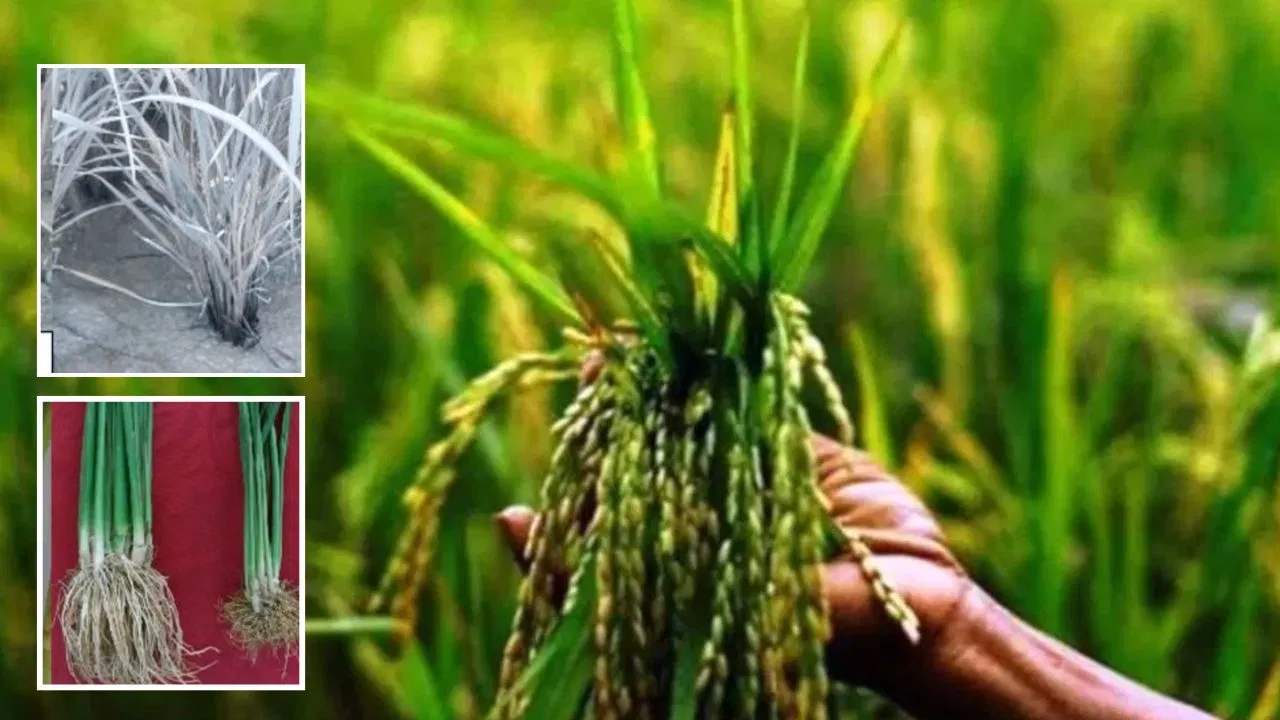
India’s paddy farmers are facing a new challenge: a crop disease caused by a virus that originated in China. Known as the Southern Rice Black Streaked Dwarf Virus (SRBSDV), it was first identified in 2001 in southern China and has since spread to other Asian countries. Now, its impact is being reported in Haryana, raising concerns among farmers, the state government, and agricultural scientists.
Virus threat to Haryana’s paddy belt
Paddy is the lifeline of Haryana’s agriculture, with the state’s Basmati rice varieties famous worldwide. However, the crop is under pressure due to SRBSDV. Agriculture Minister Shyam Singh Rana recently told the Assembly that out of 40 lakh acres of paddy sown this year, around 92,000 acres have been affected by this virus.
The government has assured farmers that advisories are being issued and strict monitoring is in place. Farmers have been asked to follow scientific guidelines to minimize the risk.
What is SRBSD virus?
-
SRBSDV was first detected in southern China in 2001.
-
Until 2008, the outbreak remained within China, but by 2009 it had spread to Vietnam and later reached other rice-growing nations, including India.
-
It is spread by the White-backed Plant Hopper (WBPH), an insect that feeds on paddy plants and transfers the virus from infected plants to healthy ones.
How does it damage paddy crops?
-
The virus stunts plant growth, making the crop up to 40% shorter.
-
Infected plants show blackening at the base, with visible white or black waxy streaks on the stem.
-
Severely infected plants may wilt and die.
-
Crop yield can drop drastically—studies suggest up to 50% reduction in productivity.
-
The disease is most dangerous during the early sprouting stage. If crops survive this period, the risk declines as the plants mature.
Preventive measures for farmers
Agricultural scientists recommend early monitoring and chemical sprays to control WBPH, the carrier insect. Commonly advised treatments include:
-
Paxolam 10 SC (Triflumazopyrin) – 235 ml per hectare
-
Osheen Token 20 SG (Dinotefuran) – 200 grams per hectare
-
Chase 50 WG (Pymetrozine) – 300 grams per hectare
For best results, experts suggest spraying near the base of the plants, preventing the virus from spreading rapidly.
Rice varieties affected
Research by IARI (Indian Agricultural Research Institute) shows that several premium and widely grown varieties are vulnerable, including:
-
Basmati: Pusa-1962, 1718, 1121, 1509, 1847, CSR-30
-
Non-Basmati: PR-114, 130, 131, 136, Pioneer Hybrid, Ariz Swift Gold
The virus has led to reduced production and market shortages, impacting both farmers and exporters.
The road ahead
Scientists believe that with timely advisories, controlled use of pesticides, and awareness among farmers, the damage from SRBSDV can be minimized. However, with paddy being such a crucial crop for Haryana and India, the spread of this virus remains a serious concern for agriculture and food security.