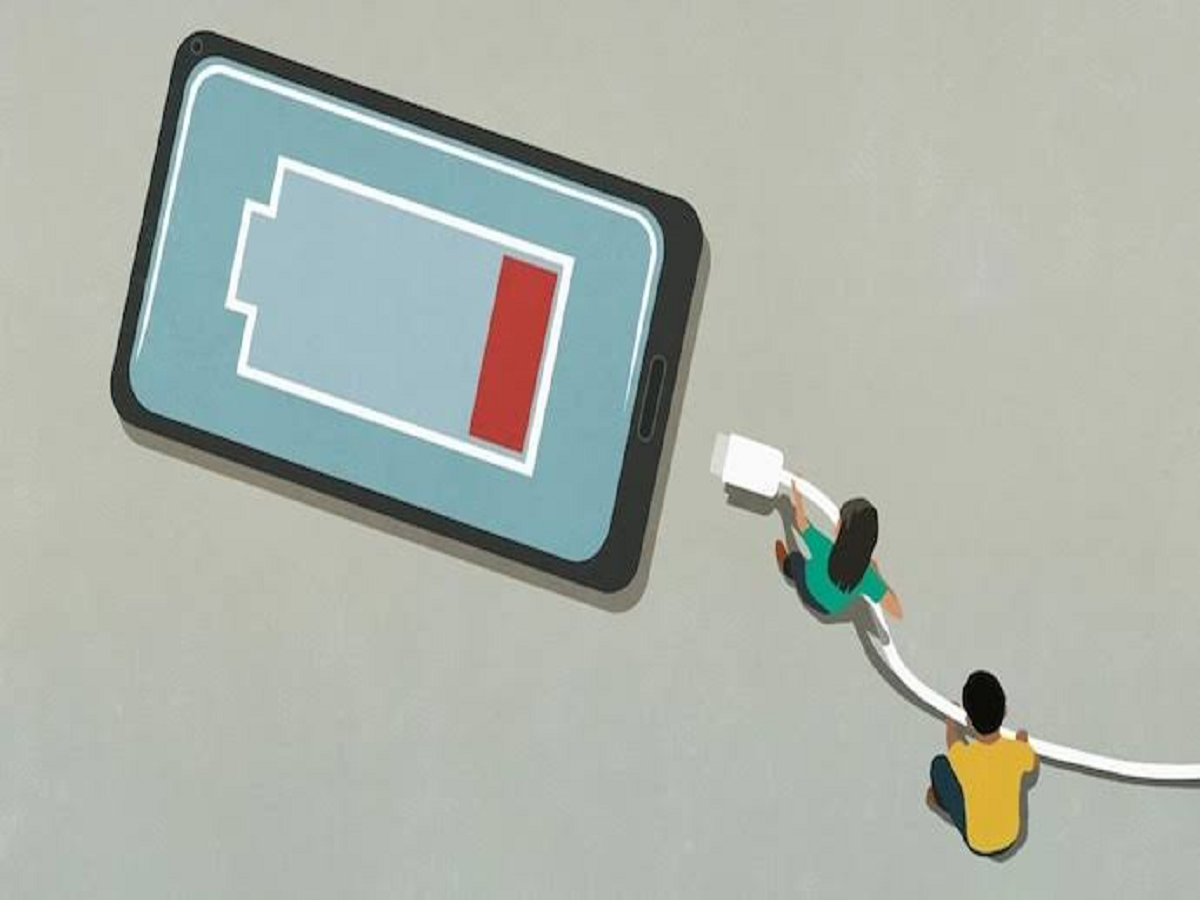
Have you ever noticed your phone battery dropping unusually fast on a cold morning?
You might leave home with 50% battery, only to see the percentage fall dramatically after spending some time outdoors.
It can look like your phone has suddenly developed a battery problem. In many cases, however, the culprit is simply temperature.
Cold weather affects the battery's chemistry
Most modern smartphones use lithium-ion batteries.
These batteries rely on chemical reactions to store and release electrical energy. When temperatures fall significantly, those chemical reactions become slower.
As a result, the battery may temporarily struggle to deliver power as efficiently as it normally does.
Your phone's battery hasn't necessarily lost all that energy. Its ability to deliver that energy efficiently has been affected by the cold.
Why can the battery percentage suddenly fall?
The battery percentage displayed on your phone is an estimate of the available charge.
When the battery becomes very cold, its electrical characteristics can change.
The phone may detect that the battery cannot safely deliver the same amount of power and adjust the displayed percentage accordingly.
That's why you might see something like 30% suddenly become 15% in extremely cold conditions.
After the phone warms up, the reported percentage may partially recover.
Cold weather can also make your phone shut down
Your phone may turn itself off even when the battery indicator shows that some charge remains.
This isn't necessarily a software failure.
The device may shut down to protect the battery and internal components if the battery cannot provide sufficient power at the required voltage.
This can be particularly noticeable when the phone is performing demanding tasks such as recording video, using navigation or running games.
Cameras and 5G can make the problem more noticeable
A cold battery already has to work harder.
If you're simultaneously using power-hungry features, the effect can become more obvious.
For example:
-
Recording high-resolution video
-
Using GPS navigation
-
Playing demanding games
-
Using a mobile hotspot
-
Running multiple apps
-
Using a bright display outdoors
All of these can increase power consumption.
Should you charge a very cold phone?
This is where caution is important.
If your phone has become extremely cold, allowing it to return gradually to a normal operating temperature before charging is generally safer than immediately subjecting it to a significant temperature change.
Modern phones have temperature monitoring and charging protections, but avoiding extreme conditions is still sensible.
Never deliberately heat a cold phone using a hair dryer, heater or other direct heat source.
Rapid temperature changes can cause their own problems.
Cold and heat are not equally harmful
Both extremes can affect batteries, but high temperatures are particularly concerning for long-term battery health.
Repeated exposure to excessive heat can accelerate battery degradation.
Cold temperatures, on the other hand, often cause a temporary reduction in performance that can improve once the battery returns to a normal temperature.
This doesn't mean extreme cold is harmless. Very low temperatures can still affect battery performance and device operation.
How to protect your phone during winter
If you're going outside in very cold conditions, a few simple precautions can help:
-
Keep the phone in an inside pocket rather than an exposed outer pocket.
-
Avoid leaving it outside for extended periods.
-
Keep it away from direct snow or moisture.
-
Don't immediately charge it if it is extremely cold.
-
Let it gradually return to a normal temperature.
-
Avoid demanding tasks when the battery is already struggling.
A protective case can also provide some insulation, although it won't make the phone immune to extreme temperatures.
Your battery isn't necessarily dying
The next time your phone suddenly loses battery percentage during cold weather, don't immediately assume that the battery has failed.
Temperature can temporarily change how a lithium-ion battery behaves.
Once the phone returns to a normal operating temperature, its performance may improve.
So if your phone seems to "lose" battery unusually quickly during winter, the explanation may be much simpler than you think: your battery is cold, and chemistry doesn't work quite the same way when temperatures drop.