TECH
Your Smartphone Could Soon Connect Directly to Satellites: The Technology That Could End Mobile Dead Zones
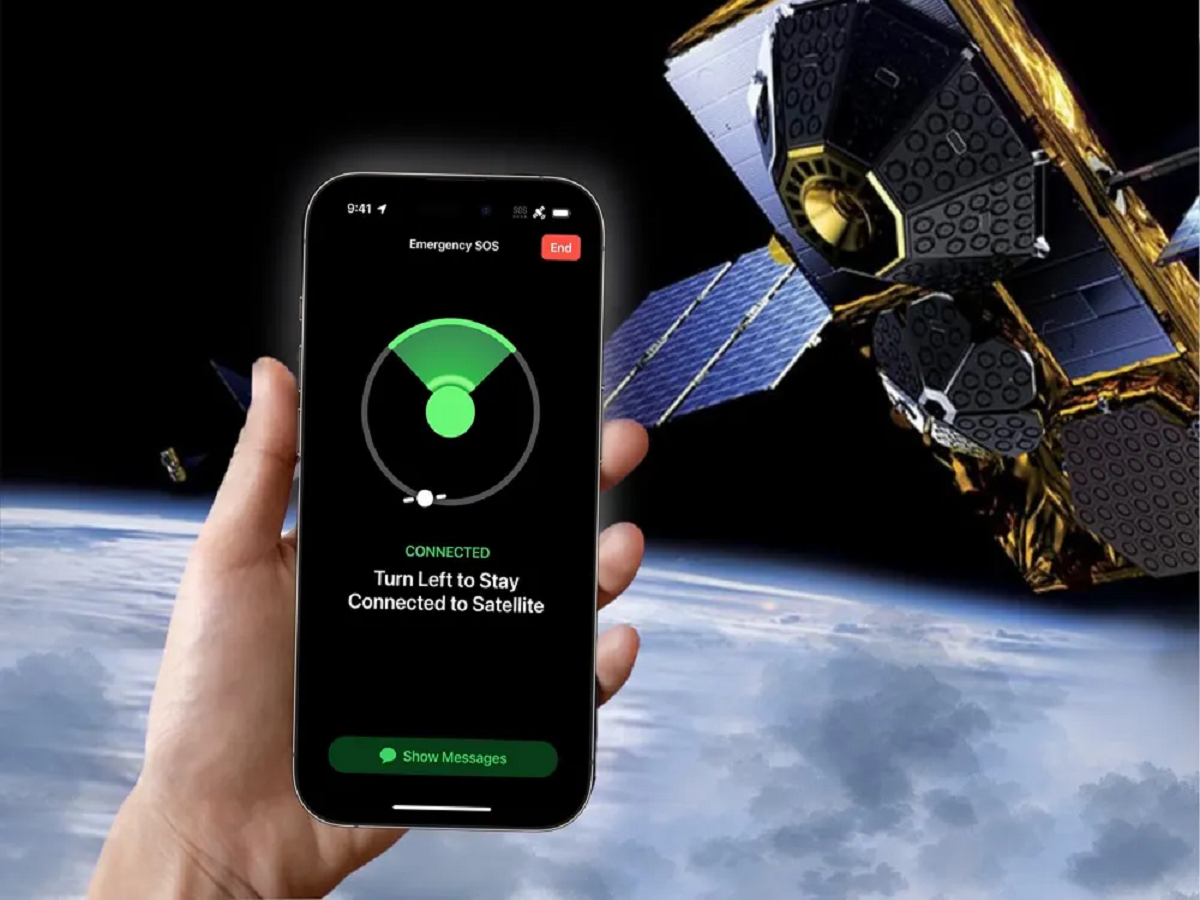
Imagine travelling through a remote mountain village, crossing a desert highway, or exploring a forest where your phone shows no network bars. Now imagine sending a message without a nearby mobile tower or a traditional internet connection.
This is the promise of satellite-to-smartphone connectivity, a technology that is gradually changing how mobile communication works. Instead of relying entirely on ground-based telecom infrastructure, compatible phones can communicate with satellites orbiting Earth.
What once seemed like science fiction is becoming an important area of development for the global telecommunications industry.
What Is Satellite-to-Phone Connectivity?
Traditional mobile phones connect to nearby cellular towers, which transmit calls, messages and internet data. However, these towers cannot economically cover every mountain, island, forest or remote highway.
Satellite-to-phone technology aims to bridge these gaps by allowing compatible smartphones to communicate with satellites directly. The satellite acts as a link between the phone and the wider communication network.
Some services are designed to support emergency messaging, while newer systems are working towards broader communication capabilities. The experience depends on the satellite network, the phone's hardware, the service provider and local regulations.
How Does the Technology Work?
The process involves three main elements: a compatible smartphone, a satellite in orbit and a communication network connected to the wider world.
When a phone loses conventional cellular coverage, it may search for an available satellite service. If a compatible connection is established, the device can transmit a message or other supported data through the satellite.
Because satellites are much farther away than mobile towers, the connection presents technical challenges. Signals can be weaker, data speeds may be limited, and buildings, dense tree cover or difficult weather conditions can affect performance.
Engineers are developing specialised satellite systems and network technologies to make these connections more reliable.
Will You Need a Special Satellite Phone?
Not necessarily.
Traditional satellite phones use specialised hardware and are often expensive compared with regular smartphones. Direct-to-smartphone services aim to make satellite communication accessible through compatible consumer devices.
However, not every smartphone can use every satellite service. Some features depend on specific hardware, software updates, network partnerships and subscriptions.
Users should check their phone manufacturer's specifications and their telecom operator's supported services before assuming that satellite connectivity will work on their device.
What Can You Do Without a Mobile Network?
The capabilities vary from one service to another. Some systems focus on emergency communications, while others are developing support for ordinary text messaging and, eventually, more demanding data services.
Potential applications include:
-
Sending emergency messages from remote locations.
-
Communicating during treks, road trips and outdoor expeditions.
-
Maintaining limited connectivity during natural disasters when terrestrial networks are damaged.
-
Supporting workers in remote infrastructure, mining, agriculture and maritime operations.
-
Improving communication in areas where building mobile towers is difficult or expensive.
Satellite connectivity could be particularly valuable when conventional networks become unavailable. However, it should not be treated as a guaranteed replacement for emergency services or a dependable connection in every location.
Why Telecom Companies Are Interested
Building mobile towers across sparsely populated regions can be costly. Satellite networks offer another way to extend coverage, potentially allowing telecom companies to serve locations that are difficult to reach through conventional infrastructure.
The technology could also create new business opportunities for satellite operators, smartphone manufacturers and mobile network providers.
For telecom companies, satellite connectivity may become an additional layer of their networks rather than a complete replacement for existing infrastructure.
What Does This Mean for India?
India's varied geography makes connectivity a significant challenge in certain regions, including remote mountain areas, islands and sparsely populated locations.
Satellite-based communication could help improve access in places where terrestrial coverage is limited. It may also support disaster response and communication for people working in remote environments.
However, availability in India will depend on regulatory approvals, spectrum arrangements, partnerships between service providers and satellite operators, and the introduction of compatible services. Consumers should not assume that a feature available in another country is automatically available in India.
The Biggest Challenges Ahead
Despite its potential, satellite-to-phone connectivity still faces several hurdles.
First, satellites must establish reliable connections with relatively small smartphone antennas. Second, network capacity is limited compared with dense terrestrial mobile networks. Third, service availability, pricing and compatibility may differ across regions.
There are also important questions about privacy, security and how satellite operators coordinate with existing telecom networks.
For widespread adoption, the technology must become affordable, dependable and easy for ordinary users to access.
Could Satellite Connectivity Replace Mobile Towers?
In the foreseeable future, it is more likely to complement traditional mobile networks than replace them.
Mobile towers remain essential for high-speed internet, heavy data usage and reliable connectivity in populated areas. Satellite systems can help fill coverage gaps and provide an alternative communication route when ground infrastructure is unavailable.
The most useful future may be a hybrid network in which smartphones automatically use the most suitable available connection, whether it comes from a cellular tower, Wi-Fi or a satellite.
Conclusion
Satellite-to-smartphone connectivity represents an important step towards a world where losing mobile coverage does not always mean losing communication.
The technology is still developing, and its capabilities will depend on compatible devices, network availability, regulations and service costs. Nevertheless, the direction is clear: the boundary between terrestrial mobile networks and satellite communications is beginning to blur.
In the coming years, the familiar network-bar indicator on a smartphone may become less of a limitation, as satellites help connect people in places that traditional mobile networks cannot easily reach.