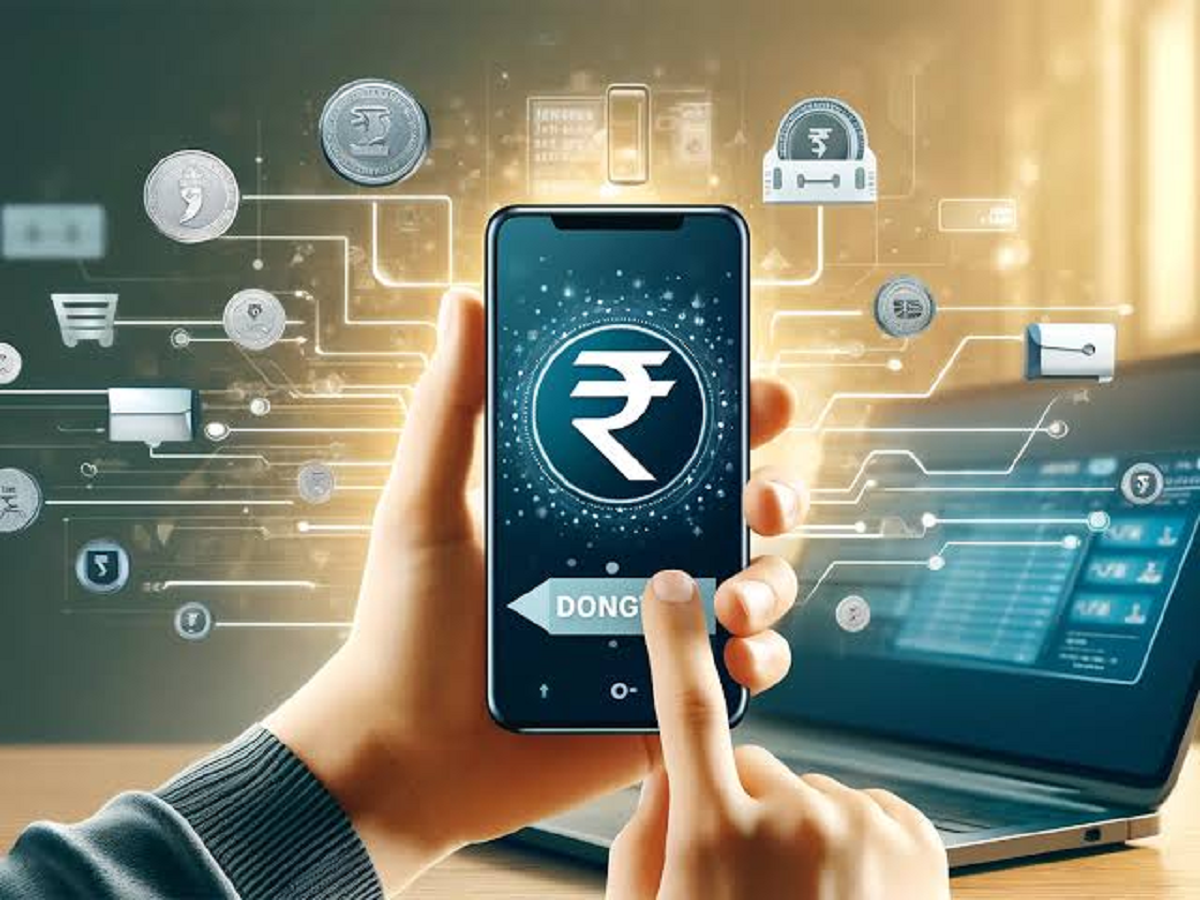
India's digital payment ecosystem has grown rapidly, with millions of people using UPI, mobile banking and digital wallets for everyday transactions. Now, another form of digital money is gaining attention: the Central Bank Digital Currency, commonly known as the Digital Rupee or e₹.
Issued by the Reserve Bank of India (RBI), the Digital Rupee represents a digital form of the Indian rupee. Unlike private cryptocurrencies, it is backed by the central bank and carries the same value as physical currency.
What exactly is the Digital Rupee?
The Digital Rupee is an electronic version of India's official currency. It is designed to function as a digital payment instrument, allowing users to hold and transfer money electronically.
The RBI has been conducting pilot programmes to explore its use in retail and wholesale transactions.
Retail CBDC is intended for individuals and businesses, while wholesale CBDC focuses on transactions involving financial institutions and other eligible participants.
How is it different from UPI?
Many people assume that the Digital Rupee and UPI are the same because both allow digital transactions. However, there is an important difference.
UPI is a payment system that enables money transfers between bank accounts. The Digital Rupee, on the other hand, is digital currency issued by the RBI itself.
With UPI, money moves between bank accounts. With a CBDC wallet, users hold digital currency that represents a direct liability of the central bank.
Both systems can support digital payments, but they serve different purposes within the financial ecosystem.
How can people use the Digital Rupee?
During the retail pilot, participating banks provide Digital Rupee wallets through which eligible users can hold and transfer e₹.
Transactions can be made between participating users and merchants, subject to the features supported by the wallet and the pilot programme.
The RBI has also explored programmability and offline payment capabilities as potential applications. These features could help extend digital payments to specific use cases and areas with limited internet connectivity.
What are the possible benefits?
The Digital Rupee could offer several advantages if adopted on a wider scale.
-
Central bank backing: It represents sovereign currency issued by the RBI.
-
Digital convenience: Users can hold and transfer money electronically.
-
Payment innovation: Programmable features could support targeted payments in suitable applications.
-
Potential offline use: Research and pilot initiatives are examining ways to facilitate transactions without continuous internet access.
-
Financial infrastructure: It could create additional options for digital payments and settlement systems.
Will the Digital Rupee replace cash?
The Digital Rupee is not intended to immediately eliminate physical currency. Cash continues to play an important role in India's economy, particularly for people who prefer physical payments or have limited access to digital infrastructure.
Similarly, UPI and other electronic payment systems are expected to remain important parts of the country's financial ecosystem.
The Digital Rupee is better understood as an additional payment option rather than a direct replacement for existing methods.
What should users know before adopting it?
Users should understand that Digital Rupee availability depends on participating banks and the scope of the RBI's pilot initiatives.
They should download wallet applications only through official channels, protect their device credentials and check transaction details before confirming payments.
The long-term success of the Digital Rupee will depend on public awareness, ease of use, merchant acceptance, privacy safeguards and its ability to provide practical advantages over existing payment methods.
As India's financial system continues to evolve, the Digital Rupee could become another important component of the country's journey towards a more advanced digital economy.