SPORTS
'Shift all the matches to Kerala': Debate erupts in Parliament after IND vs SA T20I match is cancelled due to fog.
Fog-Hit IND vs SA T20I Sparks Parliament Debate: Calls Grow to Shift Winter Matches to South India
The cancellation of the fourth T20 International match between India and South Africa due to dense fog has triggered a heated debate inside and outside Parliament, raising serious questions about the scheduling of international cricket matches in North India during the winter season. The match, scheduled to be played at the Ekana Stadium in Lucknow, was called off without a single ball being bowled because of extremely poor visibility caused by heavy fog and pollution.
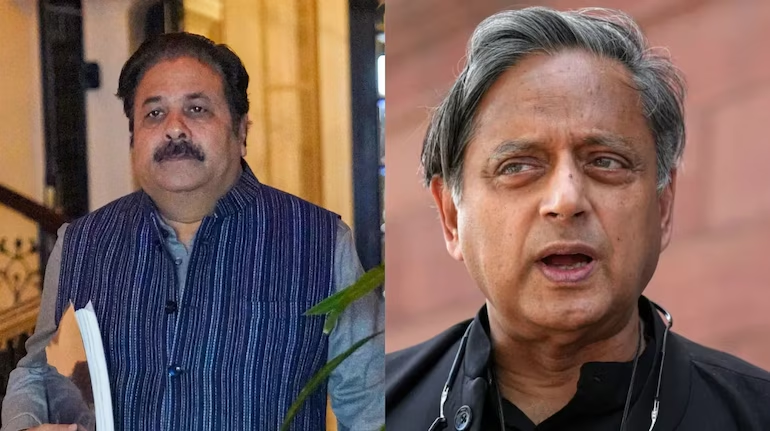
Following the washout, Congress MP Shashi Tharoor and BCCI Vice President Rajeev Shukla were seen engaging in a sharp exchange over whether winter cricket fixtures should continue to be hosted in northern states, where fog and air pollution are recurring problems during December and January.
Why the Debate Started
The fourth T20I between India and South Africa, scheduled for Wednesday, December 17, was abandoned after multiple inspections by match officials. Thick fog had engulfed the Ekana Stadium, making visibility unsafe for players. Eventually, the match was officially cancelled at around 9:30 PM, nearly two and a half hours after the scheduled start time of 7:00 PM.
The incident disappointed fans across the country and reignited concerns over player safety, spectator experience, and the credibility of scheduling high-profile international matches during peak winter months in North India.
Shashi Tharoor’s Argument: Shift Matches to the South
Reacting strongly to the cancellation, Shashi Tharoor argued that international matches scheduled between mid-December and mid-January should be shifted to South India, where weather conditions are generally more favorable.
Speaking to reporters outside Parliament, Tharoor said that fog is a predictable issue in North India during winters, making it difficult for players to even see the ball. He emphasized that fans feel “cheated” when matches are called off due to avoidable weather conditions.
“From mid-December to mid-January, fog blankets most parts of North India. Everyone knows that in such conditions, playing cricket becomes nearly impossible,” Tharoor said. He added that the entire country was disappointed after failing to witness the India vs South Africa clash and suggested that southern venues should be preferred during this period.
The Congress MP also pitched his home city, Thiruvananthapuram, as a potential venue, highlighting that it has a world-class stadium ready to host international matches.
Rajeev Shukla’s Response: Caution, Not Regional Bias
BCCI Vice President Rajeev Shukla acknowledged that greater caution is needed while scheduling matches during winter but rejected the idea that the issue was limited to any one region.
He pointed out that the BCCI follows a rotation policy, under which states like Kerala already get their fair share of international matches. Shukla stressed that the real concern is the time window between December 15 and January 15, when weather disruptions are frequent in many parts of the country.
“This is not about Kerala or any particular region. What we need is more careful scheduling during this specific winter period,” Shukla said. When Tharoor reiterated his point about winter fog, Shukla responded light-heartedly, saying, “Alright, we’ll shift all matches to Kerala,” drawing laughter but also underlining the seriousness of the issue.
Pollution Concerns Add to the Problem
Beyond fog, air pollution emerged as a major factor behind the cancellation. On match day, Lucknow’s Air Quality Index (AQI) crossed 400, placing it in the “severe” category. This raised serious concerns about player health and safety.
During the Indian team’s warm-up session, star all-rounder Hardik Pandya was seen wearing a surgical mask to protect himself from pollution. Players completed their warm-up by around 7:30 PM before returning to the dressing room, as visibility failed to improve.
Spectators also began leaving the stadium by 9:00 PM due to cold conditions and uncertainty, further highlighting the logistical and fan-experience challenges.
Series Context and What’s Next
The India vs South Africa series had venues spread across cities such as New Chandigarh, Dharamshala, Lucknow, Ranchi, Raipur, Visakhapatnam, Cuttack, Ahmedabad, Guwahati, and Kolkata. Many of these northern venues typically experience poor air quality and fog during November and December.
With no reserve day available for the abandoned T20I, both teams will now travel to Ahmedabad for the final match of the series. India currently leads the series 2-1, and the decider remains highly anticipated.
Bigger Questions for the BCCI
The Lucknow washout has once again put the spotlight on the BCCI’s winter scheduling strategy. Experts and fans alike are questioning whether player safety, weather predictability, and air quality data should play a bigger role in deciding venues.
As climate patterns become increasingly unpredictable, the debate sparked by this fog-hit match may force cricket administrators to rethink how and where winter international fixtures are hosted in India.