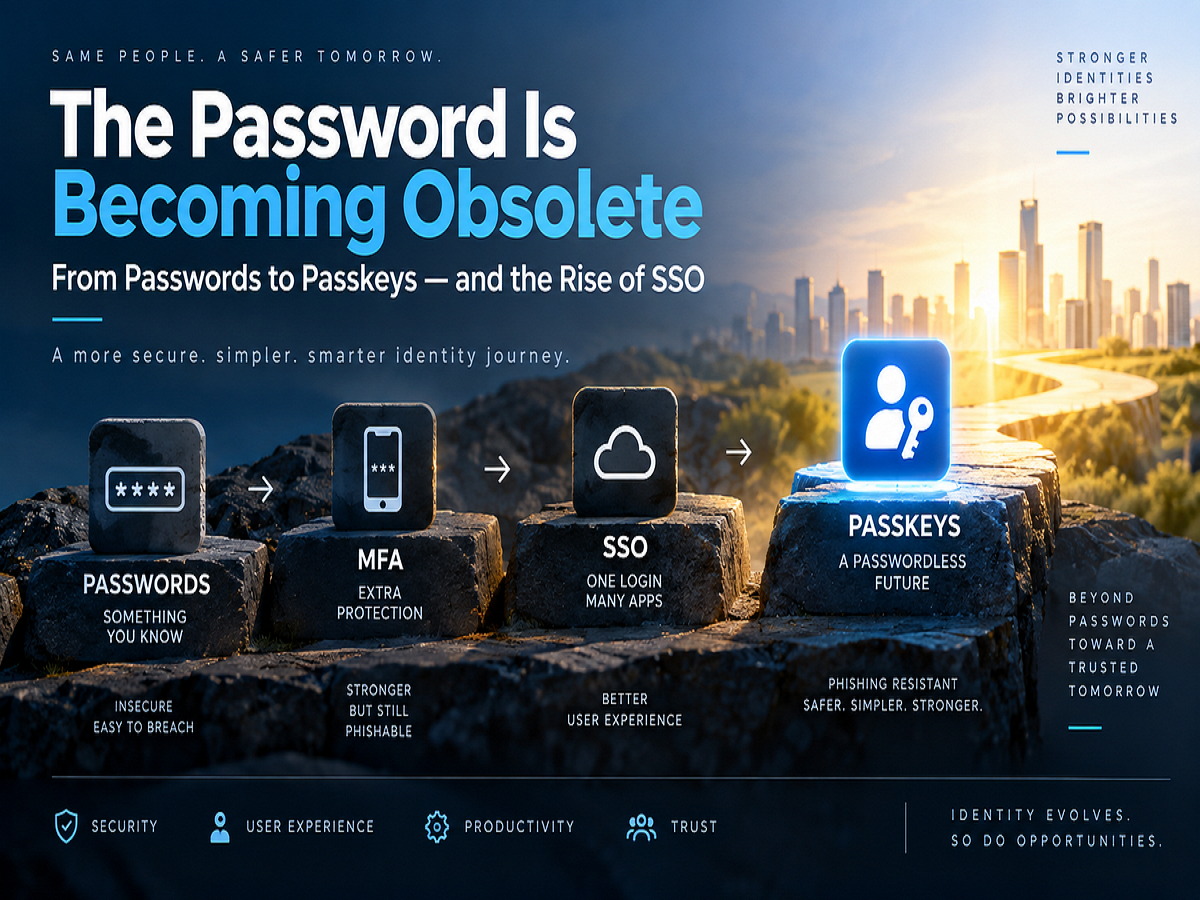
For decades, passwords have been the first line of defence for our online accounts. But they are also one of the weakest links in digital security.
People forget passwords, reuse them across websites, fall for phishing attacks and sometimes store them in unsafe places. Now, a new technology called passkeys is trying to eliminate the password altogether.
What exactly is a passkey?
A passkey is a digital credential that allows users to sign in without typing a traditional password.
Instead of remembering a complicated combination of letters, numbers and symbols, users can authenticate themselves using methods already available on their devices, such as a fingerprint, facial recognition or a device PIN.
The biometric information generally stays on the user's device rather than being sent to the website as a password.
Why are passkeys considered safer?
One of the biggest advantages of passkeys is that there is no traditional password for hackers to steal or trick users into revealing.
Phishing attacks often work by creating a fake login page that looks like a legitimate website. The victim enters their username and password, unknowingly handing their credentials to an attacker.
Passkeys are designed differently. Authentication is tied to the legitimate website or service, making traditional password-based phishing considerably harder.
No more “Forgot Password?”
Another major benefit is convenience.
Instead of receiving an email or SMS to reset a forgotten password, users can authenticate using their phone or another supported device.
For people who have dozens of online accounts, this could remove one of the most frustrating parts of using the internet.
What happens if you lose your phone?
This is one of the questions many users have about passkeys.
Modern passkey systems can be synchronised across a user's devices through supported password managers and ecosystem services. This can make it possible to access credentials even after switching to another device.
However, users should still maintain secure recovery options and protect their primary devices carefully.
Are passwords disappearing immediately?
Probably not.
Passwords remain deeply embedded in websites, apps and corporate systems. The transition to passkeys will therefore take time.
Many services are expected to support both passwords and passkeys during the transition period, allowing users to gradually move towards passwordless authentication.
The future of logging in
The internet was built around passwords because they were simple to implement. But today's digital world has far more accounts, devices and security threats.
Passkeys represent a shift towards authentication based on cryptographic credentials and the devices people already trust.
The biggest change may be surprisingly simple: the safest password could eventually be no password at all.