TECH
Your Next Smartphone Could Process AI Without the Internet: The Rise of On-Device Artificial Intelligence
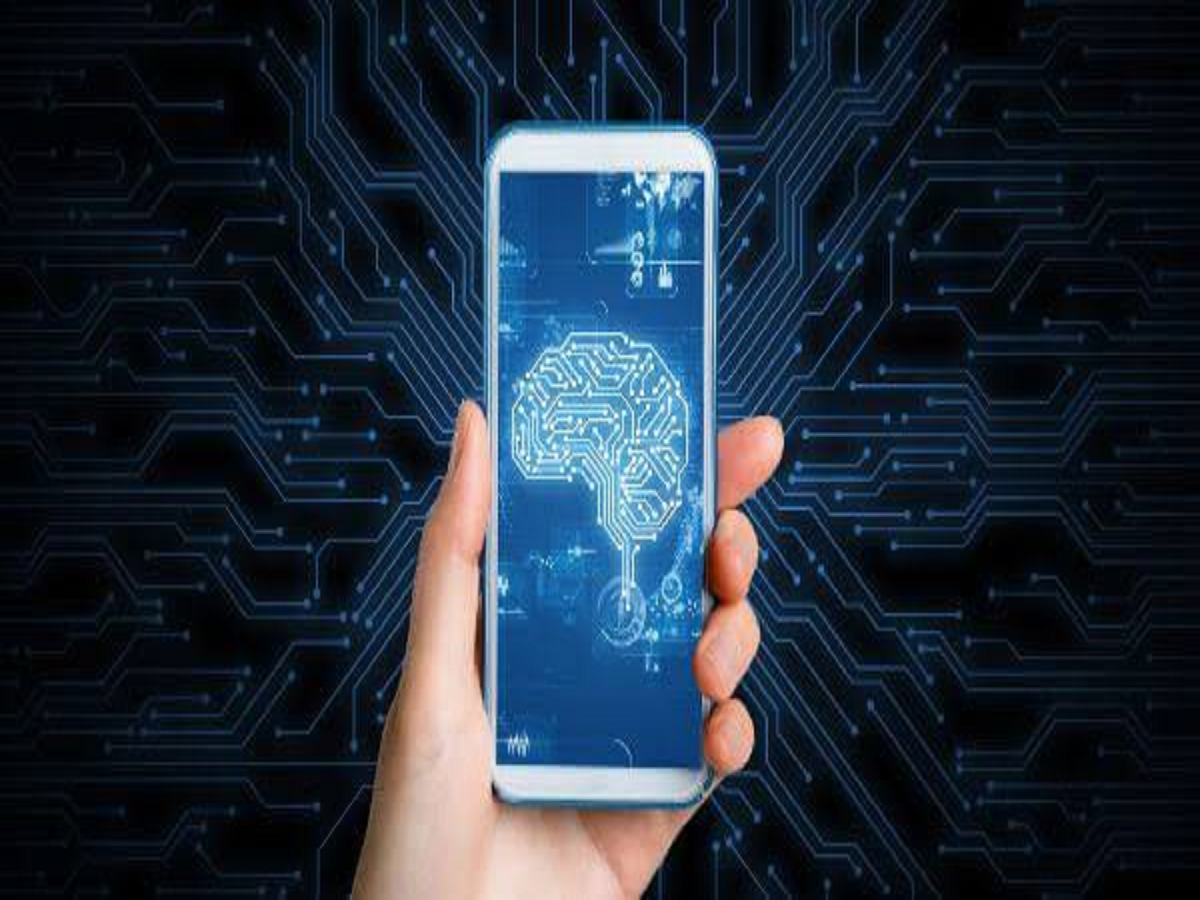
Imagine asking your smartphone to summarise a private document, organise your photographs, rewrite a message or help you complete a task without sending every piece of information to a remote server.
This is becoming possible through a technology known as on-device artificial intelligence. Instead of relying entirely on powerful computers in distant data centres, smartphones, laptops and other personal devices are increasingly capable of running AI models locally.
The shift could change how people use AI, how their personal information is handled and even how much internet connectivity their devices require.
What Is On-Device AI?
Most people are familiar with cloud-based AI services. When a user submits a question, the request is sent over the internet to remote servers, where specialised hardware processes it before returning a response.
On-device AI follows a different approach. The AI model runs directly on the user's smartphone, laptop or another compatible device.
Modern processors increasingly include specialised hardware designed to accelerate AI calculations. These components, often called neural processing units (NPUs), can perform certain AI tasks efficiently while working alongside the CPU and GPU.
The result is that some AI features can operate locally without requiring every request to travel through the internet.
Why Are Technology Companies Investing in It?
Running AI locally offers several potential advantages, particularly as consumers begin using AI for everyday activities.
1. Greater Privacy
When an AI task is processed entirely on the device, the information used for that task may not need to be transmitted to a cloud service.
This can be valuable when working with personal notes, private photographs or sensitive documents.
However, on-device processing does not automatically guarantee complete privacy. Some applications may still transmit data for synchronisation, analytics or cloud-based features. Users should check the application's privacy settings and policies.
2. Faster Responses
Sending a request to a remote server introduces network delays. Local processing can reduce this delay for supported tasks because the device does not always need to communicate with a data centre.
This can make certain features, such as text correction, image recognition and voice processing, feel more responsive.
Actual performance depends on the model, the device's hardware and the complexity of the task.
3. AI That Works Without Internet Access
One of the most useful advantages is the ability to run certain AI features offline.
A compatible device may be able to summarise locally stored text, recognise images or assist with writing even when an internet connection is unavailable.
However, offline functionality depends on whether the necessary model and data are stored on the device. Tasks requiring live information, remote services or larger cloud models may still need internet access.
4. Potentially Lower Cloud Costs
Processing suitable AI requests locally can reduce the number of tasks that a company needs to handle on expensive cloud infrastructure.
For developers, this may create opportunities to offer certain features with lower ongoing server costs. It does not necessarily mean an application will become free, since developers still have hardware, software and support expenses.
What Can On-Device AI Actually Do?
The capabilities are expanding, although they differ considerably between devices.
Common and emerging applications include:
-
Writing assistance: rewriting messages, correcting grammar and summarising text.
-
Photography: identifying subjects, improving images and applying intelligent editing tools.
-
Voice processing: speech recognition, transcription and certain translation functions.
-
Personal productivity: organising notes, extracting information from documents and helping with routine tasks.
-
Accessibility: generating captions, improving speech interactions and supporting users with different needs.
-
Smart search: finding information within supported files, photographs or other content stored locally.
More complex tasks may still require cloud-based models because larger models generally need more memory and computing power.
Why AI Chips Matter
Traditional processors are designed to handle a wide variety of computing tasks. GPUs are particularly useful for highly parallel calculations, while NPUs are designed to accelerate certain machine-learning workloads efficiently.
These components can help devices run supported AI models with lower power consumption than some alternative processing approaches.
This matters because smartphones and laptops have limited battery capacity and thermal headroom. A device must deliver useful AI performance without overheating or draining its battery too quickly.
Manufacturers are therefore competing not only on processor speed, but also on memory capacity, AI performance and energy efficiency.
Will Every Smartphone Get Advanced AI Features?
Not immediately.
Running AI models locally requires sufficient processing power, memory and storage. Older smartphones may lack the hardware needed for more demanding features, even if they receive software updates.
Some manufacturers also limit AI features by device model, language, region or software version.
Consumers should therefore distinguish between a phone that can access AI through the internet and one that can run specific AI models directly on its own hardware.
These are different capabilities, and marketing descriptions do not always make the distinction obvious.
The Biggest Limitation: Smaller Models
On-device AI has to operate within the constraints of a relatively small device.
Large cloud-based models can use substantial computing resources and memory. Local models are often smaller or more specialised to make them practical for everyday hardware.
This can affect reasoning ability, accuracy and the complexity of tasks they can handle. Smaller models may perform very well at focused activities but struggle with complicated requests that require extensive knowledge or multi-step analysis.
AI systems can also generate incorrect information, whether they run locally or in the cloud. Important outputs should still be verified.
Could On-Device AI Replace Cloud AI?
It is unlikely to replace it completely.
Cloud infrastructure will remain useful for tasks that require large models, substantial computing power, updated information or access to external services.
A more practical future is a hybrid system. Simple or privacy-sensitive tasks could run locally, while more demanding requests are sent to a cloud model when the user permits it and connectivity is available.
This approach could combine the speed and privacy advantages of local processing with the broader capabilities of remote AI systems.
What Should Consumers Consider Before Buying an AI-Powered Device?
The presence of an AI-branded processor does not guarantee that every AI feature will be useful.
Before buying a new smartphone or laptop, consider the following:
-
The specific AI features available on the device.
-
Whether those features work offline or require a subscription.
-
The amount of RAM and storage available.
-
Software-update commitments and supported languages.
-
Privacy controls and the option to disable cloud processing.
-
Battery life when AI features are used regularly.
It is worth checking real-world performance rather than choosing a device based solely on its advertised AI capabilities.
Conclusion
On-device artificial intelligence is an important development because it brings more computing capability directly into the devices people already use.
By processing selected tasks locally, compatible devices can offer faster responses, reduce dependence on internet connectivity and potentially keep more personal information on the user's device.
The technology still faces limitations involving hardware, memory, accuracy and model size. Nevertheless, as processors become more efficient and local models improve, AI could become a more natural part of everyday computing.
The future of AI may not be entirely in the cloud or entirely on your phone. It may depend on devices becoming smart enough to decide which tasks they can handle themselves and which ones need a more powerful system.