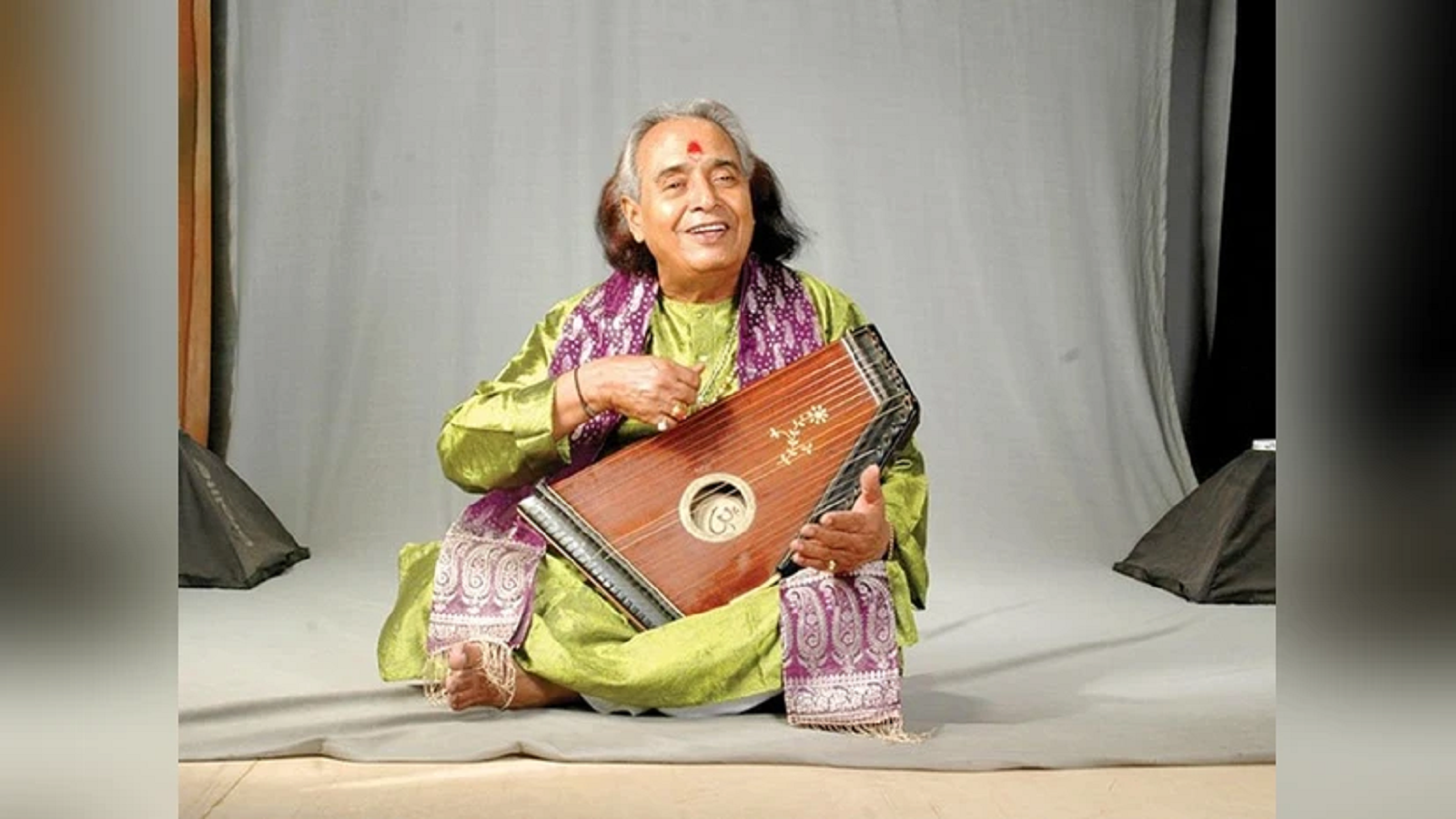
About three decades ago, at a music recital at Prayag Sangeet Samiti in Allahabad, Pandit Chhannulal Mishra showcased not just his mastery of classical singing but also his signature charm. When an audience member attempted to leave midway, Panditji stopped him with humor and song, turning the distraction into a poetic moment. This was his hallmark — blending conversation with music, explaining intricate concepts like thumri, khatka, and murki in a way that made classical music accessible rather than intimidating.
Early Life and Childhood Struggles
Born in 1936 in Hariharpur village in Azamgarh, Uttar Pradesh, Pandit Mishra was originally named Mohan Lal Mishra. His household, though steeped in music thanks to his father Badri Prasad Mishra — a tabla player — faced severe financial constraints. The family often survived on coarse grains, but his father’s dream was unwavering: his son must one day make a name for himself in the world. Strict discipline followed. Panditji recalled being beaten for skipping music practice to swim, with his father reminding him that life’s purpose was to rise in music, not get lost in carelessness.
His childhood name “Chhannulal” carried a symbolic meaning — one free from six physical disorders. This protective renaming practice was common in rural India and the name eventually became his musical identity.
Finding His Guru
At the age of 8 or 9, his father moved the family to Muzaffarpur and entrusted his musical future to Abdul Ghani Khan of the Kirana Gharana. Young Chhannulal endured grueling tests of commitment. Khan Sahib would send him in harsh summer heat to fetch firewood, rejecting bundles for being too wet, forcing multiple trips. Only after proving his perseverance did his Guru begin formal training, shaping the foundations of his classical journey.
Musical Style and Artistry
Pandit Mishra became one of the foremost representatives of the Banarasi Gharana, excelling in thumri, chaiti, hori, and kajri. He believed in immersing listeners in the soul of music rather than overwhelming them with technical mastery. His concert halls echoed with both ragas and humor, often mixing light anecdotes with deep musical insights. His Holi rendition “Khele Masane Mein Holi” became a cultural staple, and his Sohar and Chaiti renditions won audiences across India.
Though his film songs were limited, his duet “Saans Albeli” with Shreya Ghoshal in Prakash Jha’s Aarakshan left a lasting mark. The Government of India honored him with the Padma Vibhushan for his contribution to Indian classical and semi-classical music.
Legacy
Pandit Chhannulal Mishra’s journey — from poverty-stricken beginnings in Azamgarh to becoming one of India’s most respected classical voices — highlights not just an artist’s growth but also a philosophy: music must connect, not alienate. His blend of scholarship, simplicity, and storytelling ensured that generations found classical music not distant, but deeply human.