NATIONAL
Will old currency notes stored in bank lockers be exchanged? The High Court has sought a response from the RBI in the Bikaner case...
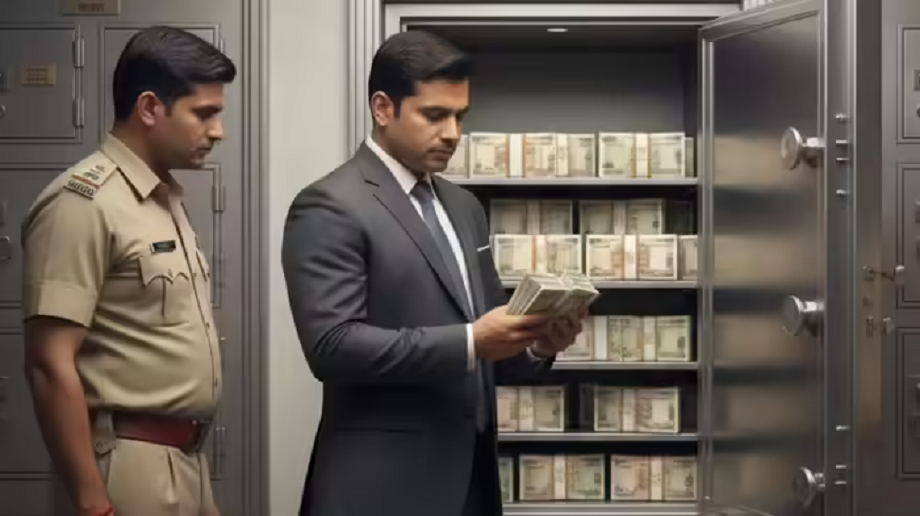
Old Currency Notes: Jodhpur High Court has sought response from RBI and Central Government in the matter of recovery of 15.50 lakh old currency notes from a bank locker which was closed for many years due to succession dispute.
Jodhpur: The Rajasthan High Court, Jodhpur, has issued notices to the Central Government, the Reserve Bank of India, and the Oriental Bank of Commerce, among other parties, seeking their responses in a significant case. The matter relates to a bank locker that remained sealed under court supervision for several years due to a succession dispute, and in which demonetized currency worth ₹15.50 lakh was recovered.
Petitioner Ranveer Singh, through advocate Vipul Singhvi, filed a petition in the High Court, stating that after the death of his father, Chandra Singh, the bank locker remained in the custody of the court and the bank for several years due to a family property dispute. When the locker was opened in 2018 following the court's final order, a total of ₹15.50 lakh (500,000) in old ₹500 and ₹1000 notes was found.
The court sought a response on the lawyer's petition
The petitioner claims that he was unable to access his locker during the demonetization period because the matter was subjudice. Therefore, he had no opportunity to exchange the notes.
A division bench comprising Acting Chief Justice Sanjiv Kumar Sharma and Justice Anurup Sanghi, hearing the case, recognized that this raises a serious question of justice and constitutional protection of property. The court directed all parties to file their responses within four weeks.
The High Court's stance comes at a time when numerous legal questions regarding old notes are still pending in the courts following demonetization. This case is one of those complex situations where a person's assets remained in judicial custody and he was unable to exchange his money within the government's deadline.
Based on these arguments, Singhvi sought justice from the court.
Advocate Vipul Singhvi argued in court that protection of property is a fundamental right guaranteed by the Constitution. If a citizen or their heirs are denied the opportunity to exchange old notes due to court custody, they should not suffer any loss. Citing Articles 300A and 14 of the Constitution, he demanded that the government and banks be ordered to exchange the old notes or pay the actual value/compensation. The petition stated that it is the state's responsibility to compensate for losses caused by the judicial process, and that denying the right of a true heir is against the Constitution and the principles of justice.
PC:NBT